


Halloween may be almost here, but this week I’m looking beyond the spooky stuff (although I’ve still got a couple of last-minute picks for you).
We’re saying goodbye to a terrific Forest City Film Festival, and look ahead to an unusual new play about the animals who went to war with Beasts of Burden from AlvegoRoot Theatre.
I also interview the Artistic Director and Associate Artistic Director of AlvegoRoot to get to know one of London’s independent theatre companies a little better.
The Loon Recommends for Oct 29 - Nov 4, 2026
Dracula: A Comedy of Terrors at the Grand Theatre
(click for this pick from last week which runs until November 7)Scared Stiff Exhibition at The Benz Gallery
(Another pick from last week - a spooky art show runs until October 31)That’s a Wrap on Forest City Film Festival 2026
The Animals That Went to War - Catch the play Beasts of Burden
Behind the Beasts: A Conversation with AlvegoRoot Theatre
That’s a Wrap on Forest City Film Festival 2026
The credits have rolled on another Forest City Film Festival, with the 11th annual festival wrapping up Sunday after showcasing 144 films, many with connections to London and Southwestern Ontario.
Organizers say the festival exceeded its projected attendance of more than 10,000 people, with sold-out screenings, standing ovations and plenty of conversations continuing long after the credits rolled.
Personally, I thought this year’s festival was the best one yet. I managed to catch eight films and only wish I had time to see more!
The festival concluded with its annual awards ceremony at Wolf Performance Hall, recognizing filmmakers across narrative, documentary, experimental, music video and other categories.
The Stunt Driver, directed by Michael Dowse, took home Best Narrative Feature, while Jay Baruchel received Best Performance for his work in the film.
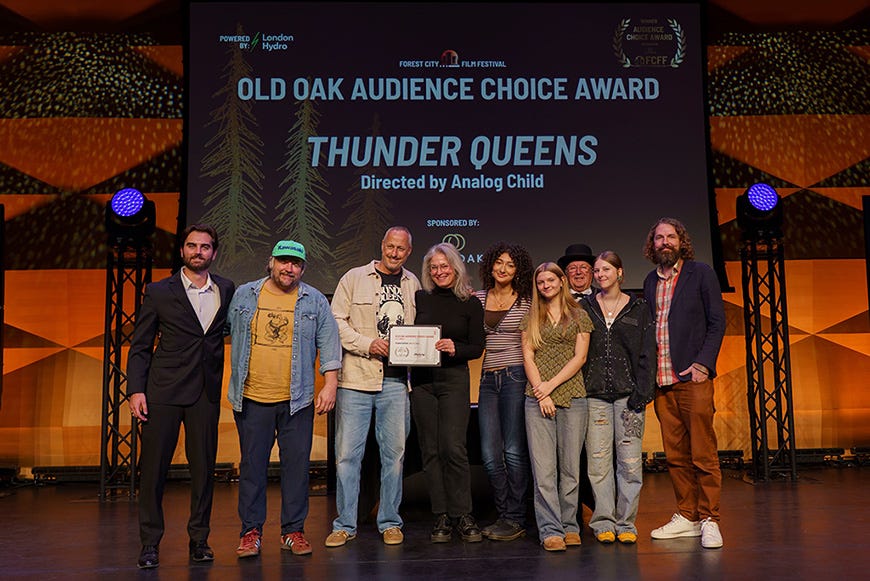
And a film previously recommended right here in The Loon earned some love from festival audiences: Thunder Queens, from Directors Dustin Seabrook and Tobin J. Stewart, won the Old Oak Audience Choice Award.
This is a homegrown story executive produced by Tegan and Sara that follows Londoners Violet, Lola and Clara as they grow up together, find their voices and turn their love of punk into a band. It’s a coming-of-age rock documentary about friendship, music and the community that helped make it all possible.
I was one of the people who voted for Thunder Queens to win the Audience Choice Award, so I was thrilled to see it take the prize. The film is terrific, but what made the screening even more special was seeing Violet, Lola and Clara take the stage for a Q&A afterwards. Their love of music was obvious, but even more apparent was the genuine affection they have for one another.
Thunder Queens played to a sold-out and VERY enthusiastic crowd, filled with what seemed to be friends, family, supporters and fans. There was such warmth in the room, and the audience’s reaction added another memorable layer to the experience.
That sense of community started before we even entered the theatre. In the lobby, a young fan had set up a table for a Thunder Queens fan club, alongside original paintings of all three musicians by local artist Jeremy Bruneel (Lola’s dad).
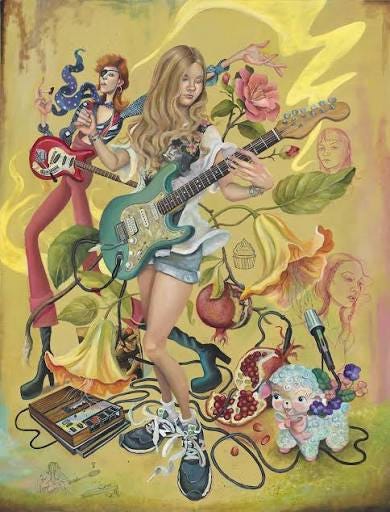
I’ve been a big fan of Jeremy’s work for years, so it was lovely to see the paintings in person. His artwork is also incorporated into the film through animation, to wonderful effect.
Two very big thumbs up for the film and for Thunder Queens themselves. I hope everyone gets the chance to see it soon! As soon as I hear of any local showings, I’ll be sure to write about it in my column.
My other favourite film of the festival was The Debut with Julianne Moore and Paul Giamatti. It was laugh out loud funny and I fully expect Moore to be nominated for a bunch of awards for her performance. The movie hits theatres on December 18.
Congratulations to all of this year’s filmmakers, and to the Forest City Film Festival on another successful year of putting London and Southwestern Ontario stories, talent and filmmaking on the big screen!
The Animals That Went to War - Beasts of Burden by AlvegoRoot Theatre
November 4-11 | Manor Park Memorial Hall | 11 Briscoe St. West | $33 per ticket
What do a bear, a goat, a horse, two dogs, a pigeon and some African pouch rats have in common? They’re all at the heart of Beasts of Burden, the latest original production from London’s AlvegoRoot Theatre.
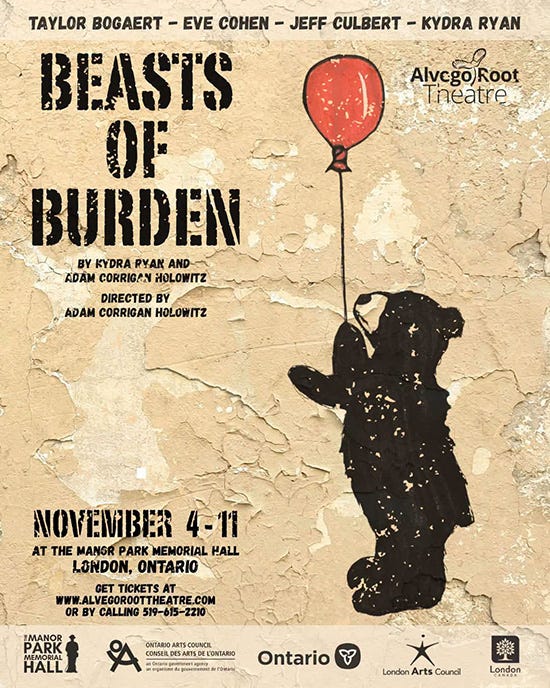
Written by Kydra Ryan and Adam Corrigan Holowitz, Beasts of Burden looks at war from a perspective we don’t often consider - the animals who experienced it alongside soldiers.
Among the stories in the play are:
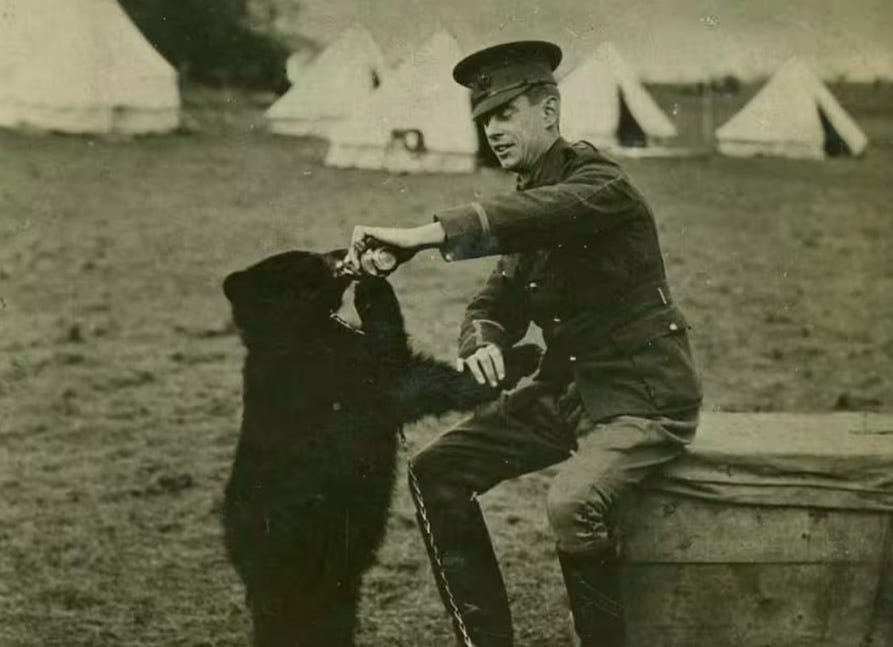
Winnie, the Canadian black bear who inspired the beloved Winnie-the-Pooh.
Sergeant Bill, a Saskatchewan goat who was smuggled across the English Channel in an orange crate.
Gander, the Newfoundland dog who died saving Canadian soldiers during the Battle of Hong Kong.
and Bonfire and Bonneau, the horse and dog who accompanied In Flanders Fields poet John McCrae.
It’s a fascinating premise, but what really interests me is that Ryan and Holowitz aren’t simply telling a collection of quirky animal stories. Through them, the play explores love, loyalty, loss and the remarkable bonds that developed between soldiers and the animals around them.
Video above from AlvegoRoot’s October 14, Instagram post.
The production also incorporates music and poetry from the period, including some of McCrae’s lesser-known writing, and the animals are brought to life without puppets or actors dressed up in animal costumes.
There’s also something particularly fitting about where and when the play is being performed. AlvegoRoot’s home is Manor Park Memorial Hall, a neighbourhood community hub. The Hall sits beside the Manor Park War Memorial, where the figure of a WWI soldier stands over his lost comrades.
It is dedicated to the men of the Manor Park area of London who served in First World War, with plaques later added recognizing those who served in the Second World War and Korean War.
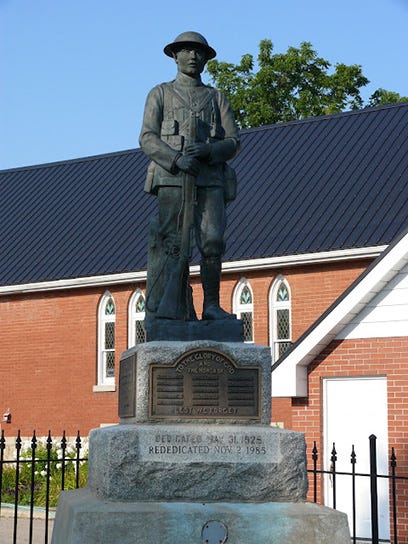
With Beasts of Burden exploring the experiences of animals and soldiers during wartime, staging it in the shadow of that memorial feels especially meaningful.
And with the run culminating in a final performance on Remembrance Day, November 11, the setting and timing give the stories an added resonance.
Show Details
Beasts of Burden runs November 4–11 at Manor Park Memorial Hall, 11 Briscoe Street West.
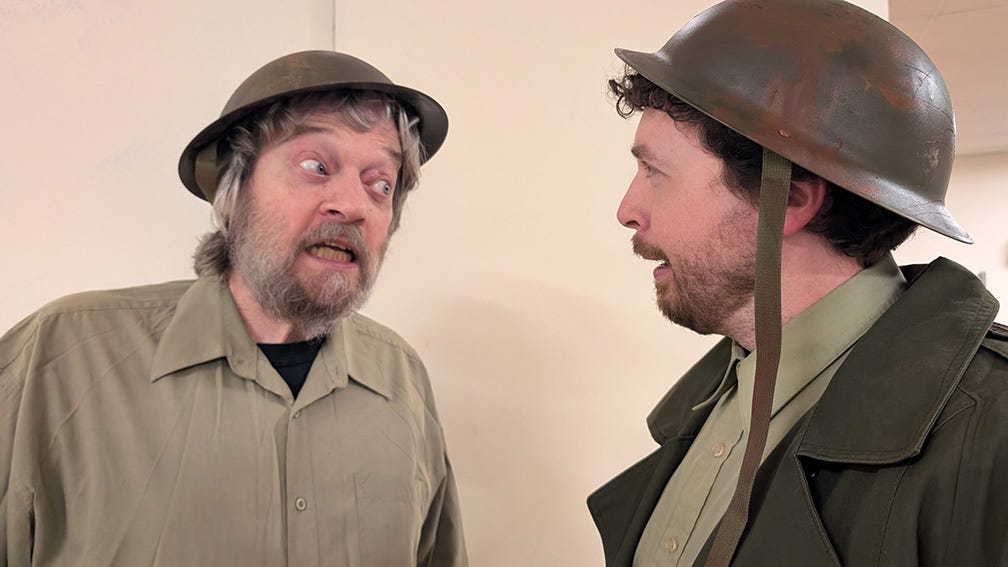
The play stars Taylor Bogaert, Eve Cohen, Jeff Culbert and Kydra Ryan.
Tickets are $33.90, with $14.99 tickets available for people under 30 and arts workers.
The production is recommended for ages 14+.
Get your ticket from AlvegoRoot Theatre
Downtown London - Sponsor of The Loon
Downtown London is dedicated to championing the businesses, events, restaurants, shops, and people that make the core of our city vibrant.
ADVERTISEMENT

Forest City Arts & Culture Round-Up is sponsored by Downtown London
www.downtownlondon.ca
Supporting independent local journalism in our community
Behind the Beasts: A Conversation with AlvegoRoot Theatre
London has a vibrant theatre community that extends well beyond the stages of the Grand and Palace theatres.
Across the city, independent companies and artists are consistently producing ambitious, original work, often without the attention they deserve. AlvegoRoot Theatre is one of these local gems.

Now in its 18th season, AlvegoRoot has built its identity around locally created theatre and stories with connections to London and the surrounding region. I wanted to learn more about the creation of Beasts of Burden, and about the company behind it, so I caught up with Adam Corrigan Holowitz, AlvegoRoot’s founder and Artistic Director, and Kydra Ryan, Associate Artistic Director.
The two co-wrote the play, bringing together some remarkable pieces of Canadian history to explore war and our relationship with the animals who experienced it alongside us.
We talked about everything from AlvegoRoot’s evolution over the years and the research behind the play to a court-martialled goat, the bear who inspired Winnie-the-Pooh and why these stories still resonate today.
This interview has been edited and condensed for length and clarity.
Adam, you founded AlvegoRoot 18 years ago. What inspired you to create the company, and how has it evolved over those 18 seasons while staying true to its original vision?

AlvegoRoot has existed in three stages. When I was in high school, we were an amateur company, then when I was in theatre school, AlvegoRoot was a summer theatre company of mostly early career artists, and now we are a professional theatre that champions local plays and theatre artists.
In our first few years, before AlvegoRoot found its artistic voice, we were doing classics like Waiting for Godot, Uncle Vanya and Macbeth. They were fulfilling plays to put on, but they were not connecting with an audience.
In 2011, I wrote and performed a play called Manor Park, which was about the neighbourhood I grew up in. That play connected with people unlike anything we had done before. From that point on, we found our purpose: to tell local stories and create local theatre.
What has remained the same throughout AlvegoRoot’s existence is that we have always been a very community-focused organization. It is important that theatre does not just speak to communities but also strengthens and builds community.
We want to create work for local artists that can help make London a viable place to be based as a theatre professional.
We pick our plays to connect to local experiences so the plays themselves bring people together in shared experience.
Kydra, this began with your idea. Where did Beasts of Burden come from? Was there a particular animal or story that first sent you down this path?

We have been wanting to do a war story for a while now. I can’t remember the exact way the idea came about, but we had the idea of doing a special event reading about war animals, and this idea eventually grew into creating a full play.
Through the playwriting unit that Adam hosted, I tested out a concept with a monologue about a canary in a coal mine. After his partner had died, the canary was relocated to the tunnels at Vimy Ridge to detect gas.
How did the writing partnership between the two of you work on this show? Did you divide up particular animals and stories, or was the play developed more collaboratively?
Kydra: Usually our writing is more collaborative, but in this case we had an impending deadline thanks to picking up gigs this summer. That’s when I asked Adam to write with me instead of just as dramaturg. Plus, he was already having ideas about Sergeant Bill, the goat, that sounded better than anything I could come up with.
We split the first draft up by scenes for the most part, and then came together to edit the subsequent drafts. It worked out well because the play is very modular.
Adam: I feel very lucky to be able to co-write plays together. There are a lot of variables that go into making a successful writing team. The amazing thing about collaborative writing is that the play is unlike anything either writer would create on their own.
In plays like London Fog, the audience probably can’t tell where one of our voices ends and another begins. Beasts is a bit different as there are scenes, like Sgt Bill, which I wrote and Gander which Kydra wrote. Then there are scenes which were more fluid collaborations— so audiences may pick up on some distinct stylistic shifts between each story. But that is part of the design of the play. Each story is very unique and each animal has its own energy.
You’ve chosen very specific stories rather than trying to tell a comprehensive history of animals in the World Wars. How did you decide which animals and moments belonged in the play?
Kydra: Winnie, the black bear who inspired Winnie-the-Pooh, was one of those stories I knew needed to be included, despite the fact that she never saw battle. Winnie got halfway around the world only to be donated to the zoo when she became too big to accompany Lieutenant Harry Colebourn to war. Her story gave us a way to explore the experience of animals being left behind, which was sadly not uncommon during the war.
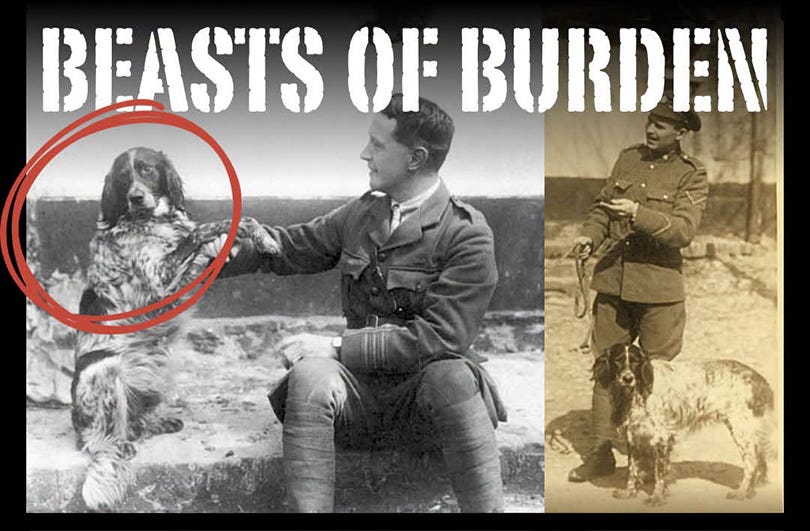
I also found the connection between John McCrae and his animals fascinating. Bonfire, his horse, was a huge part of McCrae’s life, while Bonneau seems to have been a rescue off the street. McCrae even wrote letters to his nephew from Bonfire’s perspective.
Sergeant Bill the goat is just the most hilarious story ever. He was smuggled across the English Channel in an orange crate, saved lives by headbutting soldiers into a trench, and was even court-martialled for eating the company roll.
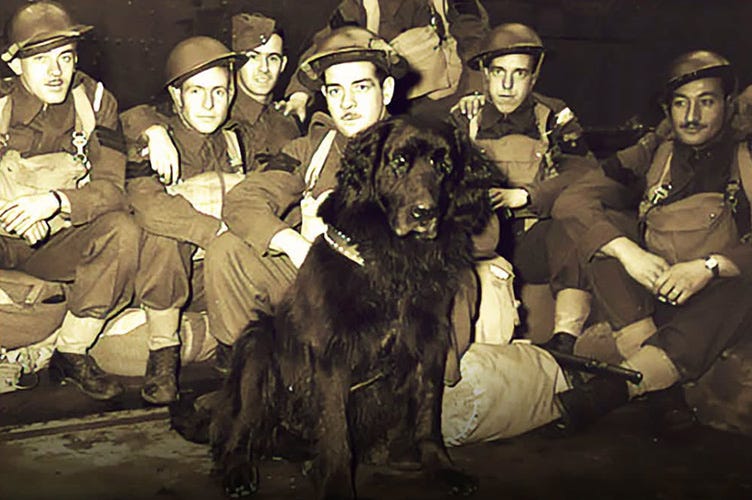
Gander was the toughest story to write because his story is so tragic. He lost his life saving wounded soldiers during the Battle of Hong Kong. We knew we had to include him, but I spent a lot of time figuring out how to get to the heart of his story without sensationalizing it.
Adam wanted to include a bird to add some range, so we made an exception for Beach Comber, a pigeon who worked with the Canadians.
Finally, we wanted to bring the play into the present day and show that the work of animals in conflicts still isn’t done. The last story is about African pouched rats specially trained to detect landmines and save lives around the world. We wanted to show animals and humans as collaborators and the potential for good that brings.
How much historical research went into the writing, and what were some of the most surprising things you discovered?
We researched about twenty different animal stories to start with, and then went on a deep dive of each one, once we decided what to write about. There’s so many fun or weird facts.
What is surprising is how freely the animals could roam in the war. They were fed beer and treated like part of the regiment.
Christopher Robin-Milne was a child star, and was bullied in boarding school because of it. He grew distant from his family over this, but also because he married his first cousin.
We also discovered that Teddy Bears are named after President Theodore Roosevelt, who famously refused to shoot a bear on a hunting trip and objected to the cruelty of tying bears to trees to make them easy marks.
Also surprising is that WWI was first referred to as WWI in 1918, because even then it was already understood that it would not be the last world war.
The production incorporates music and poetry, including work connected to John McCrae and A. A. Milne. How are you using those elements within the storytelling rather than simply as historical references?
We tried to incorporate something that complemented each piece. Some connect more directly to the plot than others. The actors are never all onstage together except when we sing, so those moments also give us a chance to connect as a group.
For the Christopher Robin scene, we use Buckingham Palace, which complements the story and helps bridge a shift in time. We also have a war parody song to accompany the cantankerous goat.
We wanted to share some of McCrae’s work beyond the well-known In Flanders Fields. His poetry became incredibly sad and dark following what he saw during the war, so we chose a poem that ties into the story while reflecting a different side of McCrae and the war itself.
If folks know these poems and songs, they might find that the words resonate differently when heard alongside the scenes of this play.
The Loon (London Ontario Online News) lineup
Local independent journalism bringing you new content every day.
Find our editorial standards and policies here.

Meet the Londoners who team up to send you a new feature every weekday:
Monday - Buckle Up - podcast with Matt Brown
SPONSORED BY HAMILTON ROAD BIATuesday - City Tours with Cedric Richards
SPONSORED BY LONDON BICYCLE CAFÉWednesday - City Hall Notes by Mike Donachie
SPONSORED BY SPERO LAWThursday - the Forest City Arts and Culture Roundup by Diana Tamblyn
SPONSORED BY DOWNTOWN LONDONFriday - Reflections with Steve Cordes
SPONSORED BY OLD EAST VILLAGE BIA
Also on Fridays: the local news ROUNDUP.
Every other Saturday: The Matt Brown Podcast. It’s the show about all things local, and maybe some other stuff too. SPONSORSHIP OPPORTUNITY AVAILABLE.
Another great read - thank you for keeping things rolling!