


Part 1: Introducing Ward 13
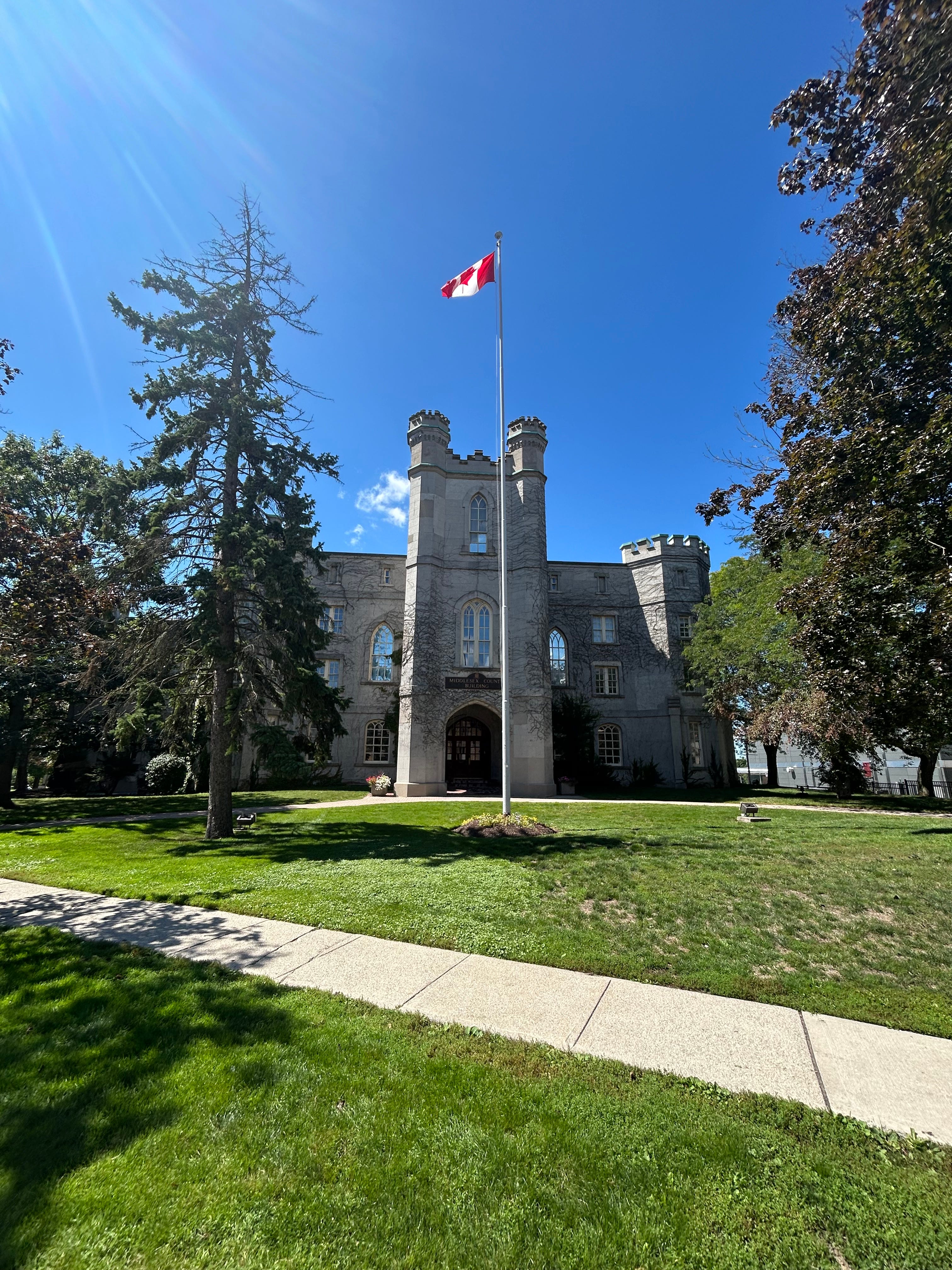
Welcome to Ward 13
Cedric writes
Continuing on this journey through London’s wards in this summer series, I am reminded that all good things must come to an end. Here we are in Ward 13, which is the 14th ward of London’s 14 wards that we have profiled in this series. There is a lot to say about a ward that occupies much of the centre of the Forest City.
The major districts in this constituency are Central London and West London, and tiny bits of Southcrest and South London. Part of the ward is shaped by the Thames River, an important artery of this what is now London for millennia. The rest of the ward is bounded by Adelaide Street North, Oxford Street, Wonderland Road, and the CN tracks.
You may be familiar with this ward if you are a Londoner or possibly a tourist! The ward is home to great places like Canada Life Place and Covent Garden Market. There are wonderful parks like Victoria Park, Ivey Park, Thames Park, and West Lions Park. This ward is home to our de facto financial district, with towers like One London Place, City Centre, and the Talbot Centre. Blackfriars Bridge is an iconic landmark anywhere in the city. Further west are neighbourhoods like Oxford Park and Kensington Village alongside the high-rises of Proudfoot Lane. I am very familiar with this ward, because I lived in Ward 13 for 13 years. I went to elementary school here, and this is the first ward where I voted in a municipal election, in 2010.
The area is home to London’s oldest communities. In the colonial sense of things, London was first designated as a community in 1826, within the Township of London. London, at the time, consisted of an area bounded by the Thames, Wellington Street, and Queens Avenue. In 1840, when London became a village, London expanded eastward to Adelaide Street and northward to Huron Street. In 1897, London West amalgamated with London, and is generally now referred to as Blackfriars. The western communities in this ward were first developed in the earlier years of the 20th century but were annexed into London in 1961.
This is a very interesting place. This is indisputably the centre of arts, business, recreation, politics, and so much more. There are renters in the core and across the ward, with families and students interspersed throughout. The problems with homelessness and public order are very pronounced in this ward. Every Londoner has an opinion on it. How does it all come together?
That’s our challenge this summer: the story of London Ontario in 14 wards. Join us. We’re going by bike and by car, and we’re inviting Londoners into the conversation.
Cedric says:
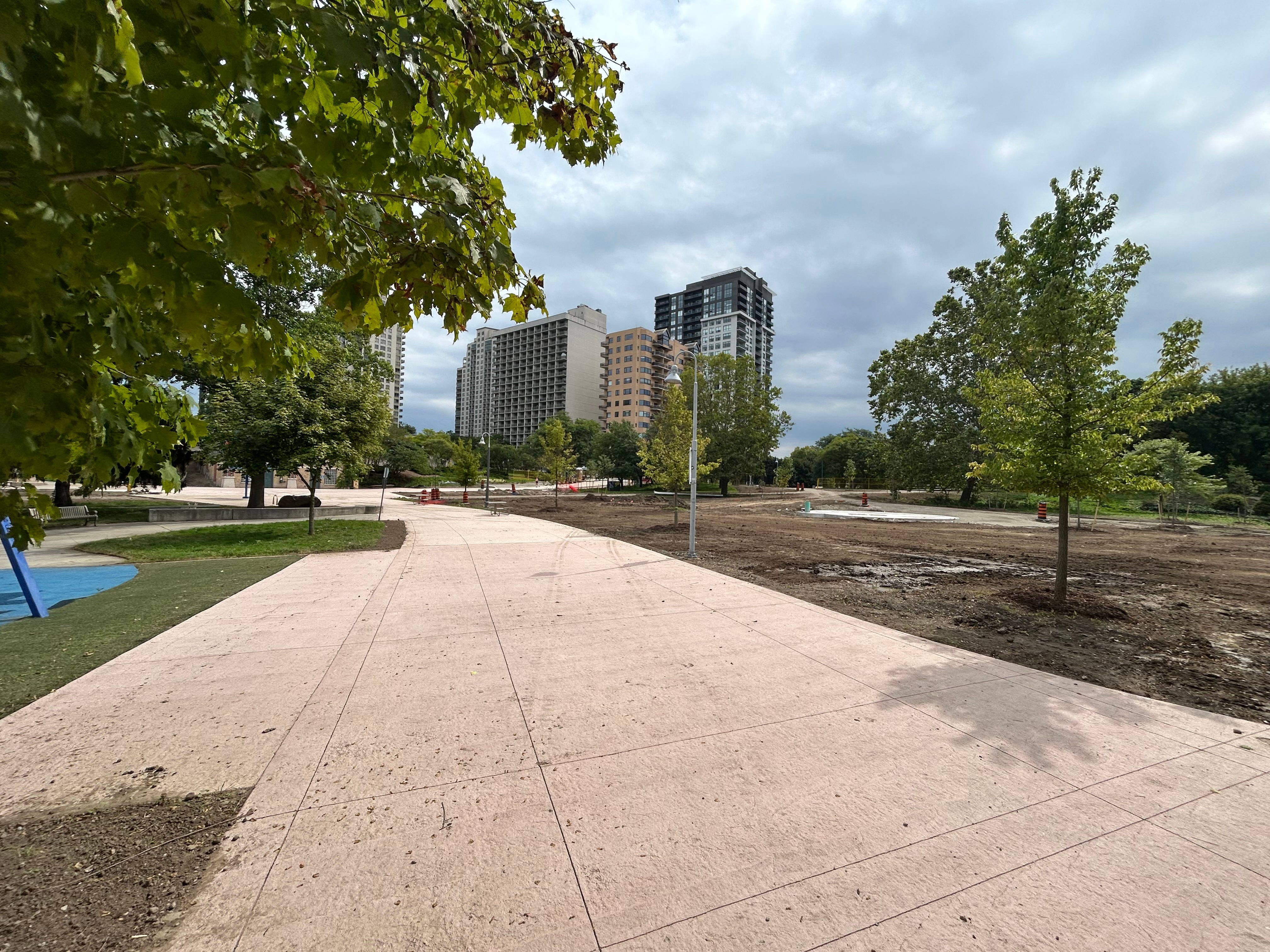
Welcome to the 14th ward in our series of profiling London’s 14 wards. Thank you for following along and exploring London with us. Now, we make our way to the centre of it all, where Ward 13 comprises the downtown and surrounding area. We picked a great spot to talk about this place, Ivey Park, which recently reopened after a major sewer replacement project.
Mike says:
Well, hasn’t this been something? We’ve spent the entire summer - 15 weeks, including a break - experiencing the city and circling downtown. Now it’s time to look at the central point and the central issues: downtown London, making up most of Ward 13. Unsurprisingly, it reflects London itself.
Every week, we’re having a chat in the ward itself. Here are our musings together in Ward 13, where we went to the forks of the Thames River to talk all things downtown and beyond.
Ward 13: The Basics
Ward 13 - Central London, West London, Southcrest, and South London
Population - 35,156


Cedric writes
Ward 13 has always been the central constituency of London ever since the city started using single-member constituencies for the 2006 election. Prior to this election, London’s wards numbered seven, each of which elected two city councillors. Downtown was a part of two different wards, with Dundas Street being a dividing line. What is now Ward 13 was once parts of the old Wards 1, 2, 5, and 6.
An activist group named Imagine London, who had been organizing to change the configuration of the city council wards, were proponents of smaller wards representing communities of interest, including a ward that represented the downtown. After the city did not act on referendum results about the size of council in the 2003 municipal election, Imagine London took their case to the Ontario Municipal Board, who ruled in their favour in December 2005. The city appealed to the Superior Court of Justice, which ultimately upheld the OMB’s decision the following month. Since the 2006 municipal election, London has had 14 city council wards and one of them has centered on this city’s core.
Other than tinkering to the west end of the ward, around Wonderland and Oxford, Ward 13 has generally remained the same for the last 20 years.
Part 2: Around the ward
South London
Cedric writes
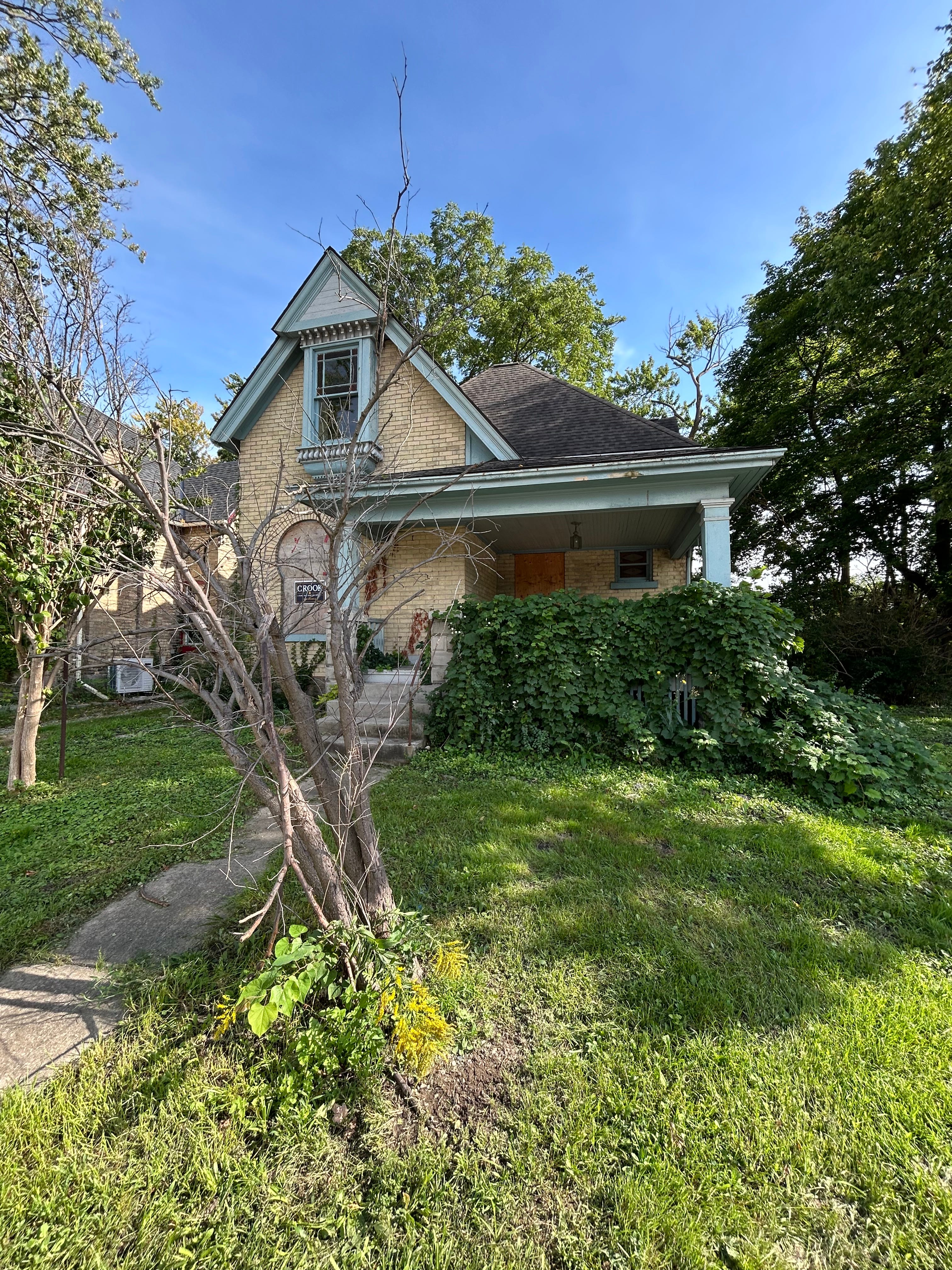
There is a tiny bit of the South London district that is a part of Ward 13. It’s like an island surrounded by the arteries that are Stanley Street and Wharncliffe Road. There are a lot of stately houses, many of which date back to the 19th century. In our city’s current affairs, the most prominent of those houses is located at 100 Stanley Street, at the corner with Wharncliffe Road. The house was most recently inhabited by Nan Finlayson, who faced expropriation centered on a proposed underpass project in which Wharncliffe Road South would be widened to four lanes under the CN tracks. The house has remained vacant and boarded up since 2020, when Finlayson sold the house to the City of London to move elsewhere.
Also in Ward 13’s portion of South London is the HMCS Prevost Naval reserve building, which has been in operation since 1938. There is a Battle of the Atlantic exhibit facing the Thames Valley Parkway which wraps around the building.
Southcrest
Cedric writes
There is also a portion of the Southcrest district in Ward 13. This is mainly made up of Evergreen Avenue and Riverview Avenue, but there are a few interesting points in this tiny little island.
At 54 Riverview Avenue, there is a two-storey building that was once owned by the Salvation Army named Bethesda House. It was a shelter for mothers and their newborn children. Notably, in 1994, a 17-year-old Patti Mallette and her newborn son, Justin Bieber stayed at the building for the latter’s first days as an infant. The building closed in 2012 and is now owned by the London Health Sciences Center, used for the Adult Eating Disorders Service.
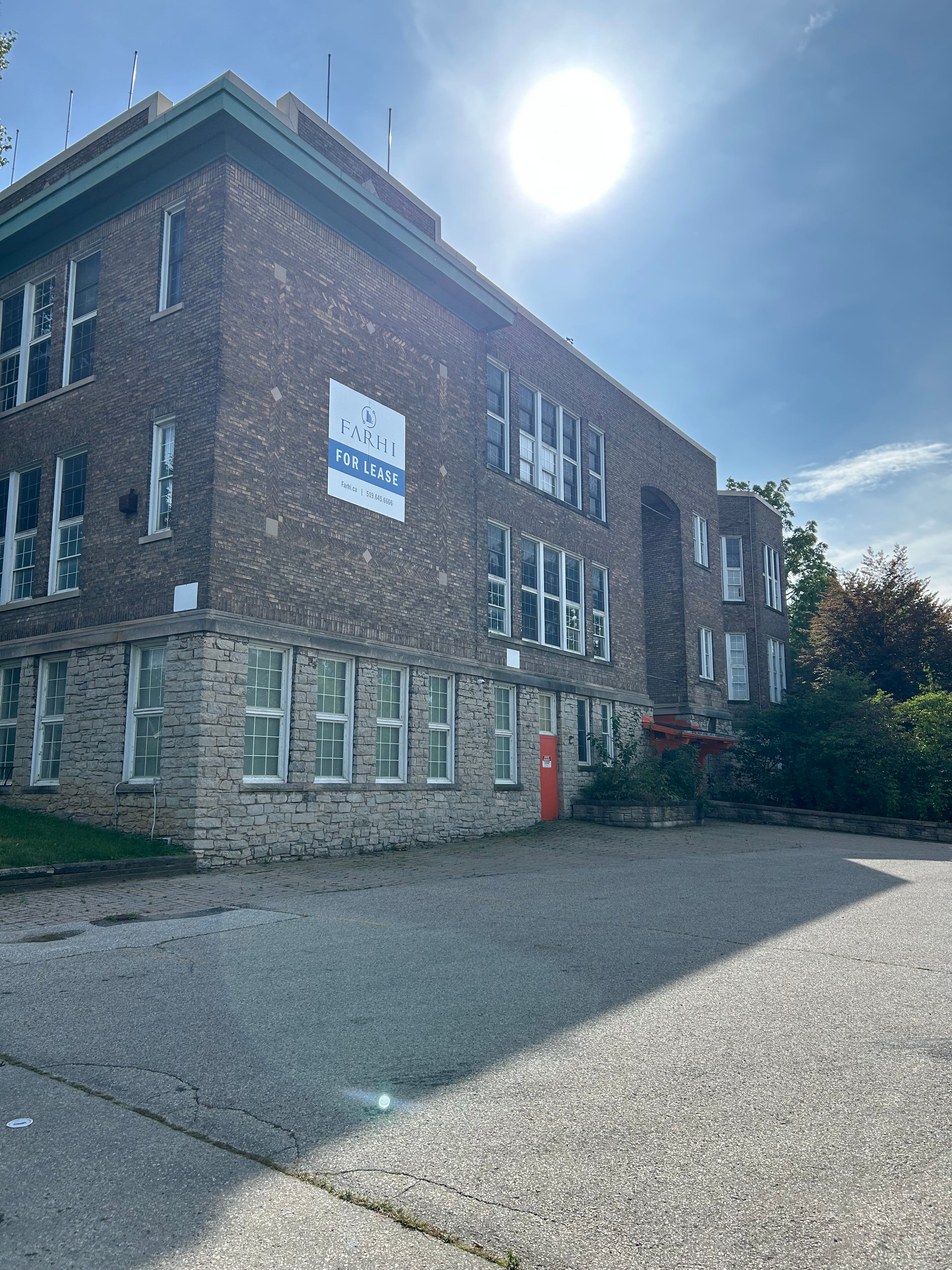
21 Wharncliffe Road South was the home of Riverview Public School from 1915 to 1982, and later the Children’s Museum. I visited this building a few times for school field trips. Into the 2010s, the building hosted the Grickle Grass music festival. In 2014, the property was sold to Farhi Holdings Corporation and then the museum moved to 100 Kellogg Lane in 2024.
Riverview and Evergreen meet each other and from that intersection is the continuation of the Thames Valley Parkway. This pathway runs to the west end of London through a tunnel named after Greg Curnoe, a legendary Regionalist artist.
West London
Cedric writes
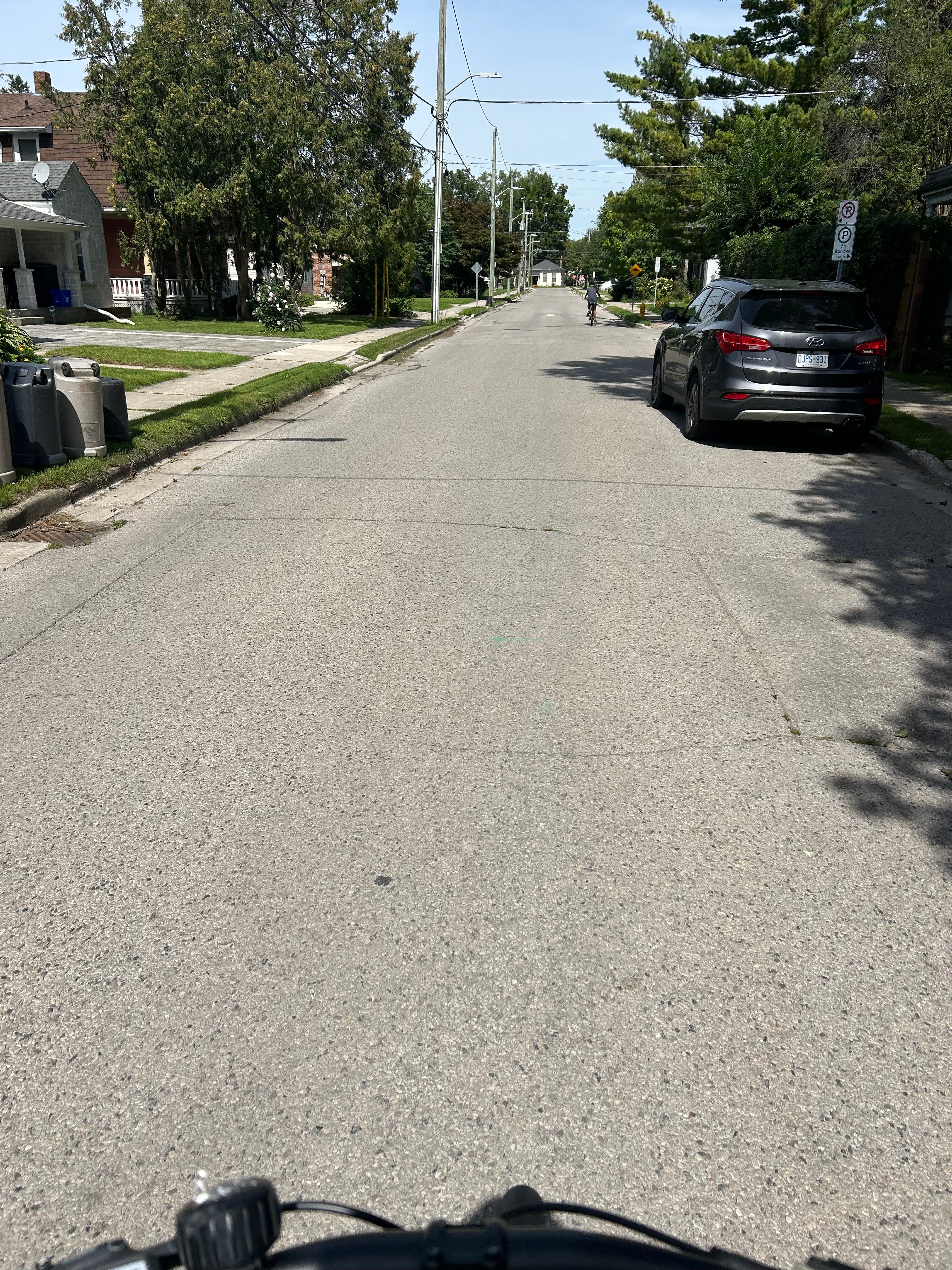
West London is located immediately west of the forks of the Thames River. It includes neighbourhoods such as Blackfriars and Oxford Park, as well as the high-density residential buildings along Proudfoot Lane.
Blackfriars is just outside of downtown to the west. Much of it is centred along Blackfriars Street, an extension of Ridout Street North. Formerly the village of London West, it was annexed into London in 1897. It was designated a Heritage Conservation District in 2014. The neighbourhood is connected to the downtown via the iconic Blackfriars Bridge. In the south end of the neighbourhood is Labatt Park, the oldest continuously-used baseball grounds in the world, and the home of the London Majors baseball team.
Oxford Park is another one of the older neighbourhoods in West London. Across from Cherryhill Village Mall, is Eagle Heights Public School. It first opened in 1949 as Oxford Park Public School. 55 years later, it merged with Empress Public School to become Eagle Heights on the old Oxford Park site. In 2005, I was among dozens of students who became the first graduating class of that school. Today, it is Thames Valley’s most enrolled elementary school, and the only one across the entire “Valley” where enrollment has surpassed 1,000 students. It’s indicative of the west end’s struggles with population growth.
Further west are streets like Proudfoot Lane and Beaverbrook Avenue. This is a cluster with apartment buildings and is the densest part of London outside of the core. Growing up, most of my classmates were immigrants from Southern Europe and Southwestern Asia, and their first homes were in apartments along Proudfoot and the surrounding area.
In the northwestern corner of the ward is London Mall, located at 530 Oxford Street West. During my childhood, I remember the mall being anchored by a K-Mart, which was replaced by a Sears Outlet Store. The Sears store endured for nearly two decades before closing in 2016 much like the rest of the company within Canada. There were a few years that the mall was a desolate place, but that changed with the opening of Food Island, an Asian supermarket. Food Island closed in 2023 and was replaced 18 months later with the Loblaw-owned T&T which fills a similar niche in London’s supermarket market. London Mall is busier than ever, with little vacancies. The parking lot has been used in recent times as the site of an Asian night market and high-rises are proposed for a portion of the lot.
And finally, I cannot forget about the McDonalds beside that mall. Owing to London being a longtime spot to test out products, this was the first McDonalds restaurant in the eastern half of Canada.
Central London
Cedric writes
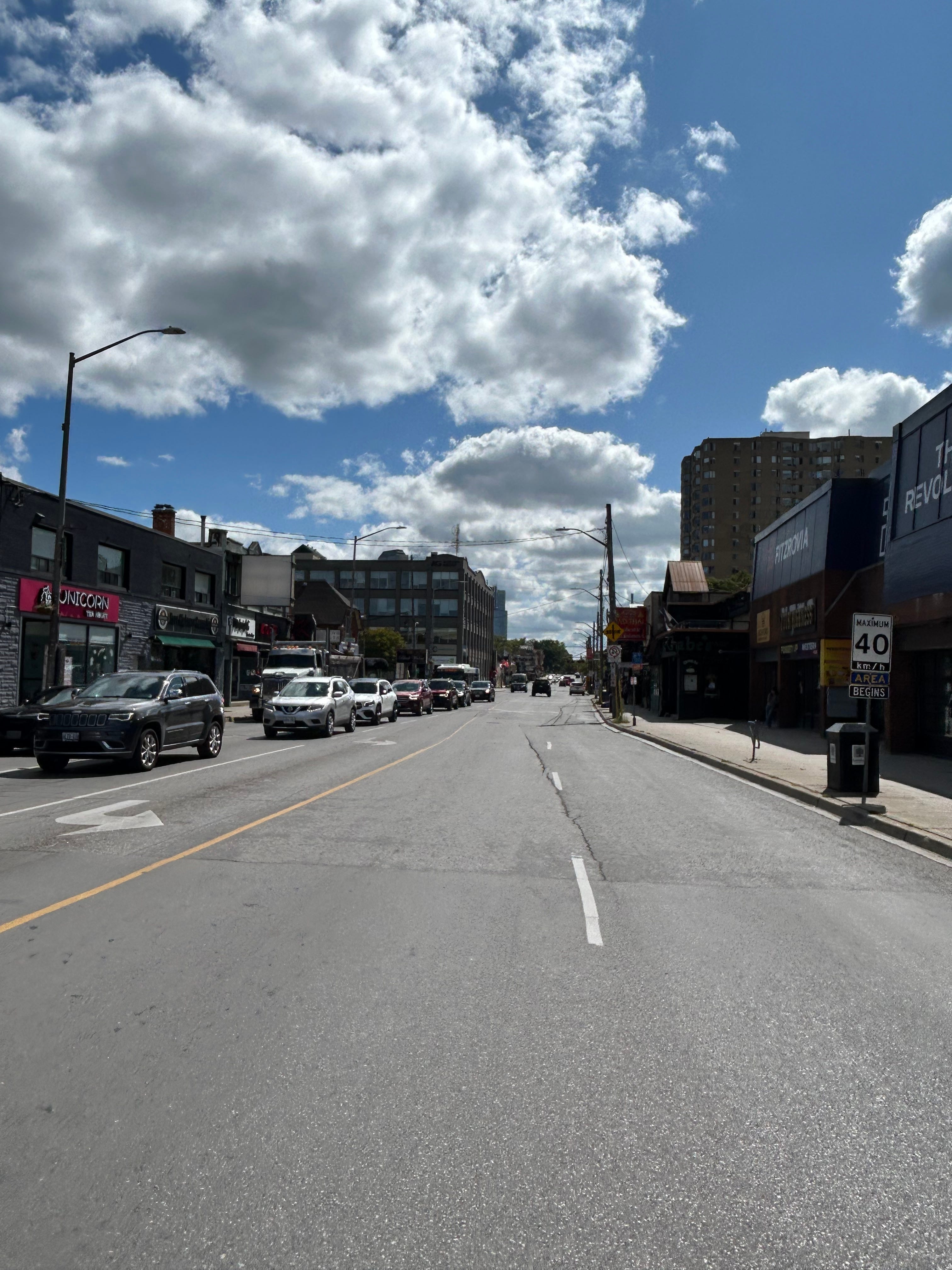
We’ve saved London’s most central district for last. Central London consists of Downtown, Woodfield, Piccadilly, Soho, and North Talbot, and all of the microneighbourhoods in and around the core.
Downtown is the centre of it all in London. Its course has followed the same as the central areas of other Canadian downtowns. It was the centre for shopping, then suburbanization caused retail and residential to flee for the outer edges of our cities. Then, somewhere along the way, cities have to find new ways to reinvent the downtown as a community of its own.
None of this is more obvious than the evolution of Citi Plaza. It opened in 1960 as Wellington Square as one of the first enclosed shopping malls in this part of the province. Two decades later, it was rechristened as London Eaton Square, becoming Galleria London by 1989 and doubling in size. As soon as Galleria opened, retailers quickly fled within a few years for the suburbs. In 1997, a GoodLife Fitness location opened in the basement of the mall as a harbinger of things to come. In 2002, the Central branch of London Public Library reopened in the former Hudson’s Bay site. In 2009, Galleria was rebranded as Citi Plaza, marketing itself as a mixed-use building. Today, retailers and other services have trickled out, rendering much of the mall as various offices, the Middlesex-London Health Unit, the library, GoodLife, and Imagine Cinemas. The mall is a bright place during the hours that it is open, as evidenced by all of the skylights. But many of the corridors are empty, like a blank canvas waiting to be painted. I feel that despite the issues with downtown, there is nowhere to go but up for a centrally located building like this one.
The major arteries of activity in the downtown are Dundas Street and Richmond Street. Dundas between Ridout Street and Wellington Street is known as Dundas Place, which was reconstructed as a flex street in 2018, with seamless curbs. Many Londoners know that it is occasionally closed to vehicles for events, but that can be reframed as the street being open to people. Richmond Street in much of Central London is better known as Richmond Row, and is home to many of London’s upscale restaurants and retailers.
In the northeast of Central London are places like Woodfield and Piccadilly. In 1993 and 2008, the east and west halves of Woodfield were respectively designated as Heritage Conservation Districts. It is a wonderful place to be any time of the year, with tree-lined streets making for a perfect background of a stroll or jaunt. Here, I enjoy walking through Piccadilly Park and along streets like Princess Avenue with a cup of coffee from Motive Espresso. The dominant building in this area is our City Hall, which is the seat of our municipal government. The present building opened in 1971 as part of a campus that includes Centennial Hall, Centennial House, and Reg Cooper Square in between. There is much discourse on the future of city hall, but nothing has materialized into concrete plans.
SoHo stands for “south of Horton Street”. Inspired by an area of the same name in the West End of London in England, Soho is another fascinating place in Ward 13. It is bounded by the CN tracks, Adelaide Street, and the Thames River, with Horton and Wellington Streets as the arteries. It was originally London’s most culturally and ethnically diverse area with white people, racialized people, Indigenous people, and immigrants all living together. One long-standing institution was the former Victoria Hospital located on South Street. Formerly a centre of medicine for over a century, the campus closed in 2013. Ongoing is a redevelopment of the hospital’s properties into housing both non-market and market. Village SoHo (formerly Vision SoHo) is a coalition of non-profit companies and homebuilders who came together to build affordable housing in the area. Like many Londoners, I am excited when people come together for the better of a community and I cannot wait to see what the neighbourhood looks like when Village SoHo is fully built out.
Part 3: Politics of Ward 13
2014 results
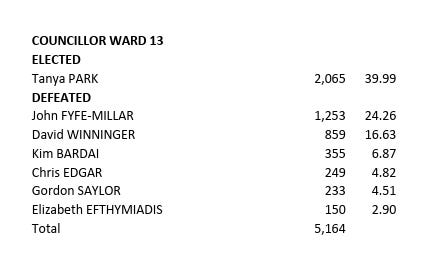
2018 results
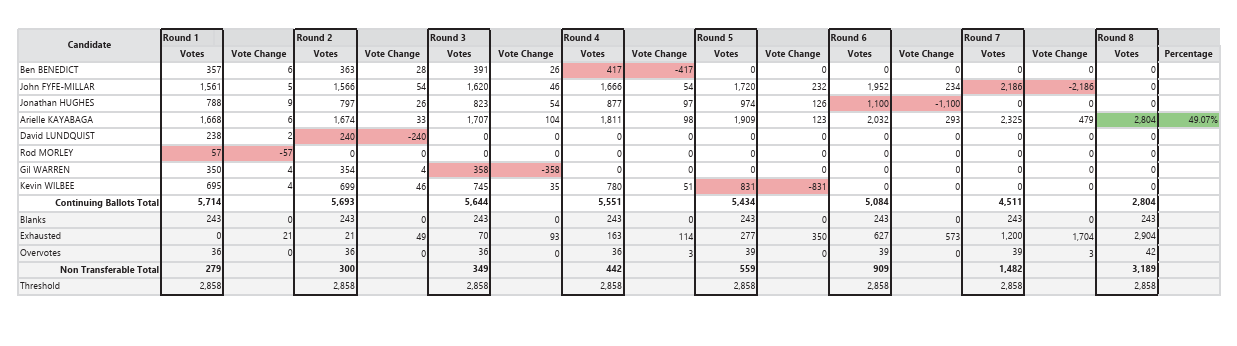
2022 results
Mike writes
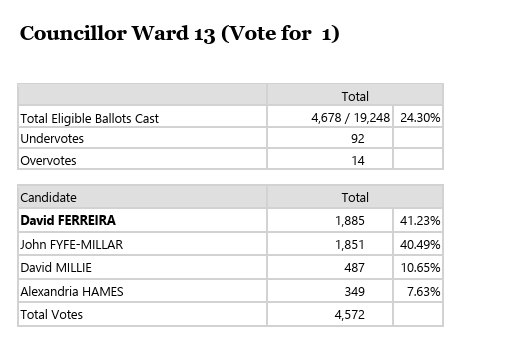
I call this ward “the poisoned chalice” and think the drama is well-deserved, because downtown’s needs are a special kind of problem. It’s an area with a lot of ordinary working folks, plus some ancillary neighbourhoods, and it tends to produce councillors who are gently left-wing and well-meaning. And, it’s an area with endless social problems and ways to attack it, so it’s next to impossible to defend while recognizing its problems. This has led to a series of high-profile councillors with varying levels of impact.
This time, incumbent David Ferreira is defending a wafer-thin majority of 34 votes, though his past opponent, John Fyfe-Millar, isn’t running again. That was an unusual contest: Fyfe-Millar is a local businessman who was appointed by council and not elected. This race was complicated by several factors, including that appointment process, as CBC London reported at the time. Fyfe-Millar lost out to Arielle Kayabaga in the polling in 2018 - a long process there, due to the proportional representation system used as a one-off - and was, to some extent, appointed as a second-placed candidate. (He was also second to Tanya Park, later a mayoral candidate, in 2014.)
This time Ward 13 is even more complex but for different reasons: Ferreira has no fewer than six challengers, for a seven-way contest that’s tough to analyze. Among the challengers, Andrew Crook has plenty of signs out, and I see other names around, such as Tony Biviano, but it feels wrong to pick anyone out of that crowded field of fairly-similar platforms. Perhaps the Ward 13 All Candidates Meetings, which is this Saturday, will help.
And Ferreira is defending a record. He has a profile and doesn’t hesitate to speak out. Two recent examples are his opinions on drug addictions and safer supply, which you can read here, and a remarkable moment when he led the way with comment about developers’ donations to other councillors.
So Ward 13 is hard to call, and interesting to watch. Ferreira can keep it, with strong messaging and lots of campaigning.
A full list of Ward candidates is maintained by the City Clerk’s Office here. And you can find a guide to every ward in our MEGAPOST here.
Part 4: In the news
Mike writes
Oh my goodness, where do I start? Downtown is the focal point of London, producing storytelling from major municipal, business and social nodes in the system that supports us all. If we focus on Ward 13 itself, we’ll pick up a few, and this 14-part series has certainly shown commonality in issues across all the wards. This is as subjective as it gets, but I’ll share a few stories for a taste of the ward and those issues.
OK, maybe there is a good place to start: the $48 million Downtown Master Plan, designed to revitalize our city’s core. Here’s CTV.
The issue of infill housing, and related discussions about density & intensification, is city-wide, and it utterly dominates any planning conversation downtown. There’s a whole article in rounding up the various high-rises and other plans - such as 30 storeys at Ridout & Kent - and it’s very tough to keep track. However, this piece from a construction industry publication lays it all out well, though it is from two years ago so watch the details. Short version: towers everywhere.
Of course, homelessness is the major issue in Ward 13. Here’s a recent LFP piece from the very edge of the ward that discusses the challenges with encampments.
On the general environment and use of downtown, Here’s a CBC story I shared before, which I enjoy. It’s about creating London’s River District.
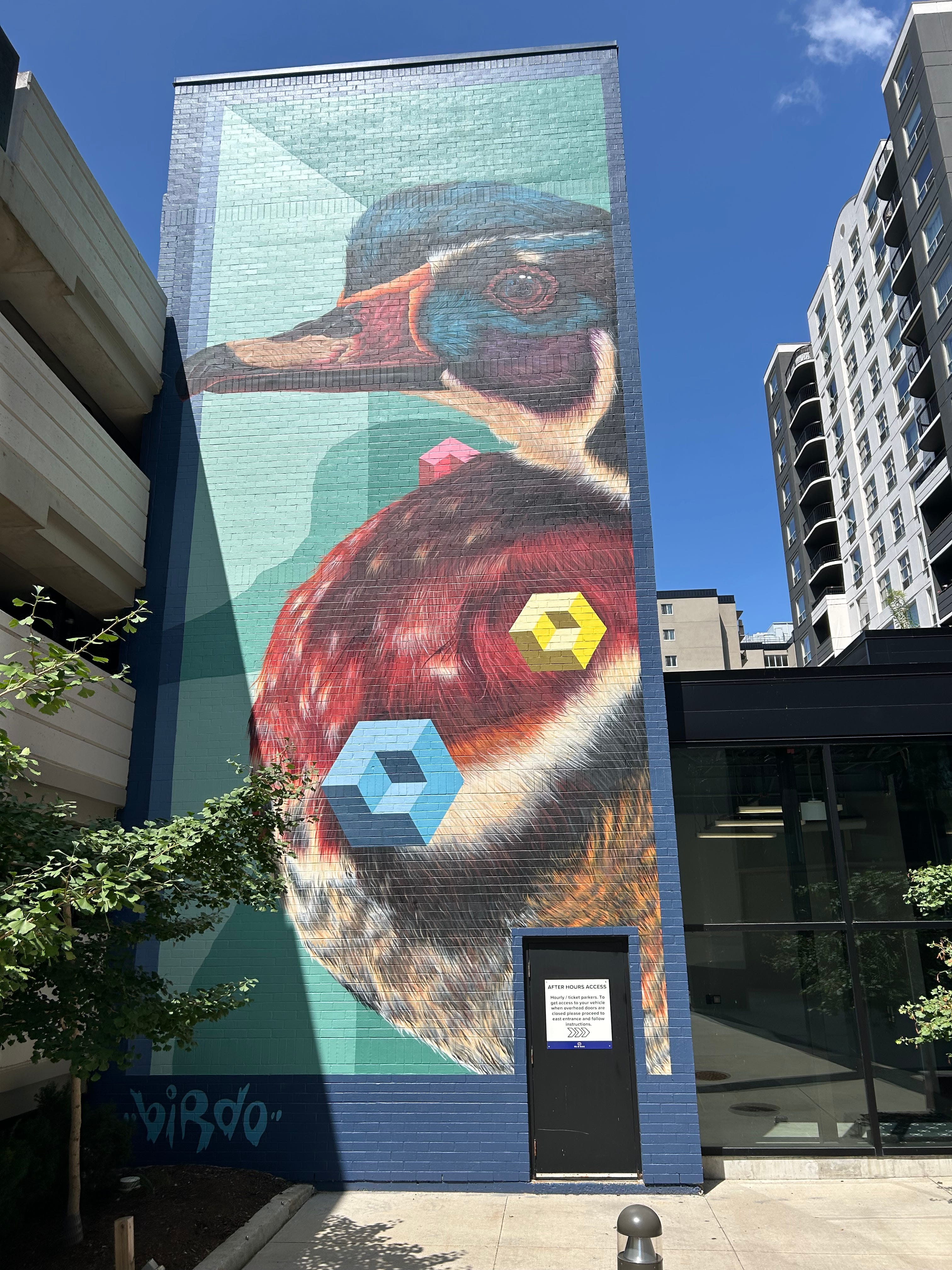
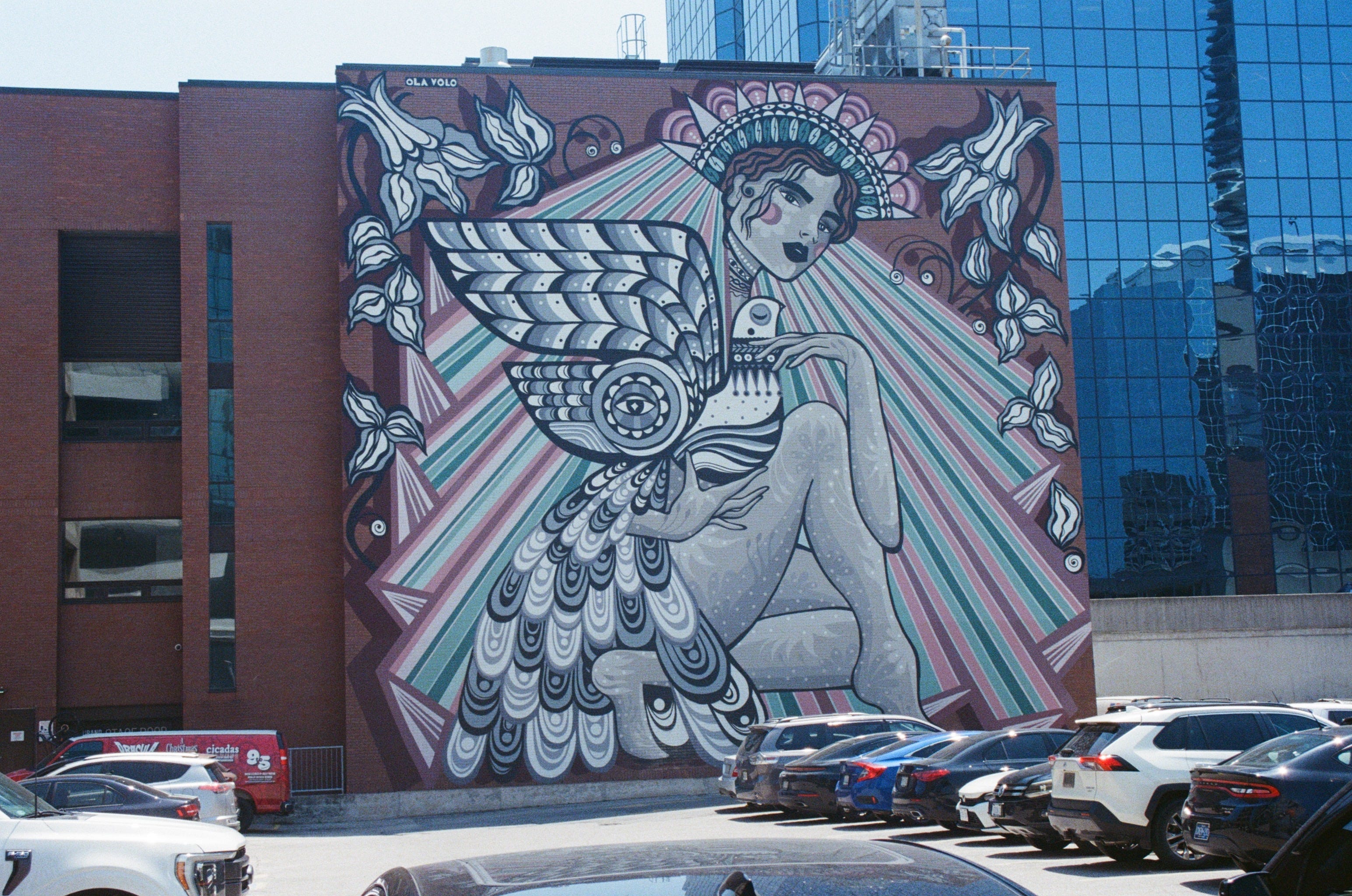
And there’s a push for public art, with various initiatives to enjoy. This has been reported in a few places but is well told in the press release.
Watch your step downtown, of course. There was this recent sinkhole, and of course that time the steam heating caused the sidewalk to explode.
Let’s end on a positive. The London Free Press did this great story about all the places to shop downtown - more than 60 of them.
I could go on. It’s an area that overshadows all narrative and generates all kinds of opinions. I really love downtown London and would encourage everyone to spend time there.
Part 5: And there’s more…
Our restaurant pick
This ward has no shortage of restaurants. Unlike in previous wards, where it was a challenge to find a good locally-owned place to eat, the challenge here was fun to think of just one place to find.
The Early Bird is the place you have to eat at. Owned by the Wolfe Brothers, it is one of my favourite restaurants in the entire city. I’ve always left full and satisfied, and the portions are so great that I always have had to request a box for takeaway. During my 20s, there was a string of years where I would visit every New Year’s Day for brunch. I’m not sure how it came together or why it ended, but it was always a great place to be in the core.
The unmissable landmarks
Blackfriars Bridge
This bridge is a wonderful piece of history. Blackfriars Bridge is a wrought iron truss bridge that was built by the Canton, Ohio-based Wrought Iron Bridge Company in 1875. The bridge is the longest of its kind in operation in North America, and one of the oldest still in use.
Between 2013 and 2018, the bridge was closed to traffic while a solution was formulated on how to refurbish and upgrade it. For much of those five years, only pedestrians could access the bridge. Blackfriars re-opened to all modes of traffic in December 2018 in a cold but memorable ceremony, bringing together downtown and West London once again.
One London Place
Located at the corner of Queens Avenue and Wellington Street, this office building opened in 1992, having been developed by Sifton and designed by Crang & Boake. Until 2023, One London Place held the distinction of London’s tallest building when the construction of the south tower of Centro displaced it. One London Place remains the tallest of the non-residential buildings. There was to be a “Two London Place” constructed in “One”’s vicinity, but the recession that was underway in the 1990s shelved plans indefinitely.
Victoria Park
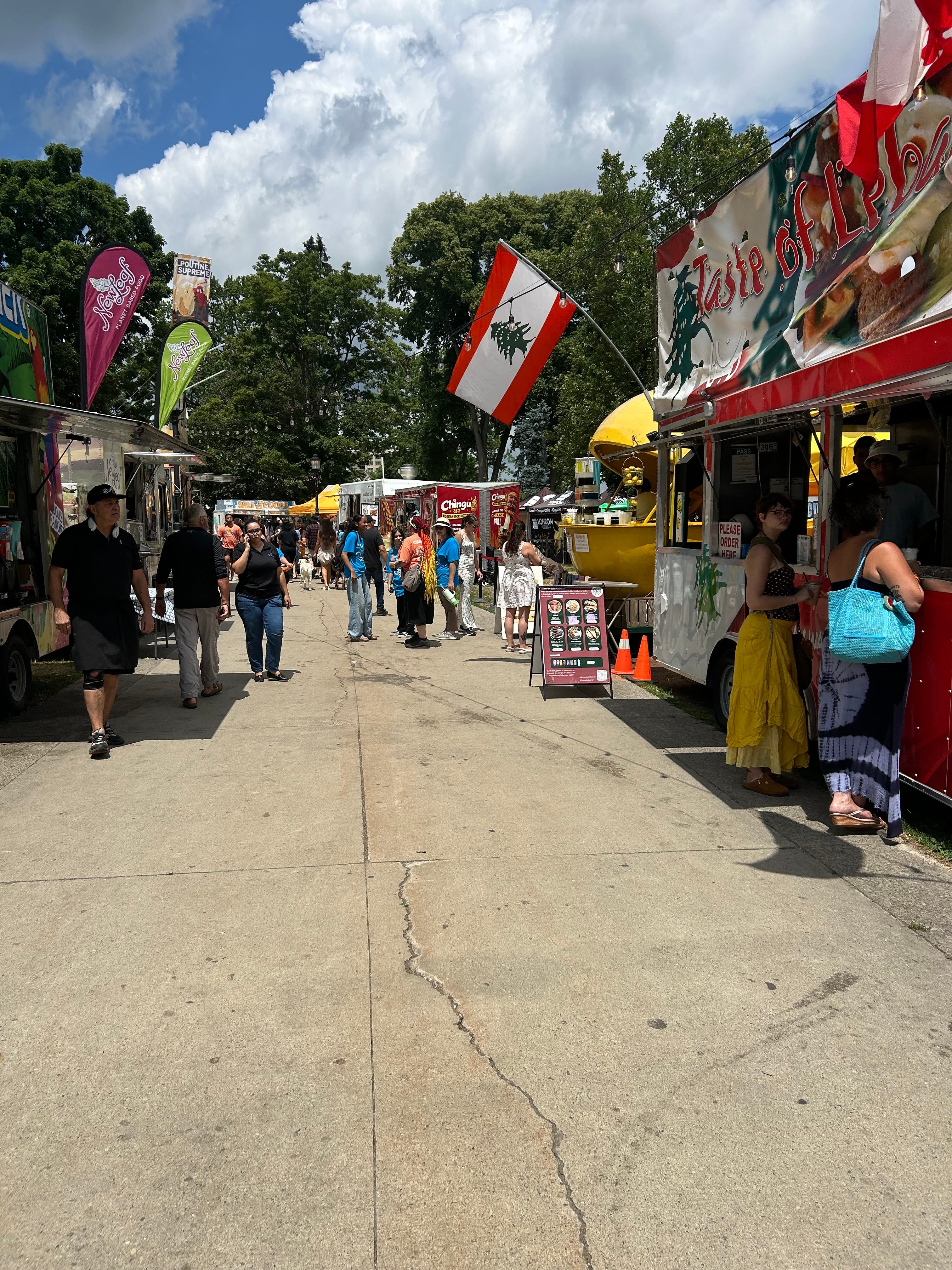
Formerly the site of the British garrison nearly two centuries ago, the 18 acres between Richmond and Wellington Streets became a public park in 1874. I enjoy Victoria Park at any time of the year. Whether it is a stroll during the shoulder seasons, or skating in the winter, or one of the festivals that runs in the summer, it is a place that I always look forward to going to.
That’s Ward 13
And that’s how we see it. We came from the suburbs, paid for parking at Ridout and Horton, went through alleyways, nooks, and crannies, up to the 12th floor, back down to the ground floor, and we offer you this guide to what it’s all about.
The Cedric/Mike teamup is now complete! We looked at all 14 wards, from the start of June to the middle of September, and hopefully you learned a new thing or two in each of our profiles. We explored every corner of the city and brought a fresh perspective on it. We, too, learned many things along the way and I want to share that with you going forward.
Next week, I want to take a look at what it all means for the city, and how it all comes together.
“See you in the next ward” will soon become “see you somewhere in the Forest City”.
And as always, I welcome any questions, comments, and suggestions on what to talk about and discuss each Tuesday.
I can’t wait to explore more of our city with you, together.
This is a great article. Thankyou for putting the time together to experience London and share your journey.
I know Nan's place well, and lived in Blackfriers for nearly 10 years.
I really liked your summary In part 4. I think the downtown plan is the crux of this election for informed ward 13 voters.
I would encourage them to read it.
I like the ideas of streamlining government, and leaning into the music city identity identified in the plan the most.
We are the forest city, what better place for a cultural hub in Canada? Nature, art, business, citizens working together.
I'm looking forward to the debates this weekend and meeting more of London.
Www.andrewcrook.ca for those interested in me 😀
I should probably update this substack profile too, lol. This is my independent research and writing account, but politics has a way of drawing it all in :)