



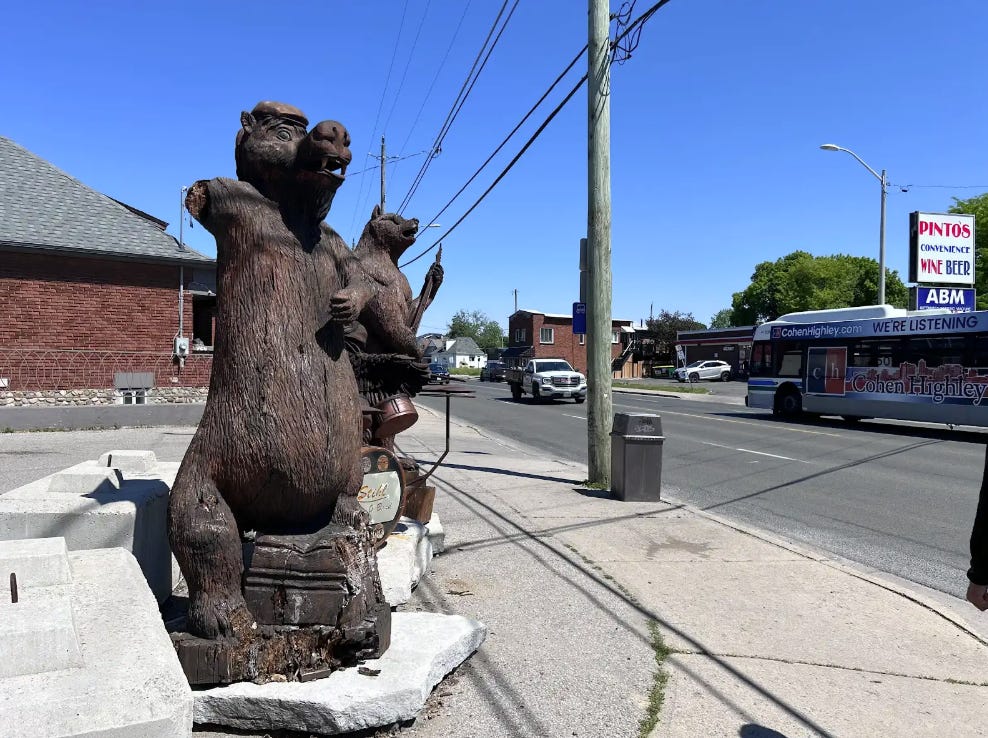
Welcome to Ward 1
We’re starting in east London for the first stop in our journey across London’s wards and neighbourhoods this summer, examining the recent history of our city’s disparate parts, and making sure to highlight that many wards have major changes to their boundaries in 2026.
Stretching across Glen Cairn, Hamilton Road, and East London, with the addition of Old East Village, Ward 1 tells an important part of the city’s story. It’s a community shaped by industry, railways, resilience, and generations of working families who have helped build London into what it is today.
You’ll probably know it from passing through, and maybe from a carved wooden tree trunk you like, or perhaps a restaurant or other business you visit. We think Ward 1 offers a rich perspective on the challenges, strengths, and character that define much of London - and all of the wards do that, individually and together.
That’s our challenge this summer: the story of London Ontario in 14 wards. Join us. We’re going by bike and by car, and we’re inviting Londoners into the conversation. Read on to find out more.
In this article
Introducing Ward 1
Around the ward by neighbourhood
A guide to the politics
Ward 1 in the news
And there’s more…
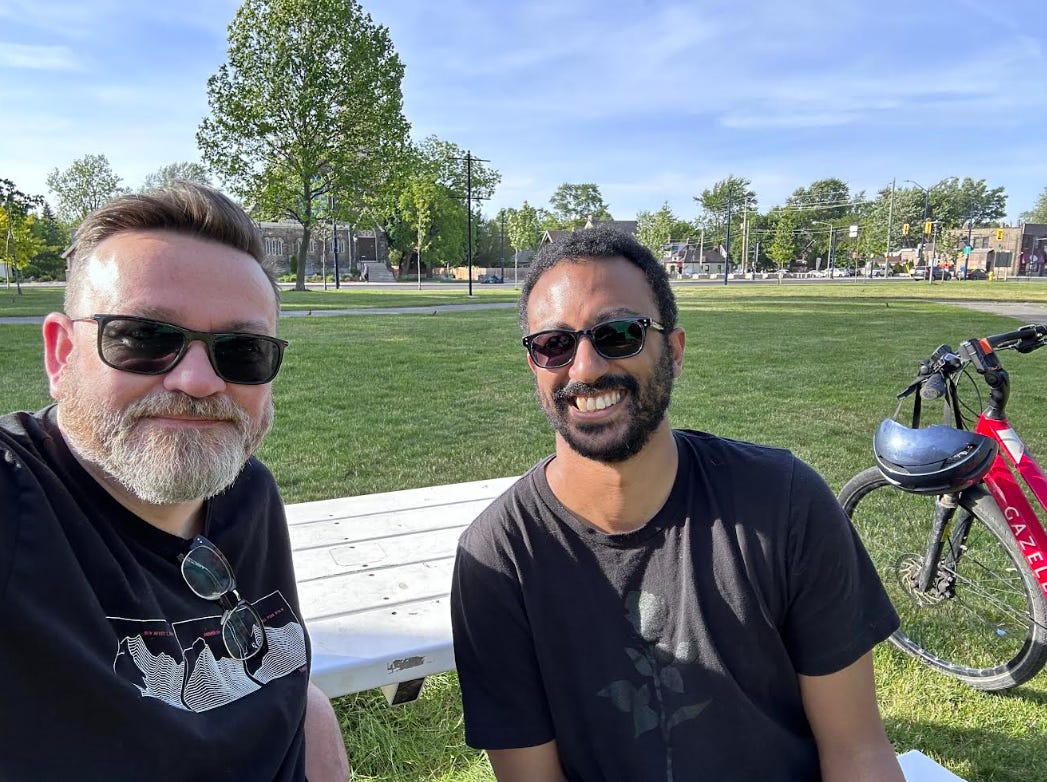
Cedric says:
I’m excited to bring you these first-person guides to each ward during this municipal election season. As most Londoners drive, I imagine they’re focused on getting from their own point A to point B. Outside of the vehicle, navigating through London, there is a city worth exploring from a different perspective. As a longtime cyclist and pedestrian, I felt that there was an untapped need for this view of the London that you will be shaping with your ballots this October. How you see your city depends on how you navigate it.
Mike says:
I’m excited, too, not least because I get to team up with Cedric Richards, who knows London better than anyone. I’m a driver, and a walker, and a wanderer-while-thinking, and I’m fascinated by different perspectives on the same problems. I’m looking for the stories that make our neighbourhoods unique, while contributing to the wider narrative of our city. It’s compelling to me and I hope we can catch people’s interest this summer as we take a really close look at London.
Every week, we’re visiting the ward to have a chat on the spot. Here are our musings together in Ward 1, where we got together in Queen’s Park, near the Western Fair. (You will hear the sounds of the park and nearby streets.)
Please let us know how we did, and send us any topics you’d like us to discuss.
Ward 1: Cedric and Mike in Queen’s Park
Cedric Richards and Mike Donachie got together in a local beauty spot for a chat about the area, its character, some recent stories, and the best sandwich in the area.
Part 1: introducing Ward 1
Ward 1 - Glen Cairn, Hamilton Road, East London
Population - 34,766

Cedric writes
The modern-day Ward 1 was created in 2006 from much of the old ward 4 and a northeast chunk of Ward 5. From 2006-2010, Ward 1 consisted of Hamilton Road, and much of rural southeast London east of Highbury Avenue South. In 2010, that rural portion was transferred to Ward 14, and Ward 1 added the Shelborne Street area.
The ward for the 2026 municipal election will see two substantial changes. Staff and consultant recommendations will see Ward 1 inheriting Old East Village from Ward 4. A council amendment ceded the Rowntree neighbourhood to Ward 11. These combined changes led to Hadleigh McAlister claiming that the city was “shaft[ing]” Ward 1.
Class is a defining demographic of this new ward; the planning districts of East London, Glen Cairn, and Hamilton Road place in the top half of districts that have the lowest incomes. These planning districts also have among the highest populations of Indigenous people in the city.
Trains also define Ward 1, with the train yards of both major railroad companies at both ends of the ward. The ward touches the city limits a tiny bit, bordering Thames Centre between the CN tracks and the Thames River, where River Road becomes Catherine Street.
I know this ward very well. From 2013 to 2025, comprising the majority of my adult life, I lived here. From 2014 to 2016, I represented the ward on the then-London Youth Advisory Council, a shadow city council that promoted youth interests in London.
Part 2: Around the ward
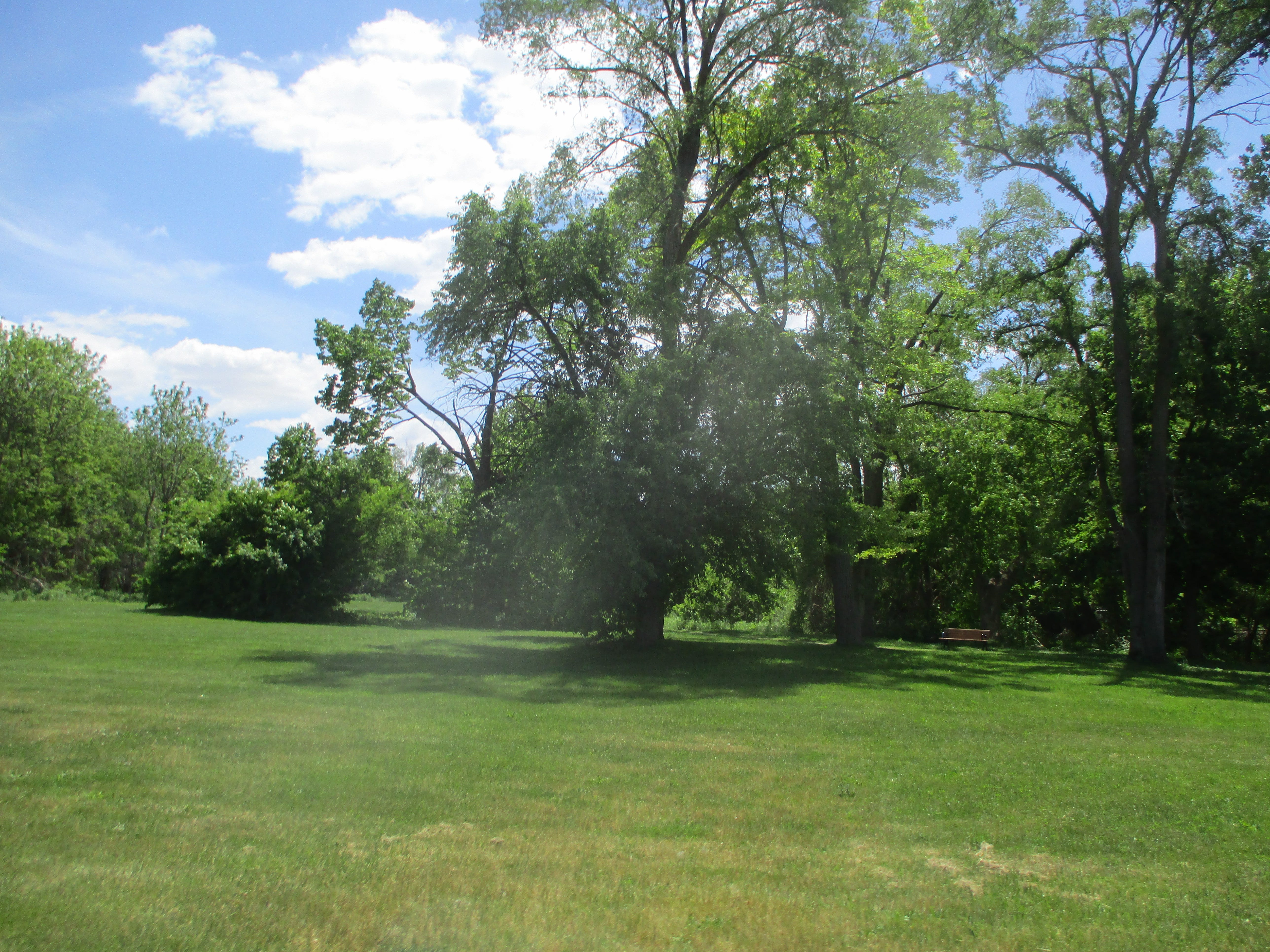
Glen Cairn
Cedric writes
As a former Ward 1 resident, you have to remind people of all stripes, whether or not they follow the news that Ward 1 also includes Glen Cairn. Well, part of it. When I moved to this area in 2013, I mistakenly observed that I’d be moving to Ward 14. However, Ward 14’s northern boundary is Commissioners Road East. For all the talk about protecting communities of interest every time council reviews wards, Glen Cairn has been cut in half since 2006. We use the same strip malls, we visit the same parks, we cross Commissioners Road back and forth each day, we visit the ponds, but we’re split between two wards.
The oldest and most prominent area in Ward 1’s part of Glen Cairn is Chelsea Green. Chelsea Green was annexed into London from Westminster Township in 1912, as part of the city’s drive to meet a population target in order to allow Sunday streetcar service.
It’s really interesting, the farther you get from downtown, the less frequent you see that gridded street pattern. Chelsea Green is one of those rare outer areas where the grid is still intact. It disintegrates as you go further east. Another thing that gets rarer is the mix of buildings and uses in a neighbourhood, because planners now insist on the concept of nodes and corridors to direct new buildings. Westlake Street has a church, Helena Avenue near the Base Line extension has a junkyard, the soon-to-be-shuttered Wheable adult education centre is on Jacqueline Street beside another church. There are four variety stores along Thompson Road, one of which is Hernandez Variety; it has a wonderful selection of foods from Central and South America. Take in the diversity of buildings; I surmise that you couldn’t create this type of neighbourhood today.
The area is also proof that the suburbs can exist alongside green space and natural beauty. Glen Cairn Park sprawls throughout Chelsea Green, from Thompson Road to the Base Line extension, and from Pond Mills Road, you can see the Thames River clear as a pane of glass.
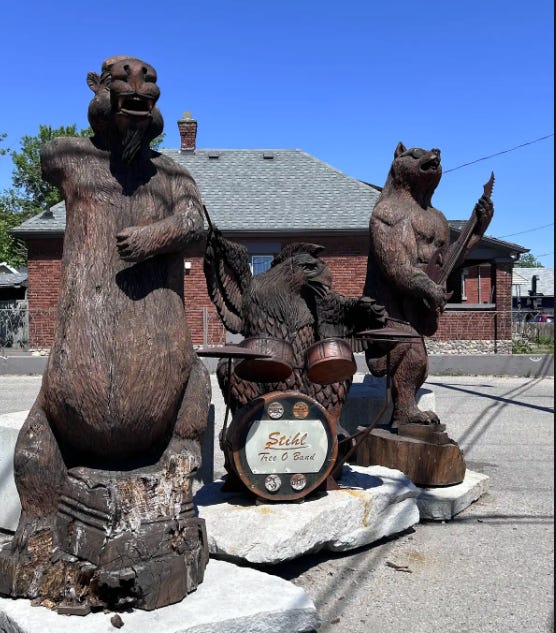
Hamilton Road
Cedric writes
You can never talk about Ward 1 without talking about the Hamilton Road Corridor. Every councillor elected since 2006 has either lived in the area or worked with local businesses along the road. Hamilton Road became a part of my everyday life as I would bike along the Vauxhall Bridge and get an underrated view of downtown at the river, or I would walk the kilometre to Hamilton Road to catch a more frequent bus to the core.
Hamilton Road traverses much of the southeast portion of the city, running from just outside of downtown to the east city limits. It runs on a diagonal between Maitland Street and the Thames River’s South Branch, rarely intersecting with a street at a 90-degree angle.
When you’re thinking about Hamilton Road, you’re often thinking about that segment from Adelaide Street to Highbury Avenue. It falls within the jurisdiction of the local Business Improvement Area, and is largely mixed use strips of shops on the bottom floor with residences on top, or houses. Schools dot the corridor too, like Trafalgar and Ealing.
There are a lot of interesting small businesses that populate the area, some of them founded by Portuguese families, and a few of them are among my favourite restaurants in the city. I stop in now and then inside these places, because I’m reminded that there is a city begging for the attention of people like you and me.
As a cyclist, travelling through this corridor is a daunting task. Hamilton Road is sandwiched between the CN tracks to the north and the Thames River to the south. It limits the ability to cross the corridor anywhere. Crossing the tracks, the Adelaide and Highbury overpasses are mainly built for cars, and there’s a mathematical chance that you might get stopped by a shunting train on Egerton, making Hale Street the best bet to go over the tracks. At the river, Meadowlilly seems like the best alternative on safely crossing the river. Hamilton Road is either two or four lanes depending on who’s parking; it surely cannot be both.
But why not take the Thames Valley Parkway? Between Adelaide and Highbury, the Parkway is shrouded by trees like some leafy canyon. From personal experience, that leads to visibility and safety issues in which the only eyes on the path are whoever is immediately close by. Imagine having some kind of incident happen to you in this area and nobody watching. And I can testify about this - it’s happened to me a few times where I was quickly able to remove myself from the situation. People less privileged than I am (read: able-bodied men) may not be so lucky.
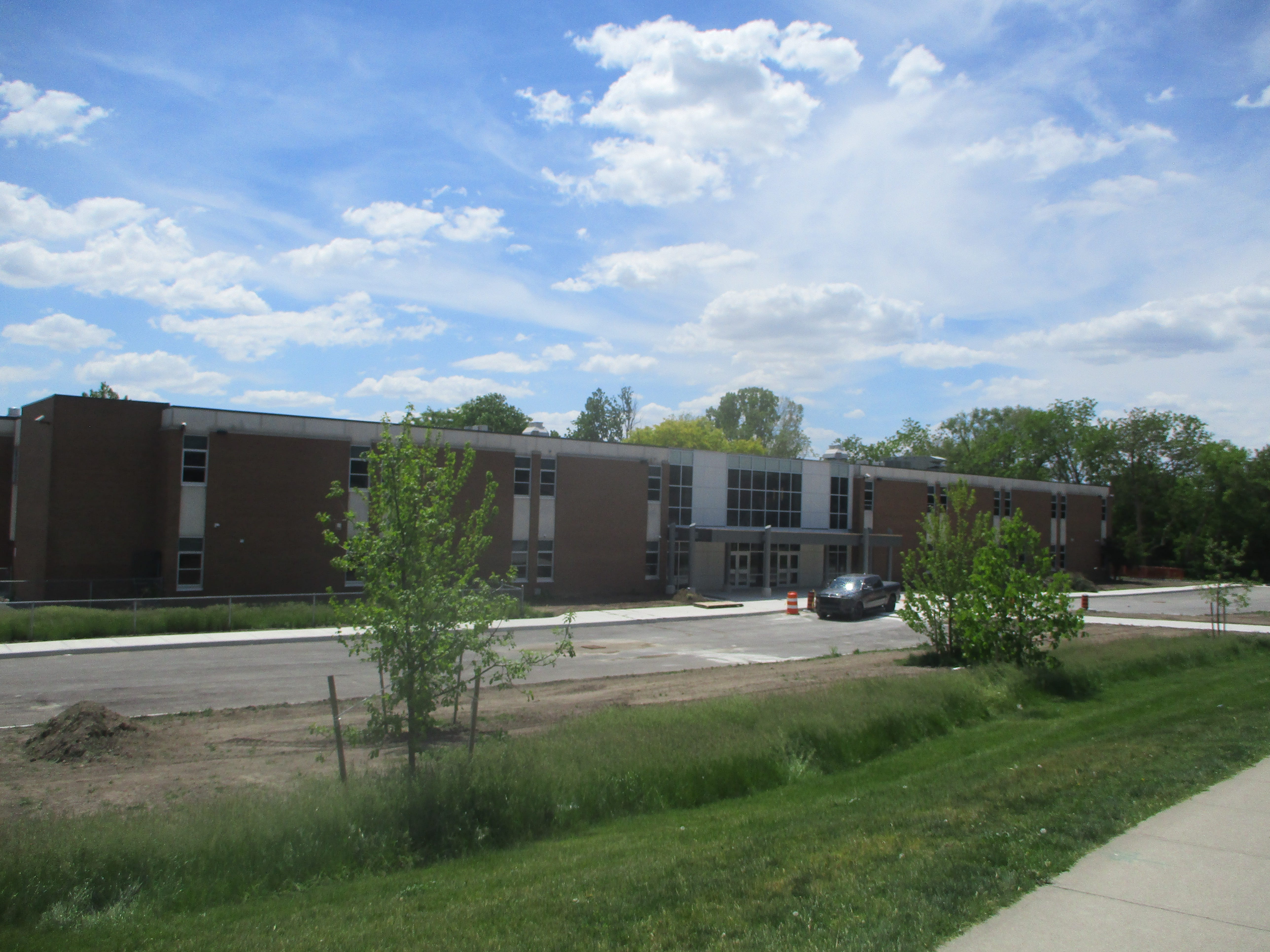
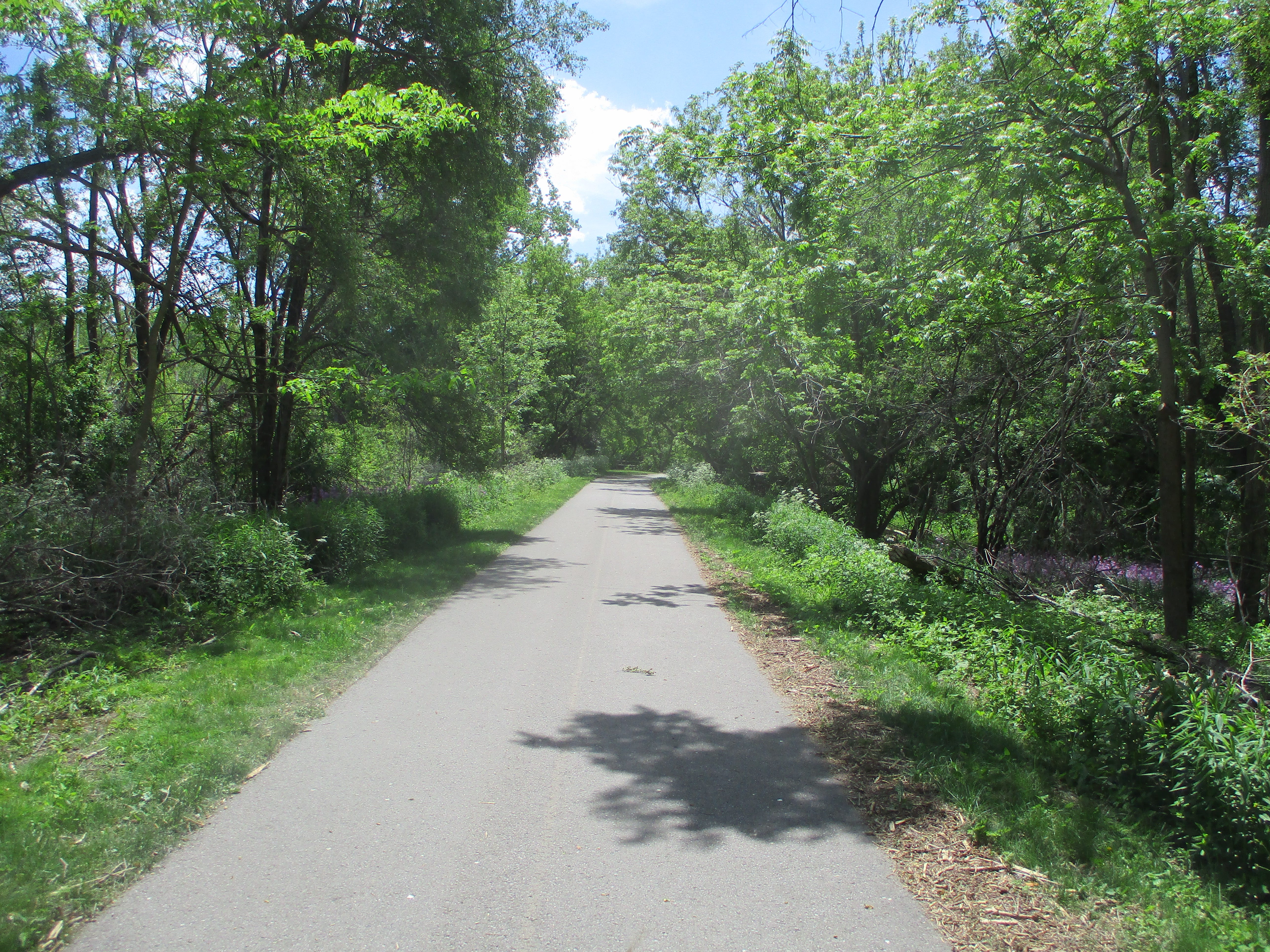
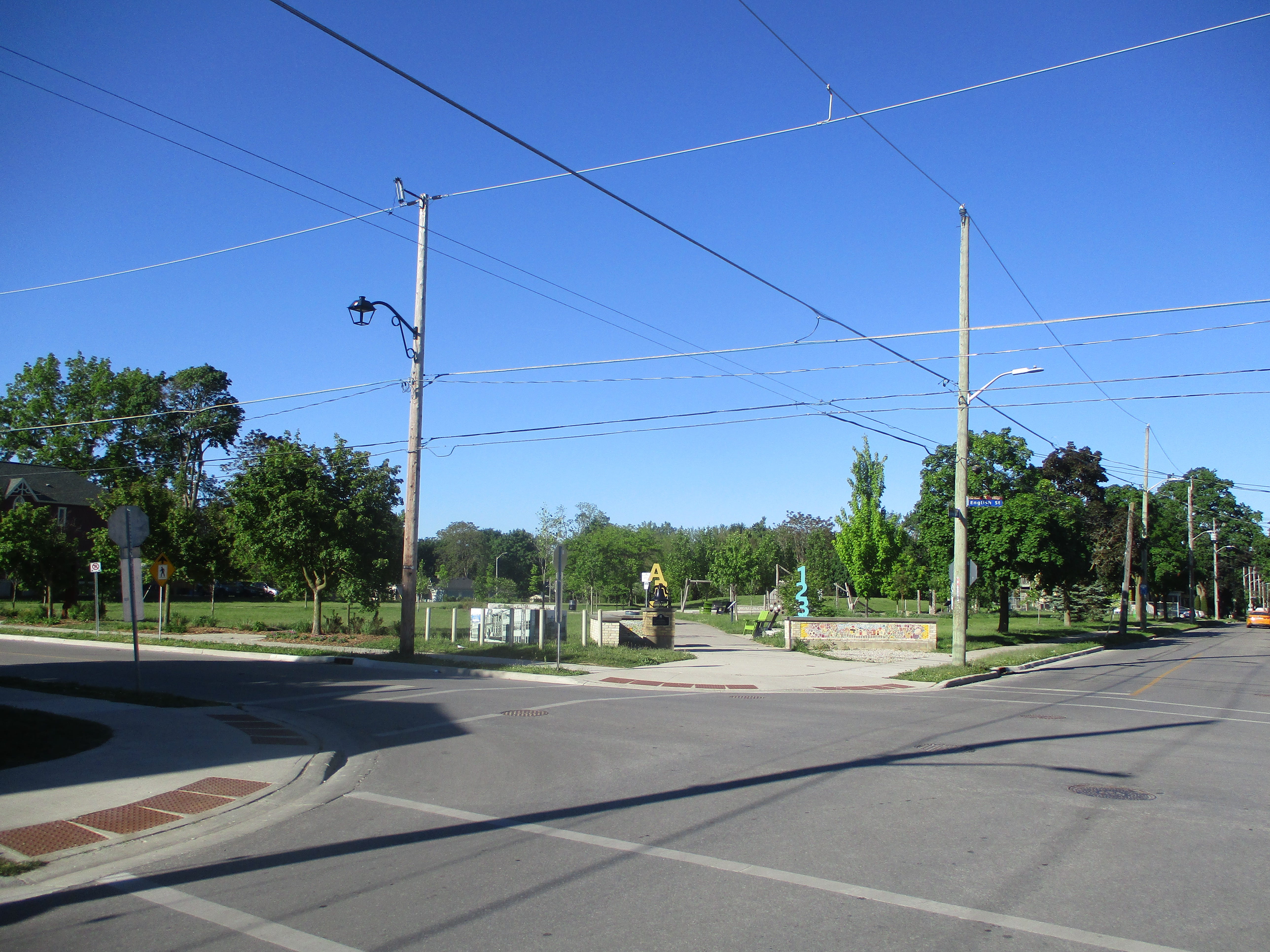
Views around Ward 1
Old East Village
Cedric writes
The city’s ward boundary review’s biggest surprise, in my opinion, is the addition of Old East Village to this ward, shifting part of the northern boundary to a different set of railroad tracks, the CPKC tracks.
For 12 years, going between my home and Old East Village was a near daily task. I remember having to merge into single file traffic, depending on where the bike lane was, and hoping and praying that I wouldn’t be caught at a train crossing near the train yard on Egerton Street.
Old East Village has its origins as Lilley’s Corners in the old London Township. Lilley’s Corners eventually became the Town of London East. London East amalgamated into London in 1885. Adelaide Street was a common border for the two municipalities. When we talk about municipal amalgamation in Ontario, this deserves attention as much as the amalgamations of Toronto, Ottawa, and Hamilton. The city limits no longer runs along Adelaide, but for people, generations removed from 1885, treat that street as a psychological border, often thinking twice about crossing it.
It’s so tough to write about the area without mentioning the visible poverty and homelessness that is prevalent in the neighbourhood, with the arguable saturation of social services along Dundas Street. It’s a common thing throughout East London; that half of London gets its hands dirty so the other half stays clean. Most places will balk about taking care of our most vulnerable, but East London is expected to do so without complaint. You see the results of that policy play out, especially on Dundas Street between Adelaide and Rectory. And it reverberates through the neighborhood too.
But it also feels like home to me. During my childhood, I remember going to the Melody diner for breakfast with my brother and my late father, and popping into the Goodwill shop after. Not far from my current house, Old East Village is just a short bicycle ride away. For the last few years, I have started my day grabbing a coffee and baked goods from either DoughEV or Artisan Bakery. I know my baristas on a first name basis. I’ve been invited to block parties, and parties of all kinds, yard sales, and even though I did not live in the neighborhood, they adopted me as one of their own. A lot of my friends live in the neighborhood. With a lot of discourse that centres on the need to avoid Old East Village, and the rightful perceptions of safety and the concerns that go with that, it’s in the best interest of all Londoners to not avoid the neighborhood. Avoiding places only cuts off people from each other and allows us not to understand each other, which, in my opinion, is getting halfway to solving the problems that face us.
Part 3: the politics of Ward 1
Mike writes
Of all the wards changing during the 2026 boundaries review, none have been affected so profoundly as Ward 1. There’s that “shafted” comment that Cedric mentions above, and of course the news-making addition of the Old East Village corridor, generator of so many negative headlines.
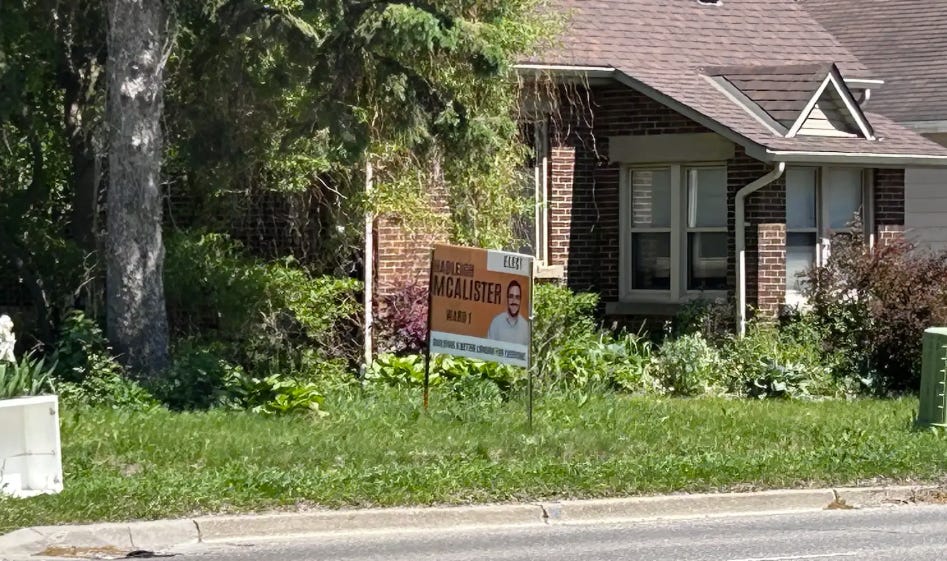
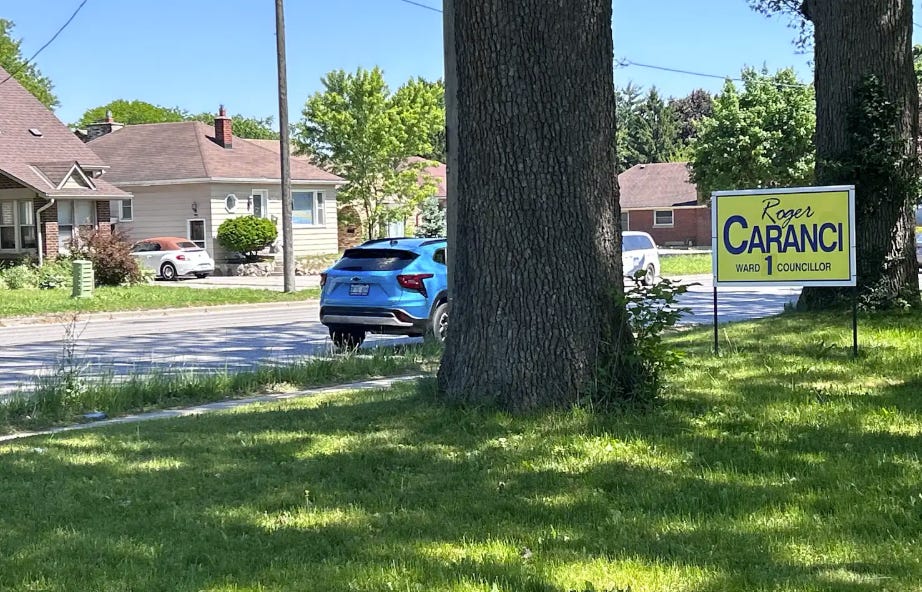
If you’ve driven up Highbury Avenue lately, you might see an indication of what’s to come, with Roger Caranci election signs extremely visible alongside those of incumbent Hadleigh McAlister. Caranci used to be councillor for this area, and even when you take into account the boundary changes, he’s incredibly well-established for a nominal challenger. Most city council candidates get their names on signs in an election year, but realtors like Caranci have name recognition all the time, and he knows how to network. He’s well-connected in business circles and even ran federally for the Liberals (London-Fanshawe in 2011).
This is an experienced, articulate, veteran politician who, as a former candidate for mayor, knows the issues city-wide and locally. Conversely and perhaps ironically, McAlister, though likeable, is a freshman councillor working to make an impact. He has links to the federal NDP and some grassroots community support, and is much earlier in his career than his challenger.
And then there is the Ward 4 influence. Susan Stevenson has been councillor for Ward 4 for the last four years and that included OEV. With her mayoral campaign, she will keep issues in the public eye, and that could mean challenges for anyone running in Ward 1, because, if they are to be taken seriously as a candidate, they must address those public order problems.
This is, without a doubt, an extremely interesting ward.
A full list of Ward candidates is maintained by the City Clerk’s Office here. You can find a guide to every ward in our MEGAPOST here.
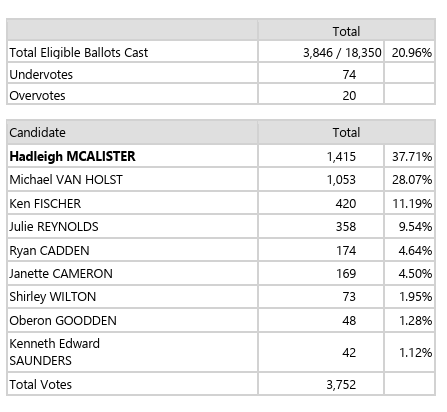
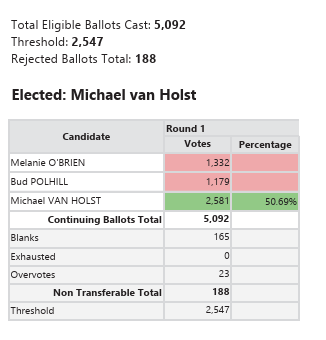
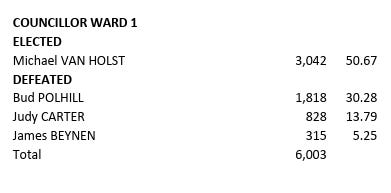
Finishing with some history, showing the last three outcomes - including the diminishing turnout. You can find some background on Michael Van Holst here.
2022 results
2018 results
2014 results
Part 4: In the news
Mike writes
Here’s some of the media reporting connected to Ward 1 during this council term. It shows the incumbent advantage, with many appearances by Hadleigh McAlister.
City Hall issues
Let’s start with a great insight into the two main candidates in 2026: Matt Brown interviewed Caranci and McAlister separately for his podcast here.
Probably the biggest recent story coming out of Ward 1 is Councillor McAlister’s crusade against rats, which generated the priceless CTV London headline Rats! ‘They’re chewing through the walls!’ and some more reporting from CBC here. This issue is ongoing.
We mentioned the “shafted” story above, and here it is from CTV London. McAlister was unhappy with ward boundary changes, and later doubled-down with this London Free Press interview.
Here’s an interesting stunt: McAlister wore black to campaign for a redesign of Hamilton Road for safety reasons. London Free Press link
Ward 1 stories
Taking a wider look at issues in the area.
There is some neighbourhood discussion about Indwell’s plans for supportive housing in the former Bob Hayward YMCA on Hamilton Road. London Free Press link
The Hamilton Road BIA had some recent well-publicized issues with losing money: link
This tragic report from CBC London includes details of a 2023 shooting in Glen Cairn.
And here’s a CTV London video in which Councillor McAlister expresses disappointment at the closure of the Service Ontario outlet in Glen Cairn.
It’s difficult to talk about Old East Village without highlighting some of its public order problems, and related issues with funding from various levels of government. Here’s a good example, in which the local BIA seeks (and later got) funding to remove graffiti: link
And there is so much going on in OEV. It’s a vibrant area that is worth everyone’s support. Here’s a great CBC story about a mosaic that tells the story of the area: link
Part 5: And there’s more…
Our restaurant pick
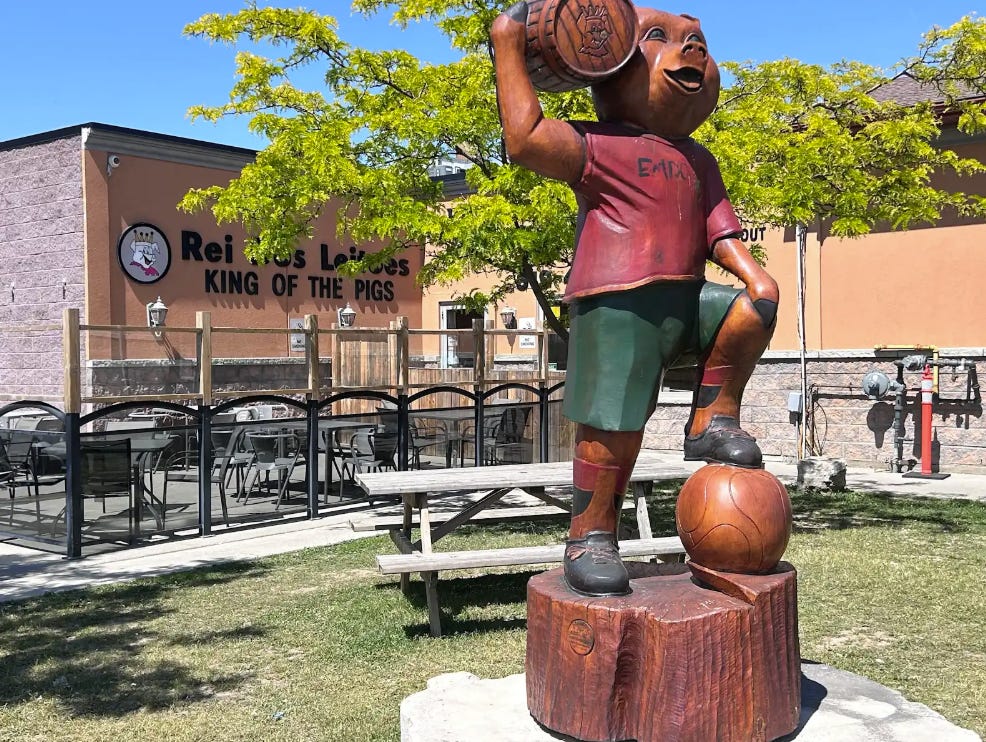
For genuine enthusiasm about Rei dos Leitoes - that’s King of the Pigs - and its bifana sandwich, listen to our audio podcast above.
You can find the restaurant here, and at 706 Hamilton Road.
The unmissable landmarks
Cedric writes
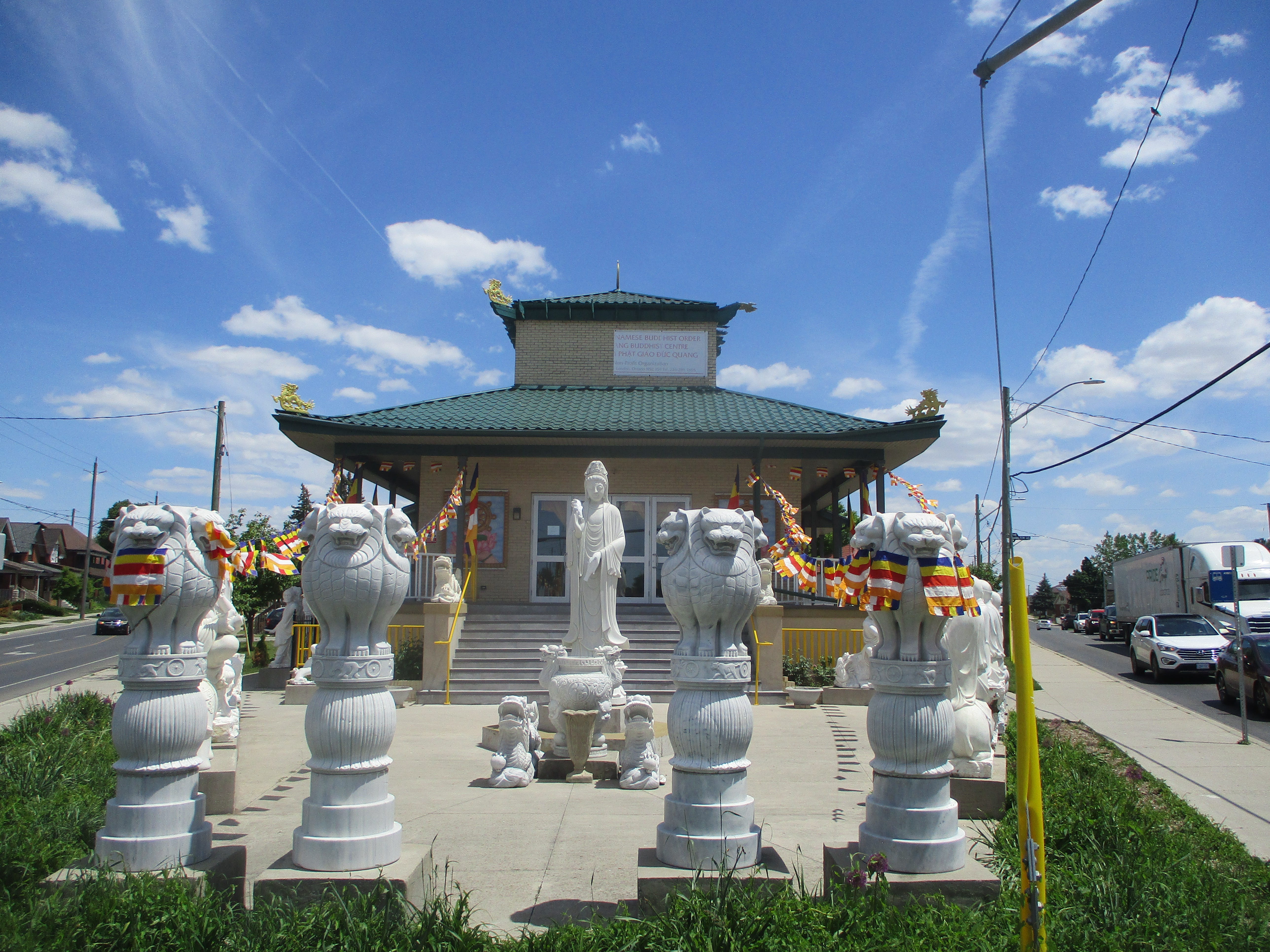
Every week, we’ll highlight the sights you might know from the ward in question. This time it’s the Duc Quang Buddhist Centre at 608 Hamilton Road located in a wedge where Hamilton Road, Egerton Street, and Trafalgar Street meet. You may have noticed it when sitting at the lights and waiting for your turn to proceed through the intersection.
The modern day wood and marble structure was opened in 2014 on the grounds of the previous temple. The predecessor building was a Presbyterian church that opened in 1910 and closed in 1995. Not long after, the site was home to LUSO, an organization that provided support services for immigrants. The site subsequently became a Buddhist temple and the building closed in 2012 due to structural concerns. The original building had to be dismantled slowly, piece by piece because of safety issues if larger construction equipment were to be involved. As you know, the temple is immediately surrounded by three roads that intersect with each other.
That’s Ward 1
And that’s how we see it. We’ve toured around, experienced it, listened to people and considered the place carefully. We learned something and we hope you did, too.
The Cedric/Mike teamup will continue all summer! We’re looking at all 14 wards, featuring one every Tuesday all the way to September. You can follow along here at London Ontario Online News, where there’s new content every day and we live here, too.
We’d love you to stay engaged and in touch. You can send us any topics you’d like us to discuss, or questions, or other sandwiches. And look out for opportunities to get involved in this series.
Thank you - we’re back next Tuesday!
LOVE this! More audio please from Cedric please! His knowledge of the city is so interesting.
Great reporting, appreciate your details and links to other supporting stories!