


Disclosure: I recently had wrist surgery and have been completing each column through a dictation device on my computer.
Welcome back to another look at The City with Cedric Richards, where you can expect a look at the Forest City with a fresh perspective. Thank you to all of you who have chosen The Loon in reading and subscribing to us each day.
Let us go back to the south end and consider this an extension of the last time we were in South London. Last Thursday, a crucial piece of road opened in our city. The Bradley Avenue Extension opened between White Oak Road and Wharncliffe Road South, creating a transportation link spanning a substantial portion of London. It was a long time coming for drivers, but it may be something to look forward to for other users of the road.
How did we get here? We have to hop in a time machine and go back about six or seven decades. The 1960s and London’s transportation situation is usually framed around the fumbling of the Ring Road. But there is another corridor on those maps that Londoners rarely pay attention to.
A brief history of Bradley Avenue
There are maps dating back to the years 1958 and 1959 that indicate a future transportation corridor located between Southdale Road West and Highway 135 (now known as Exeter Road).


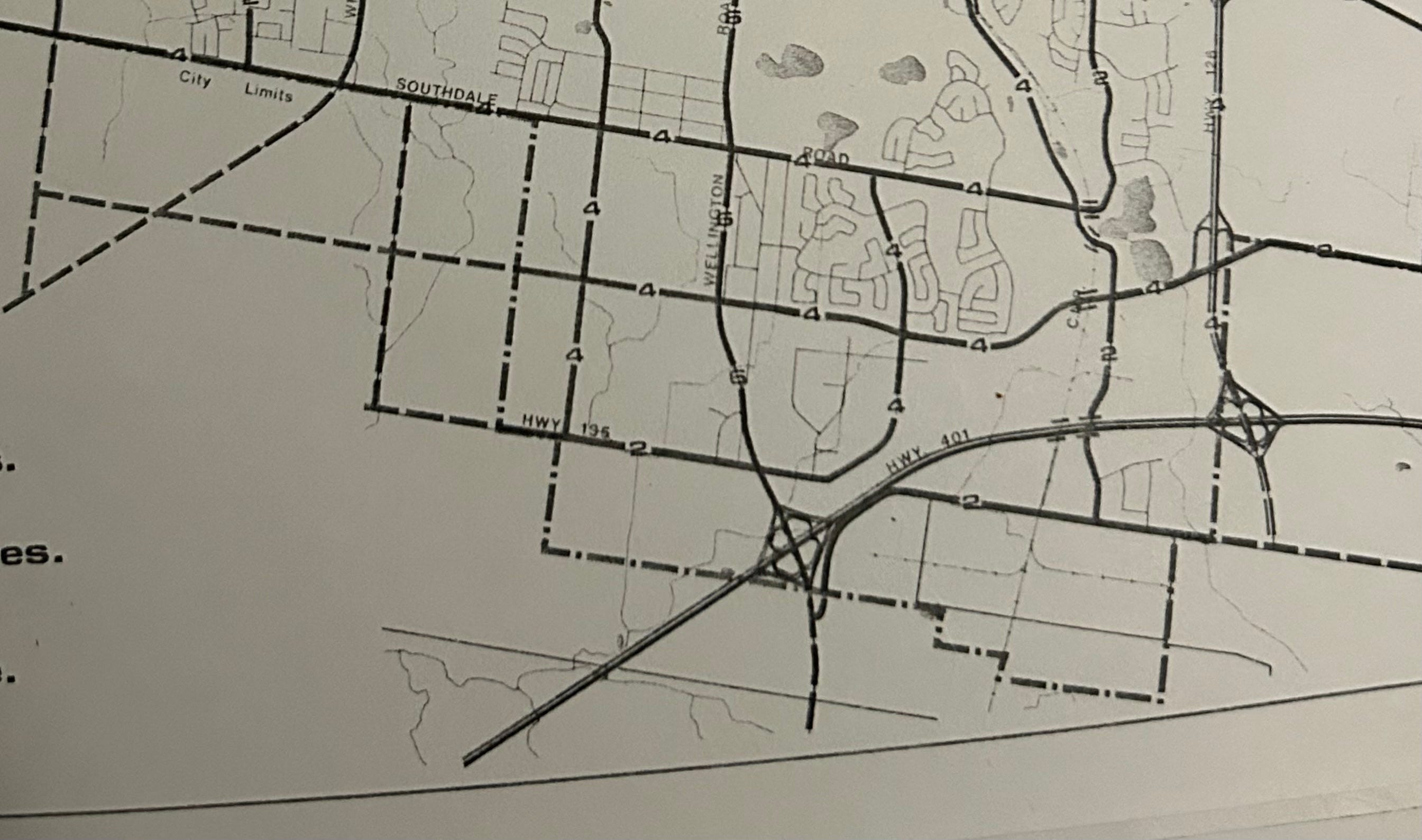
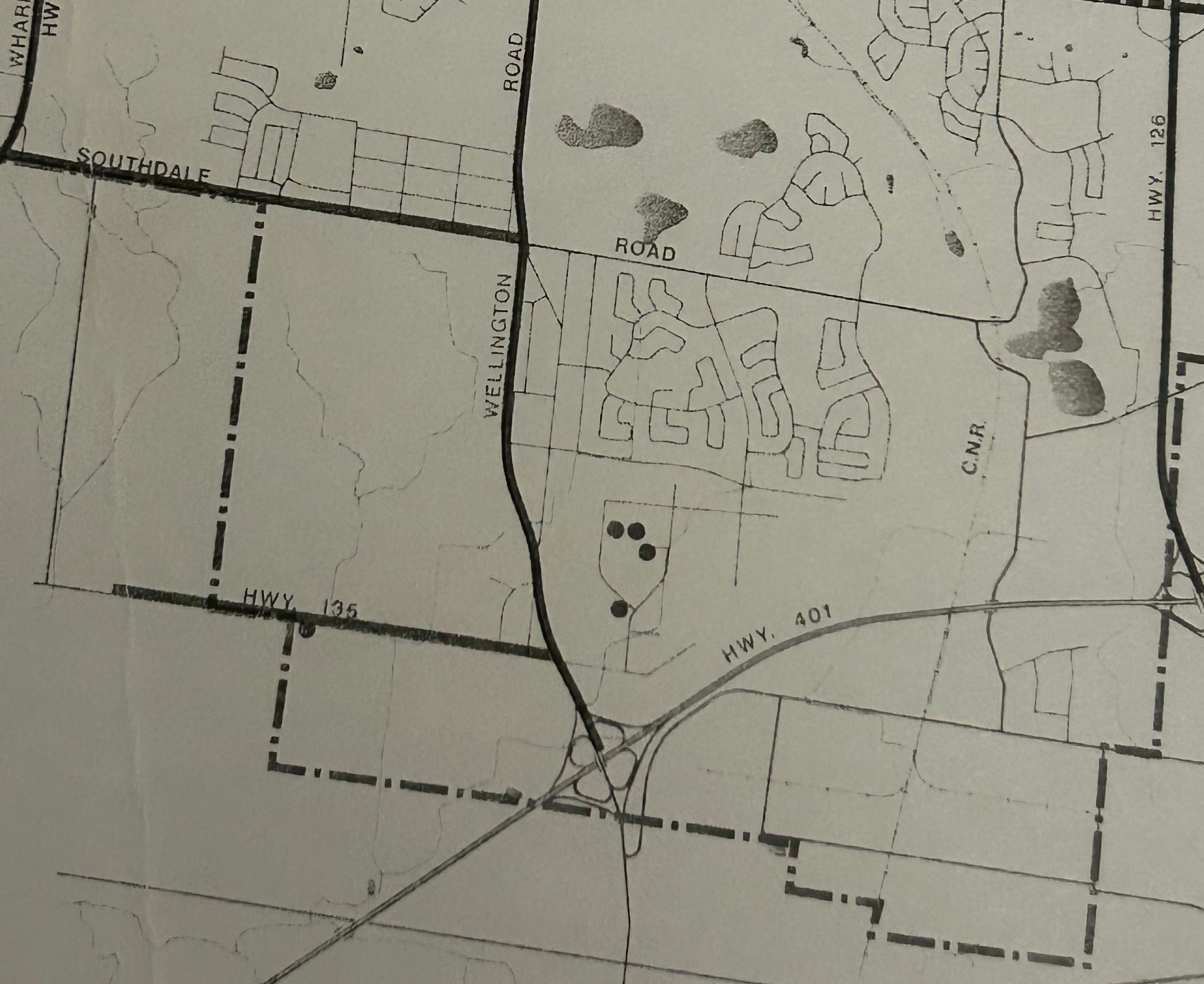
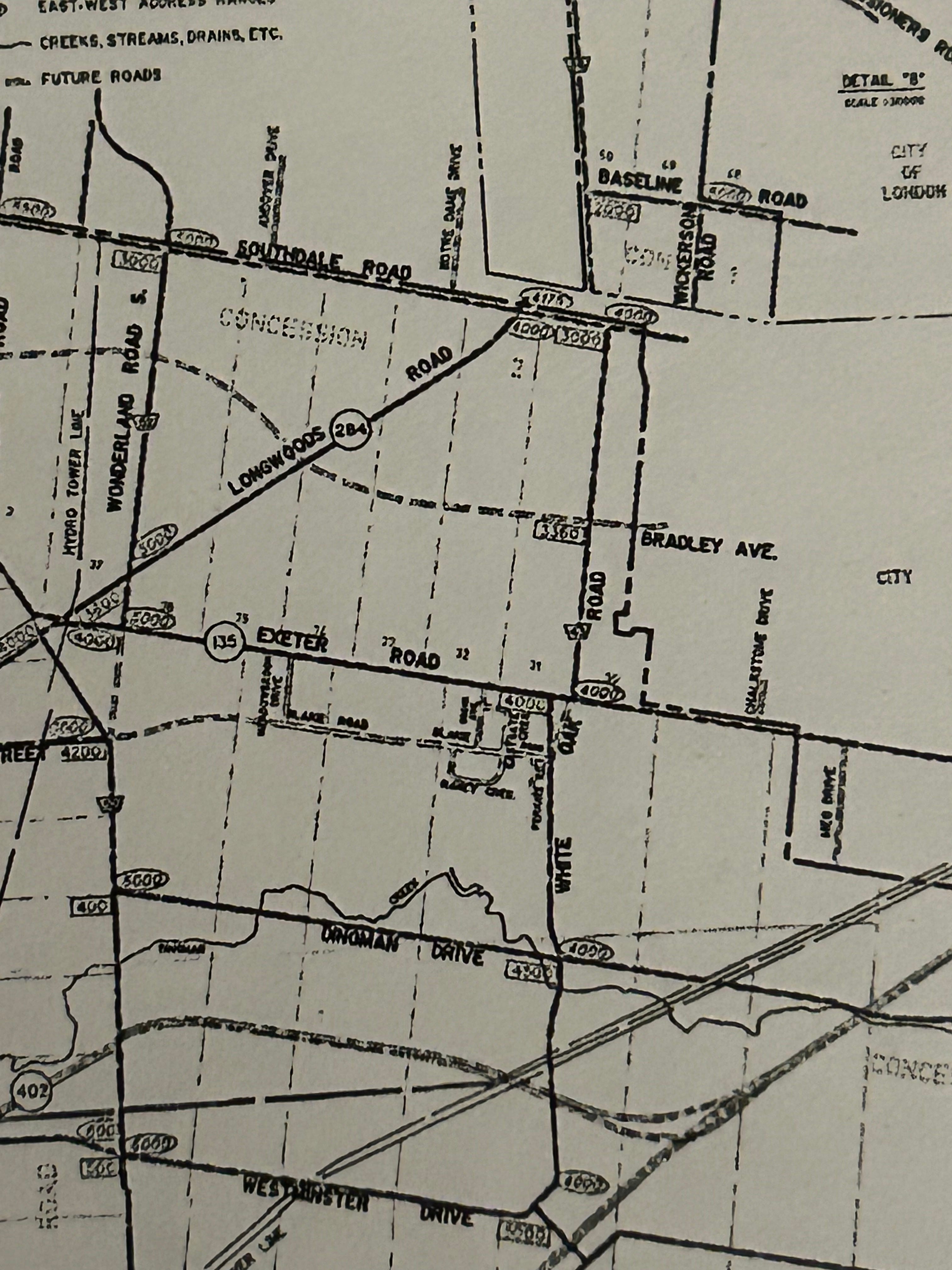
Bradley Avenue started to appear in bits and pieces as suburbanization in South London spread after annexation in 1961. As White Oaks started to develop, Bradley Avenue became one of the east-west arteries of the area.
In the southeast corner of London, bordering on Westminster Township, a road realignment took place starting in the 1960s. Highway 126 was constructed as an extension of Highbury Avenue. This truncated Pond View Road, which was previously a concession road that ended in the east at the then-Highway 74. In the west, Pond View curved around the North and South Ponds to bend at the concession road. By the 1980s, Bradley and Pond View were connected to each other, as well as to Pond Mills Road. In 1989, an interchange was constructed at Highway 126 and Bradley, forever consigning Pond View Road to being a cul-de-sac.
In the west, Bradley dead ended west of the west leg of Jalna Boulevard. By the time London annexed Westminster, Bradley was extended to White Oak Road, as a two-lane connector. Until 2026, you could see the marked difference in the roads. East of Jalna, there was a clean-looking, modern, four-lane road. At White Oak, it looked like a hastily-constructed street with dirt shoulders.
Maps in the years and decades to come also indicated that an extension to Bradley Avenue was to come, as the area was annexed into London in 1993. This phantom road also made its way into official plans and transportation master plans. It started making its way up the priority list.
As early as the fall of 2010, a signalized intersection with traffic lights and crosswalks was constructed along Wonderland between Southdale and Exeter Road. The green street sign in the median bore merely the name “Bradley Avenue”. It was a sign that an extension would be imminent. This Bradley Avenue stub was nothing more than access roads to each side of the big box morass along Wonderland Road.
The corridor slowly took shape over the next several years. East of Wonderland, parts of what is now a road was just a trail. I remember cutting through this area to get to points west because Southdale Road and Exeter Road were not kind to cyclists. I would always have to find my way to Wonderland through another trail or a side street in the Copperfield subdivision.
By 2018, Bradley Avenue was fully constructed between Wonderland and Wharncliffe Road with a multi-use path and a road that was four lanes wide. Although this is just one of the phases of the construction of Bradley Avenue, it felt overbuilt, only because it was just a connector of two roads. It reminded me of that subdivision in Haldimand County called Townsend, that contained a lot of wide roads for a planned city that never really got off the ground.
For years, Bradley Avenue existed as two non-continuous segments. The sub from Wonderland Road was actually renamed Bradley Avenue West. This added to Londoners’ tradition of adding a direction to a road name without the other end of the road taking an opposite direction. (See Richmond Street North, Dundas Street East, Wellington Road South)
This latest duration of the Bradley Avenue Extension, from Wharncliffe Road to White Oak Road appeared to be a two-part project. The first part was the road construction. The second part was a stormwater management project. This all was originally slated to start construction in 2024, but was deferred a year due to regulatory delays. When I reached out to the City of London staff in 2024, they advised me as to why construction was delayed. A species-at-risk was identified in the construction area, as well as archaeological concerns necessitating further investigation. Road design was completed on schedule. It was a reminder of what the City can and cannot control.
Walking Bradley
Last Friday, I walked the new extension which had opened the previous day. I rode the bus to Wonderland Road, just south of Bradley to begin my jaunt. I was greeted by patches of white and gray concrete block buildings. The area contained the shops that opened in recent years, shops that Londoners will tell you “I’m so glad this opened here so I don’t have to drive to Toronto.”
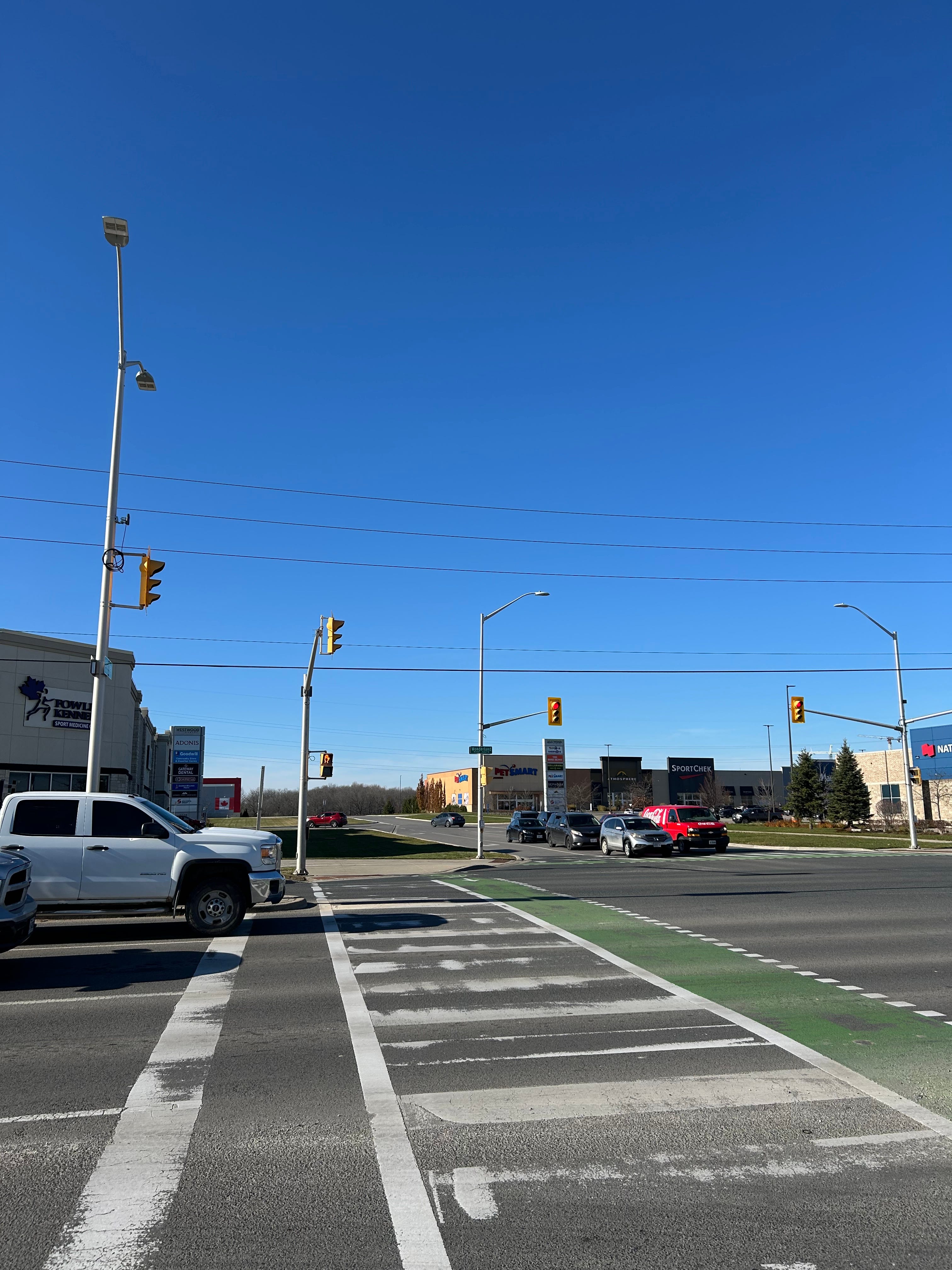
Where I started the walk was between an outlet store and a Tesla dealership. Between them were open skies, a median with concrete and tall light poles, and an abnormally hot mid-November sun, and little else. The multi-use path along here was a reminder that it is easy to construct bike lanes, and by extension, ride in the outer suburbs than it is to do so in the core.
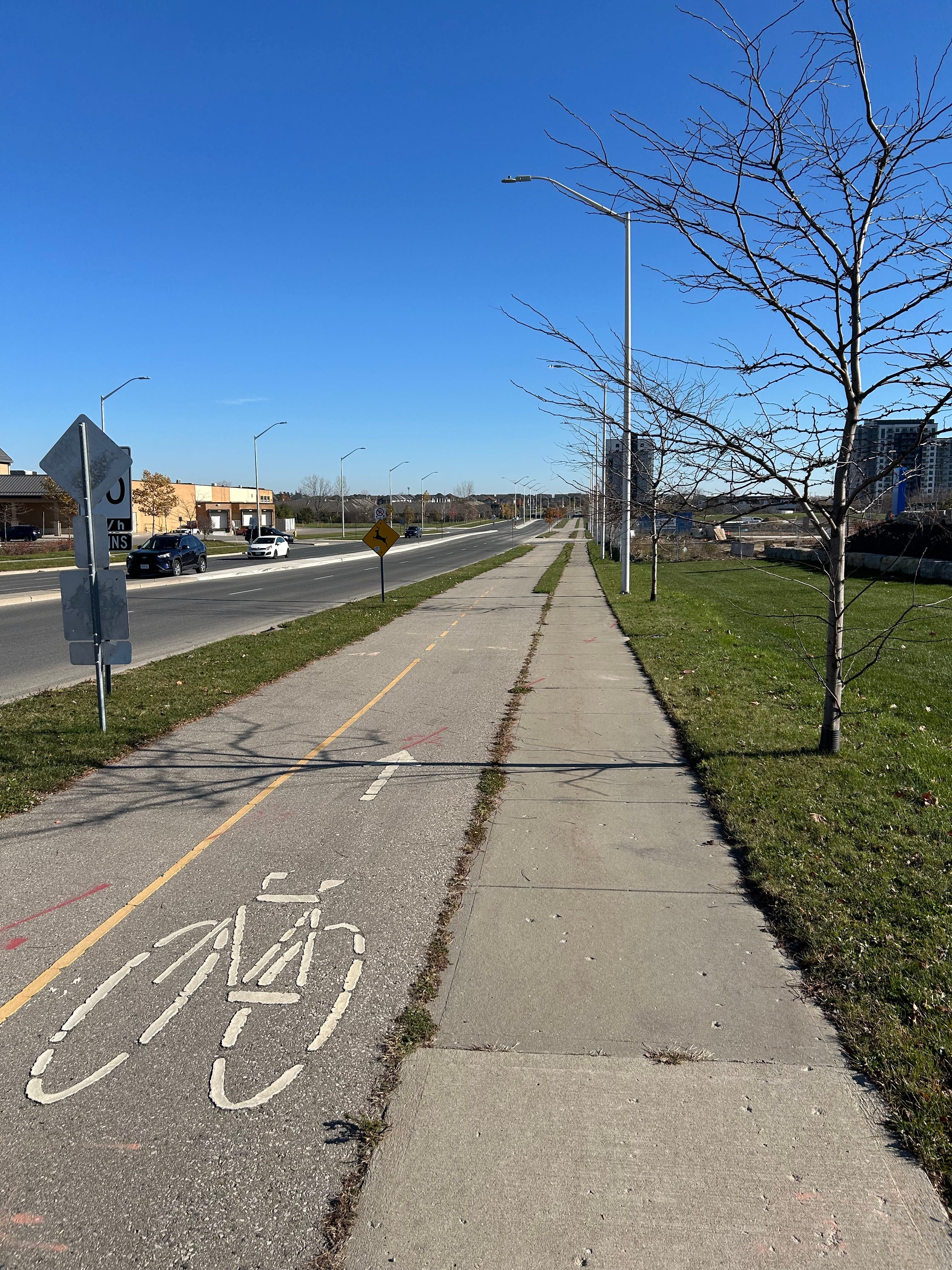
Even though transport trucks and other vehicles are travelling along this road now, it feels a bit weird. It still feels like a construction zone that only allows local traffic, even though the orange signs and barriers have vanished.
The only thing that was remotely inviting from my view was the apartment building called the Muse at Morgan Park, located at 3315 Morgan Avenue, on the corner with Bradley Avenue. There was a parkette with benches, but that was on private property.
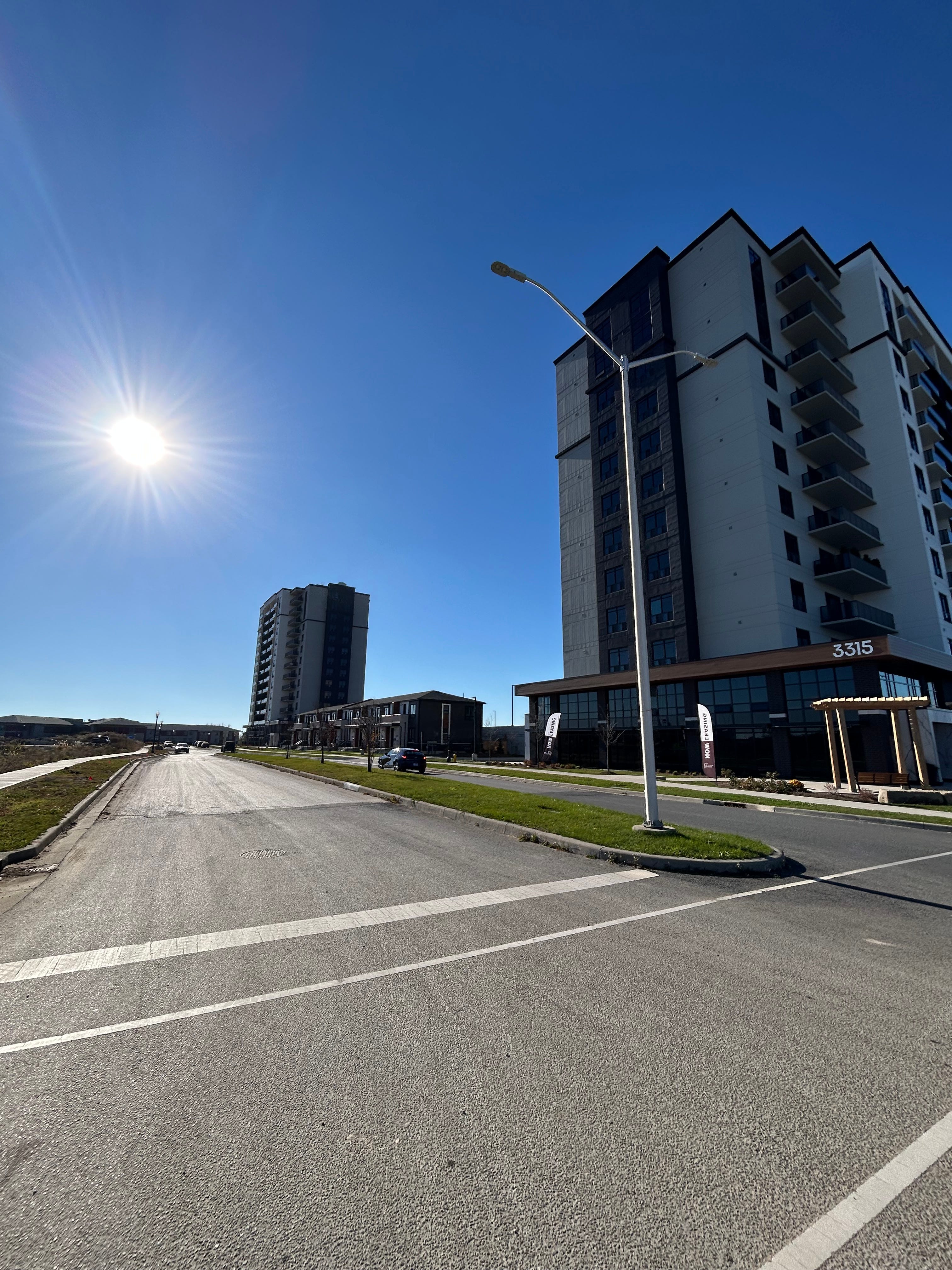
It took me about 10 minutes to walk from Wonderland Road to Wharncliffe Road.

At Wharncliffe, a new traffic signal was constructed in concert with the opening of the extension. I crossed the road and entered what felt like a new dimension. It looked like a racetrack, the type that you see in advertisements for cars. It was very apropos that we were near an arterial road in Wharncliffe that was lined with numerous car dealerships. That, and as I made my way down Bradley Avenue, cars seemed to exceed the 60 kilometres-an-hour speed limit.
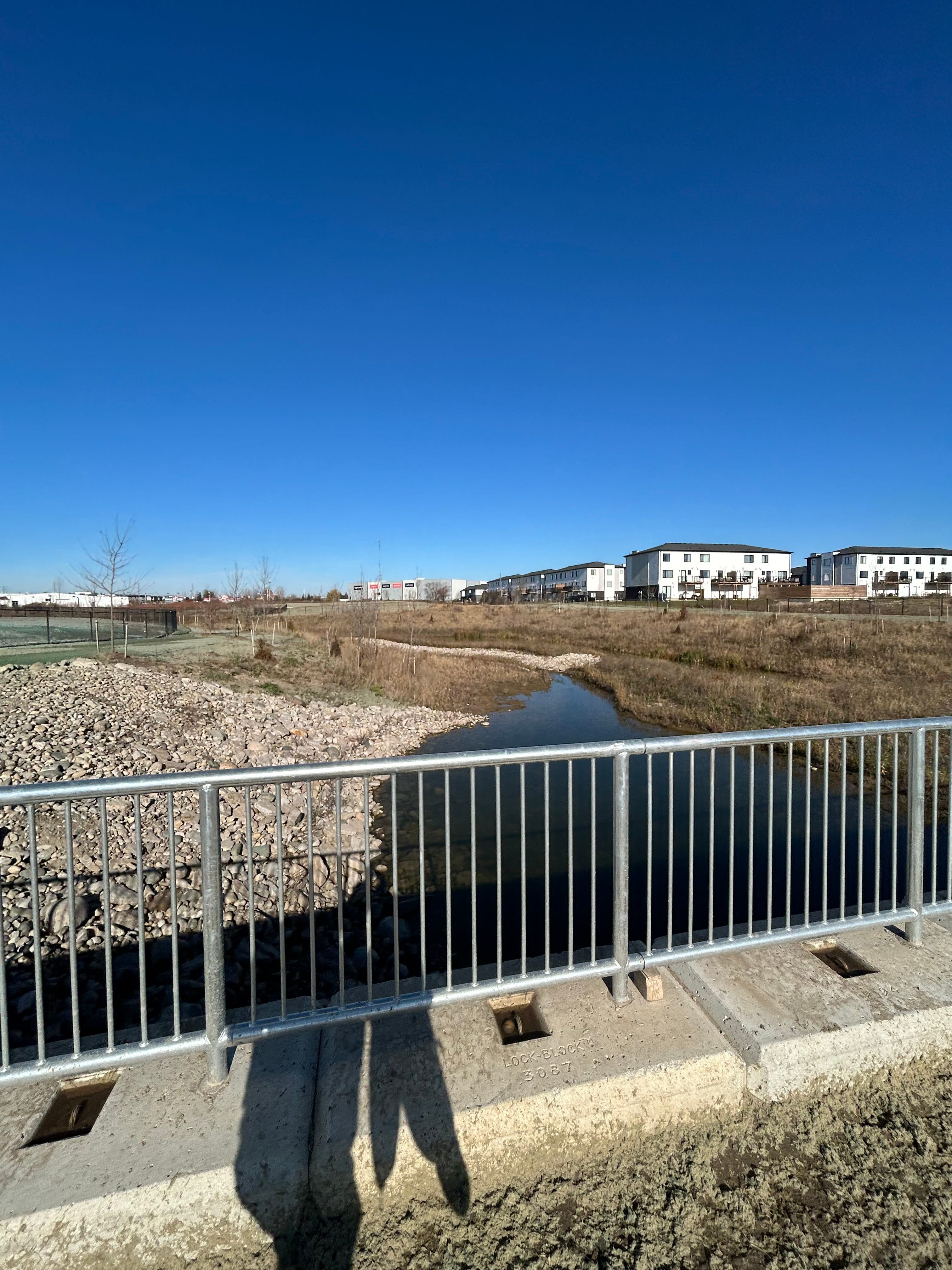
That racetrack feeling has a lot to do with the fact that almost nothing fronts onto the extension. There has been space set aside for an intersection with Paulpeel Avenue, which will lead to the subdivision that has a lot of streets named for famous artists. The only street that fully intersects with Bradley Avenue at this point is Roe Street, which was once a cul-de-sac that branched off of another cul-de-sac off of White Oak Road. Access Storage, a storage facility at this corner may receive a bit more traffic now that more people have the ability to notice it, as opposed to the previous configuration where it was just tucked away. The power of perspective!
On my walk, the first people I ran into were a friend and her friend, each walking their infants in strollers. London feels like truly a small place; you can run into anyone you know, anywhere, including on London’s newest road. Also on the walk, I saw an elderly man with his walker, as well as an elderly woman with her two toy-sized dogs.
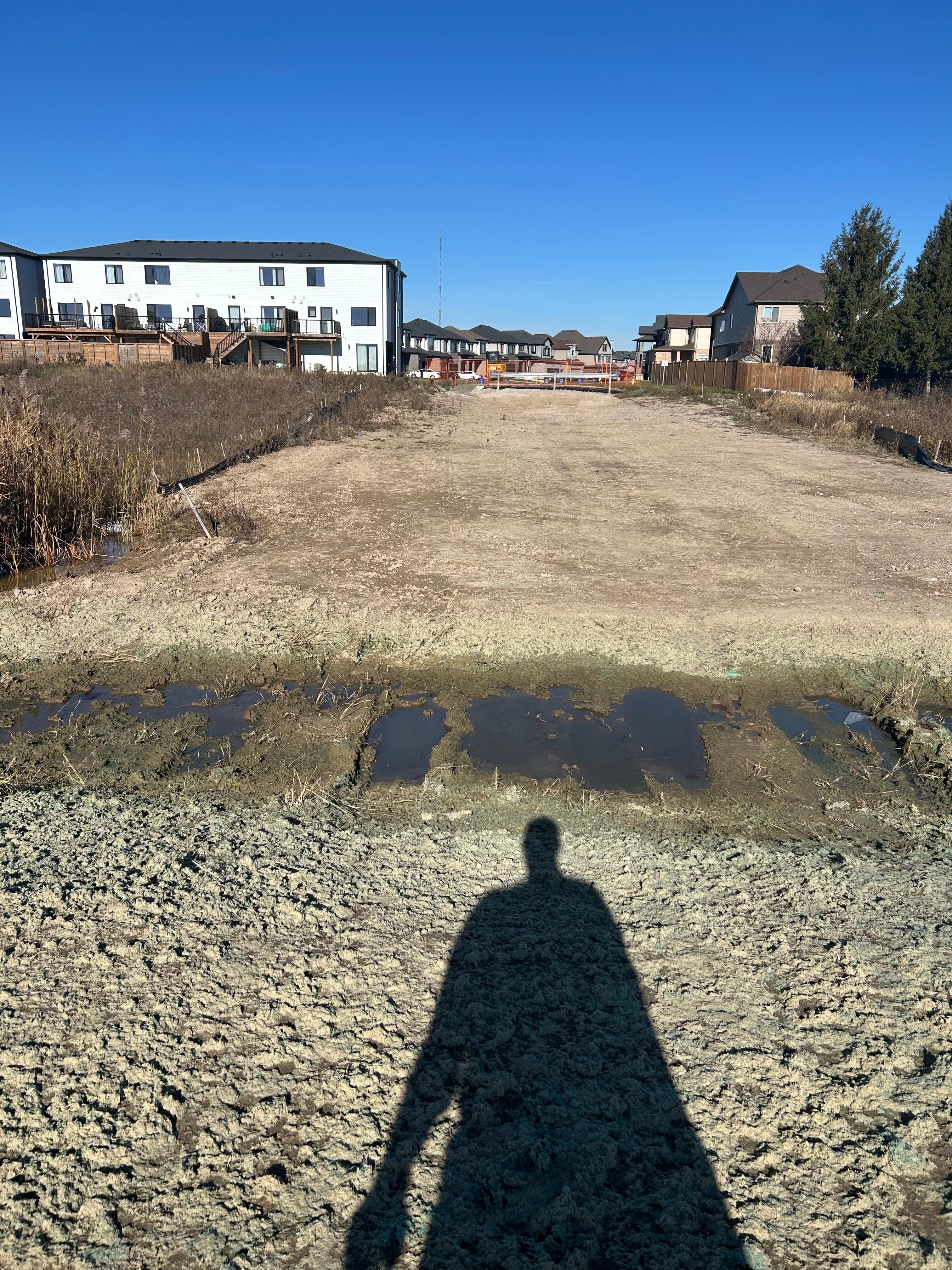
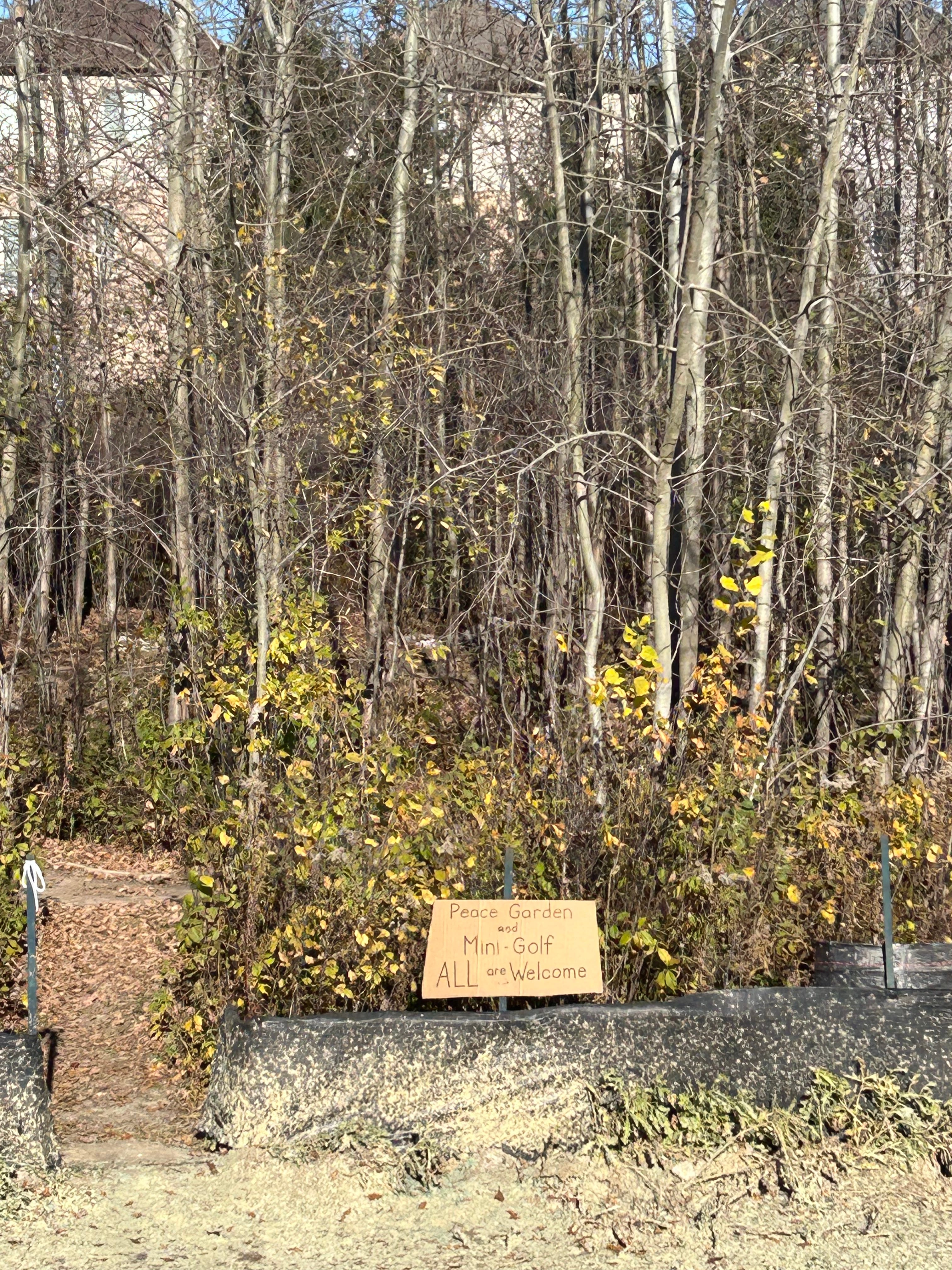
At the 27 minute mark, I made it to White Oak Road, feeling accomplished that I had completed another segment of road in this city in which I travelled on by foot or by bike.
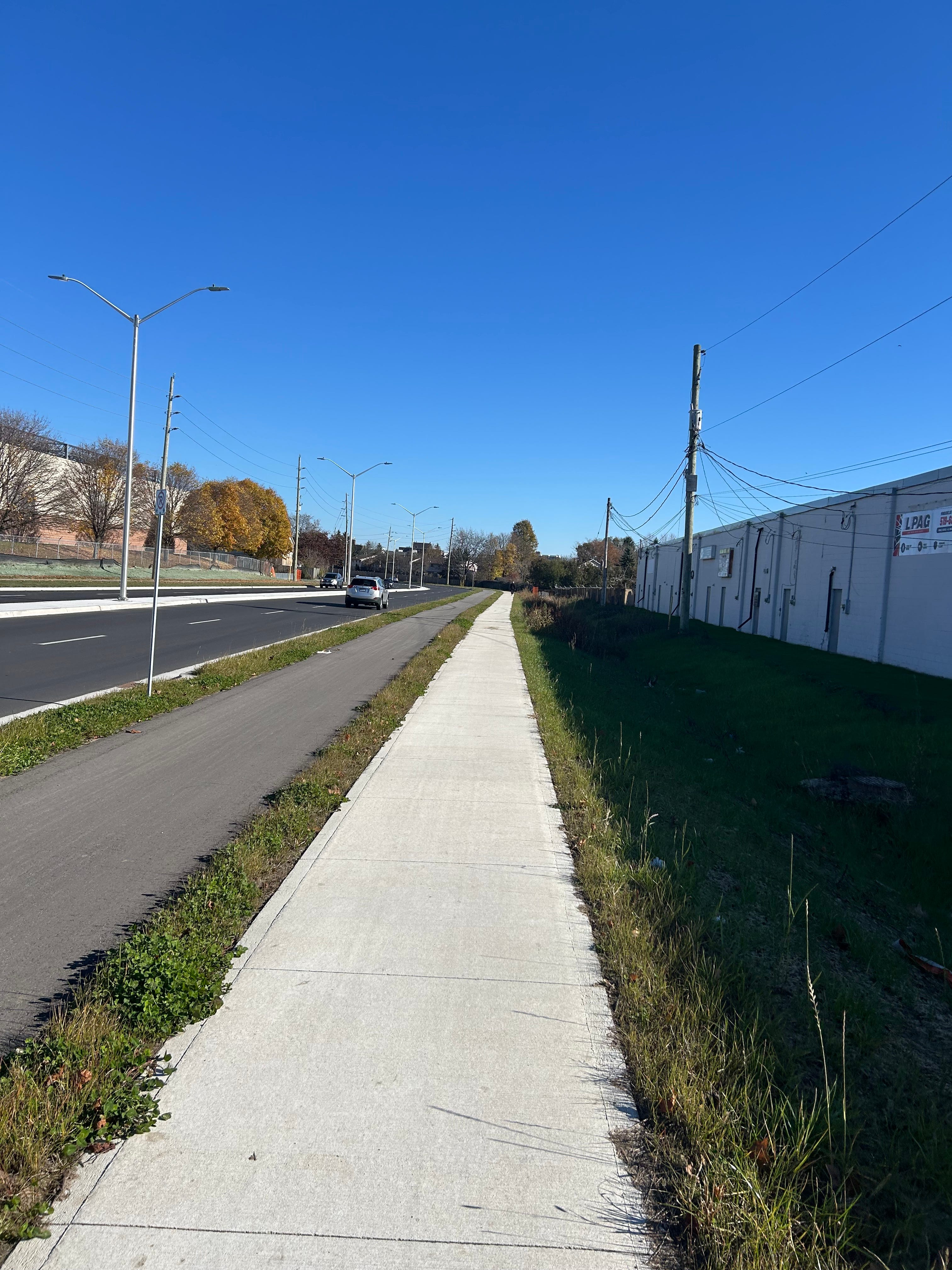
I continued walking along Bradley Avenue where this segment between White Oak Road and Jalna Boulevard was widened from two to four lanes. It was a surprise to see someone else on the sidewalk as this road continues to have that “back door” feeling. On my right is a gray brick wall containing the signs of the tenants of the building that fronts onto White Oak Road. Further ahead at the intersection with the west leg of Jalna Boulevard is the Church in the Oaks, which fronts onto neither Bradley nor Jalna, but Conway Drive; the front doors of the church are quite a walk away over a large front lawn.
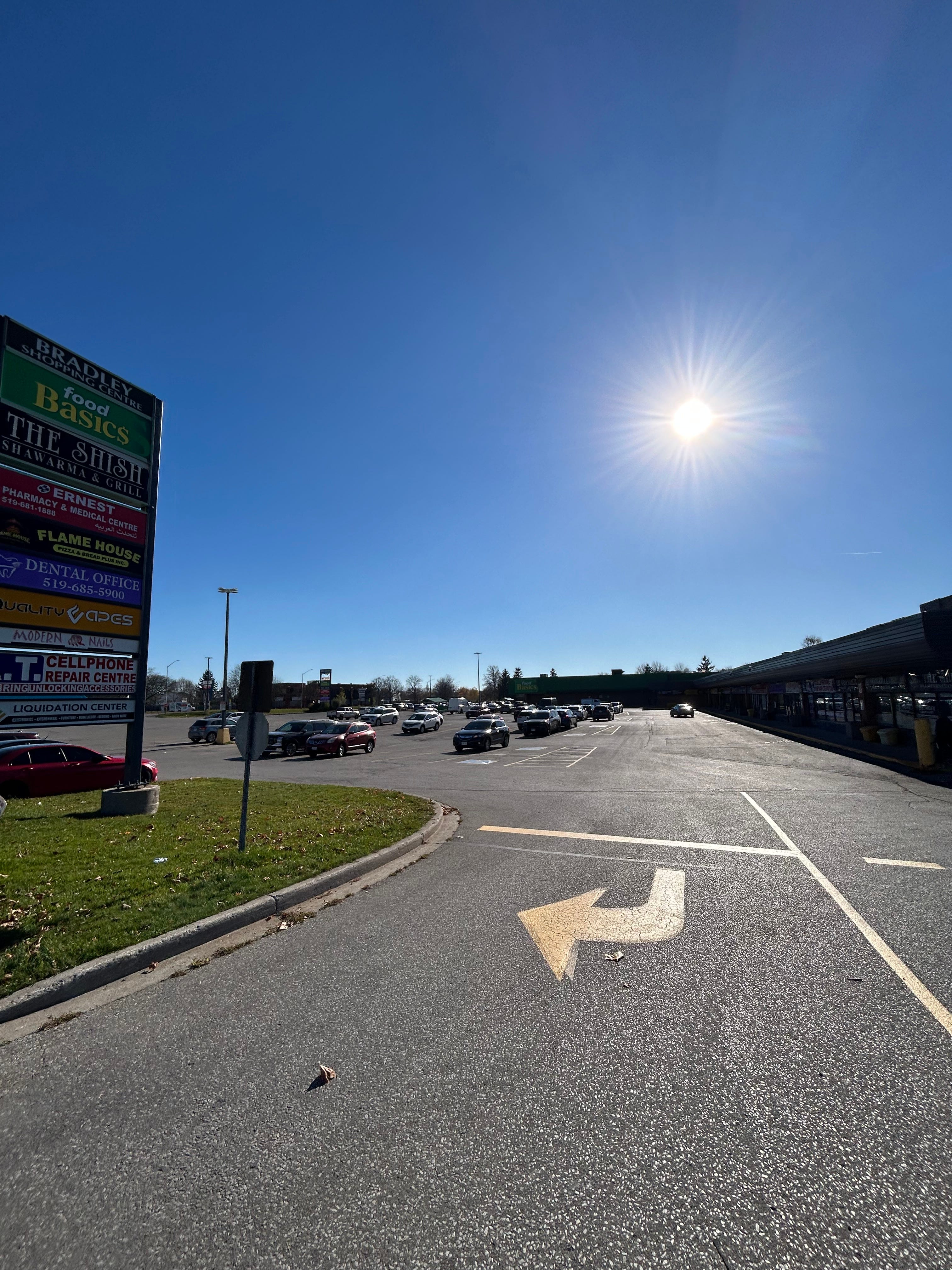
I made it to Ernest Avenue by minute 38, ran an errand at the strip plaza, and boarded a bus back home with less than a minute to go on my transfer.
The rest of the corridor
It is not just a new road that opened last week. The rest of the corridor is a fascinating place.
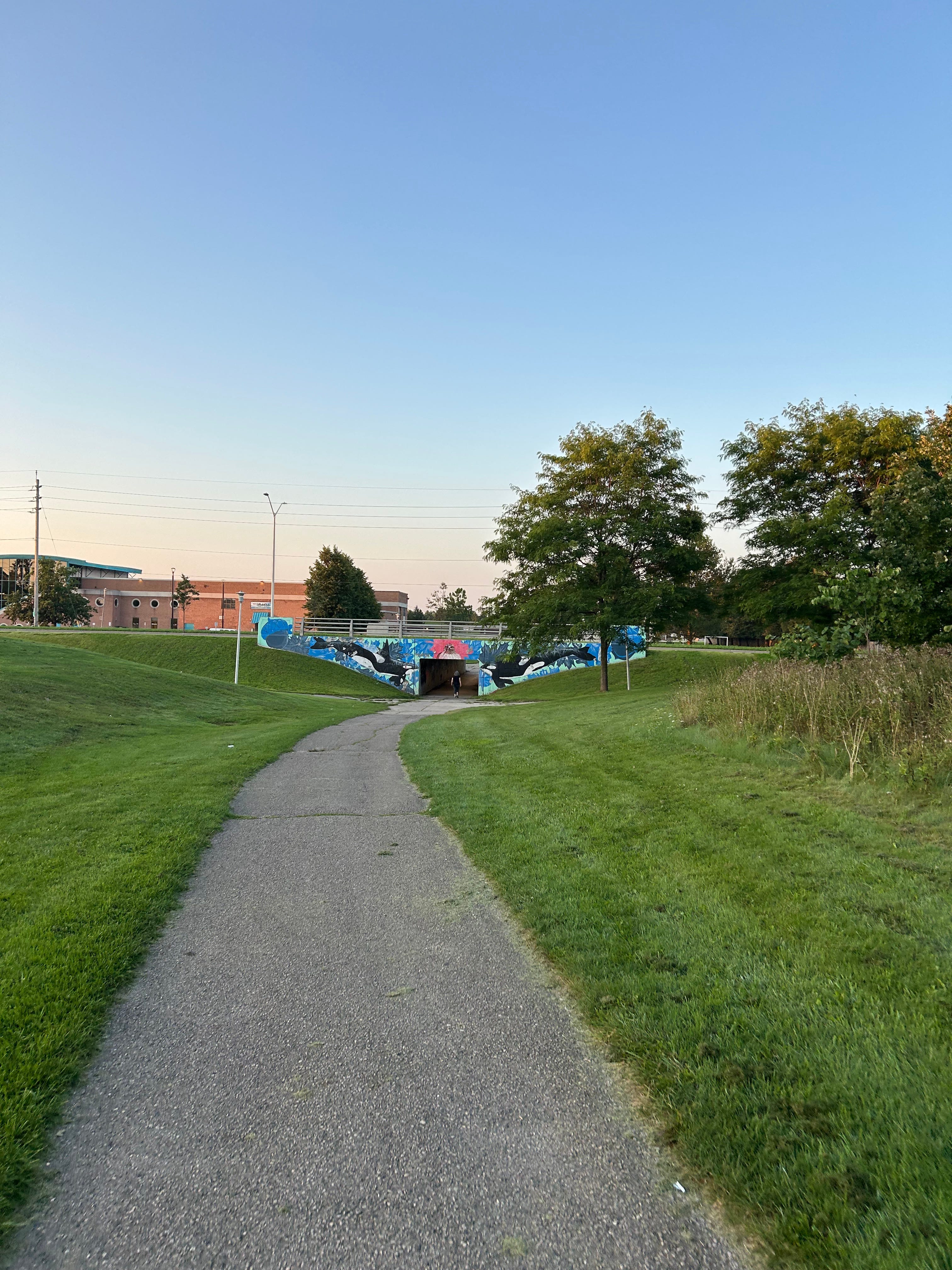
Nothing really fronts onto Bradley Avenue until the middle of White Oaks. Not much on this road has an address number. The municipal drain just east of White Oak Road is nominally called 320 Bradley Avenue. I have always been interested in that small stuff; that drains have municipal address numbers. But no door to knock on. The address numbers that everyone can see does not begin until east of Ernest Avenue. 560 Bradley Avenue is home to the White Oaks Optimist Park, which backs onto Rick Hansen Public School. The park’s south end contains a tunnel under Bradley Avenue. The path out of the tunnel leads to White Oaks Public School and South London Community Pool, which are numbered 565 and 585 Bradley Avenue, respectively. This is the site where my colleague Mike and I profiled Ward 12. The medical office building beside that school-pool complex is located at 595 Bradley. For the next several blocks, Bradley Avenue is nothing more than a driveway to properties located along either Jalna Boulevard or Wellington Road, such as White Oaks Mall. The next property that runs onto Bradley Avenue is 736 Bradley Avenue, which is a parking lot for the former Westervelt College-turned-former South London campus of Fanshawe College. There is a vestigial and very narrow painted bike lane along this road between Ernest and Wellington; the installation of protected bike lanes along Bradley three years ago felt like a twenty-fold improvement. When I rode the old bike lane in the past, I felt like I was sticking out of it while pedaling.
A few houses and industrial buildings front onto Bradley Avenue near Dearness Drive. They are trying to say “Hey, have you noticed me here? No worries, if not”. Aside from them, Bradley’s south side is the backdoor of Newbold Street, and the north side grazes the backyards of Westminster Park.
At Pond Mills Road, Bradley crosses at a weird angle, complete with pork chop intersections. It is not Bradley at Pond Mills without Forest City Storage having a sign outside with a pun. Let me know in the comments what your favourite pun from them is!
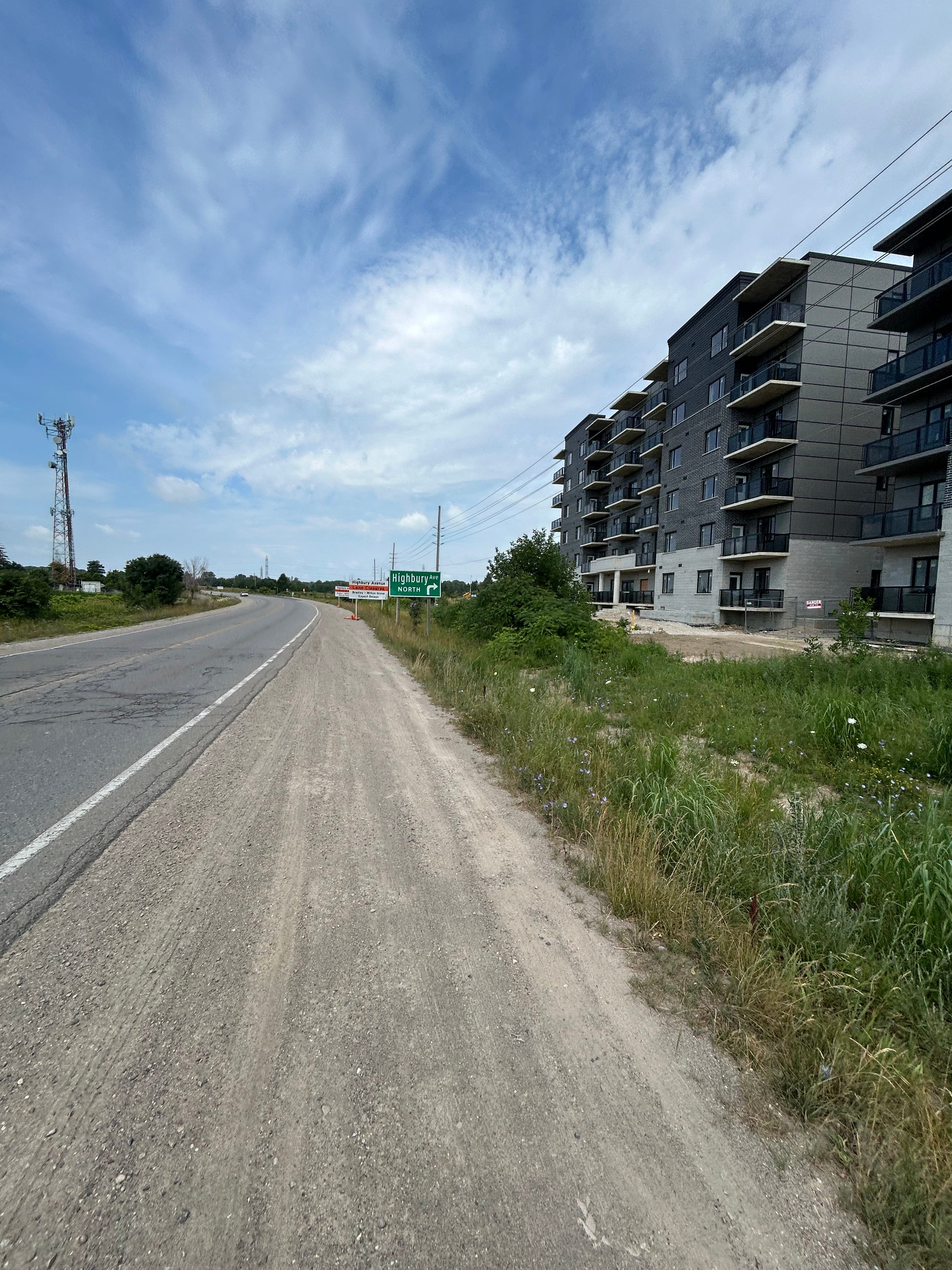
East of the interchange with Highbury Avenue South, Bradley once again carries that back door feel, this time, with much of Summerside’s newest subdivisions, along Chelton Road and Meadowgate Boulevard. Only in 2028 will this area see any kind of transit service; Route 37 is slated to be extended to White Oaks Mall, but it may remain as a peak-period-only bus.
The suburbia dies down east of Jackson Road and Bradley enters a rural lull. You may see a farmer outside or horses strolling around, but not much else. Old Victoria Road crosses in a disjointed manner. Something else crosses here and it feels so out of place. 14 times a day, London Transit’s bus route #38 crosses Bradley Avenue (and back) to enter Innovation Park, a sprawling industrial park located between Old Victoria Road and Veterans Memorial Parkway. One of these factories that the bus stops at is the Dr Oetker pizza plant.
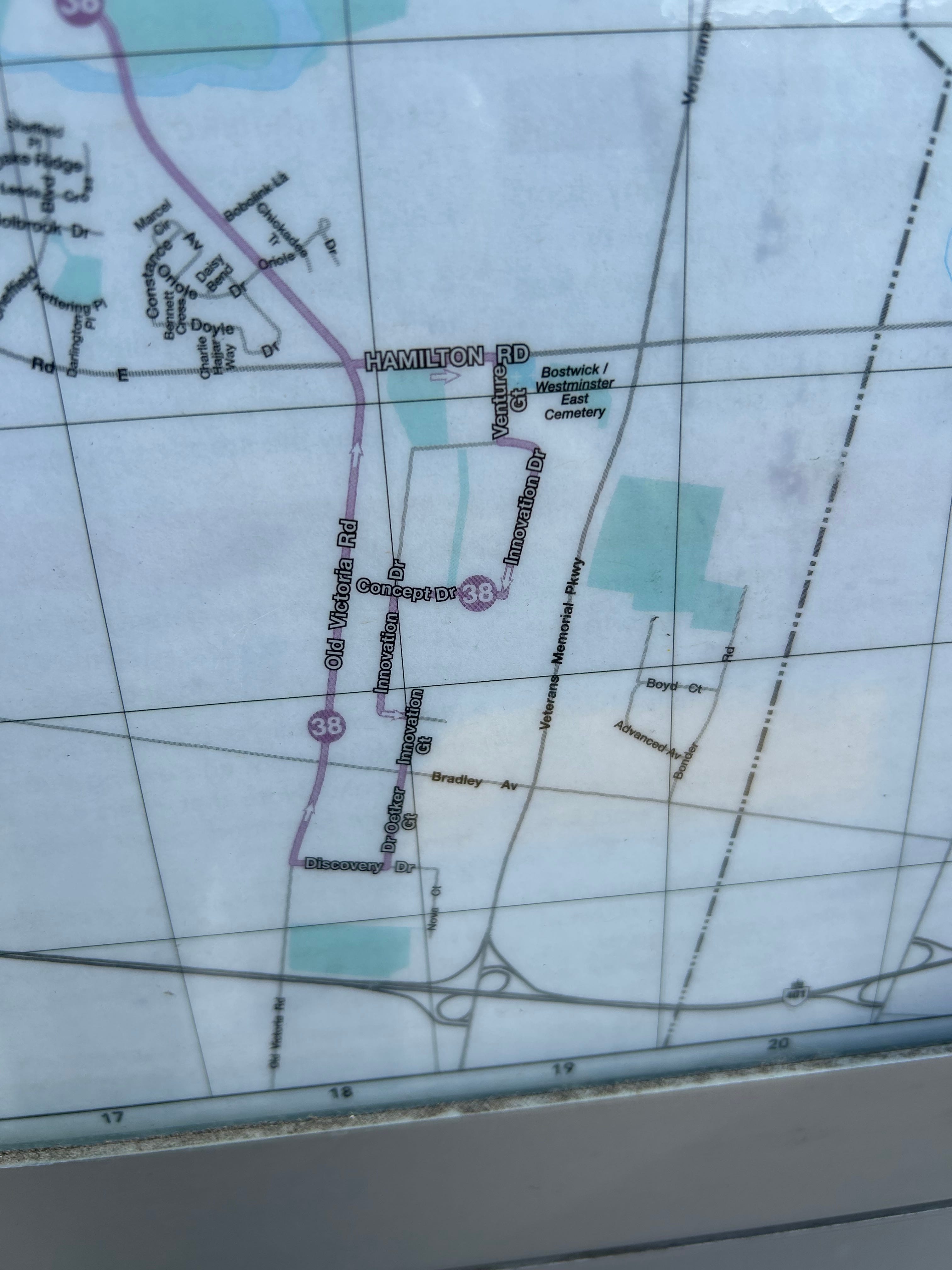
Along Veterans Memorial Parkway, Bradley Avenue is the last road a driver sees before having to ensure they’re in the correct lane to join Highway 401 or continue to the end at Wilton Grove Road. Just east of the VMP is another industrial park consisting of buildings and offices that conduct research in association with both Fanshawe College and Western University.
Bradley Avenue exits the city east of that research park, and enters the municipality of Thames Centre. There’s a bit of an oddity on this final stretch of road. It takes on the designation of Middlesex County Road 75, and metres east of the city limits, the road anticlimactically ends at Westchester Bourne Middlesex County Road 74.
The future
The future calls for yet another extension. Further west, Bradley Avenue is planned to be extended to Bostwick Road around 2035, where the two roads will meet at a roundabout with Pack Road. Pack Road currently forms the southern fringe of the Talbot Village Area. Much of the south side of it still has a rural feel to it, pending the subdivision development that will be taking it over one day. The north side of it is largely built out, with an interesting feature: the road has shared sidewalks with cul-de-sacs that runs parallel with it, like Loyalist Court and Settlement Court.
West of Colonel Talbot Road, Pack Road disappears deep into the woods, ending at Homewood Lane. The London Plan, our current official plan, proposes that this road extends westward to Westdel Bourne. This would create a corridor that spans the length of nearly this entire city.
A similar road extension is being planned just south of Bradley. Kilbourne Road, located in the South Winds area north of Lambeth, is planned to extend eastward to Wonderland Road.
The takeaway
This road is something interesting. Part of it is cobbled together much like the toys at Santa’s workshop. Part of it was once a concession road that farmers would ride horses and tractors through. It is all things to many Londoners who spend time in the south end. It is the back door, the alleyway to the things we visit. But for those few who call Bradley Avenue their address for their home, farm, or office, it sounds like a real privilege.
There was something that did dismay me, specifically about the extension. I started this column noting that it was a long time coming for drivers. I noticed someone on social media saying that this would save them four minutes on their commute time. I could not help but think about the bus rapid transit debate over the past decade in which a talking point was pejoratively spread about spending a half of a billion dollars to save four minutes on a bus commute. I thought about how the extension is framed as a good news story but upgrading the infrastructure we already have is a bad thing. It led me to start thinking about how we frame transportation planning in our discourse, and whose four minutes count, and if they are timed equally.
I hope you enjoyed our time together today, where we journeyed through London’s newest road, which is not just a shortcut or a racetrack, but something more.
Check back each Tuesday for my take on experiencing London from a fresh perspective. I am excited to meander around the city and report back to you. I welcome comments, suggestions, and topics to discuss each Tuesday. Please subscribe and let’s talk soon!
The Loon (London Ontario Online News) lineup
Local independent journalism bringing you new content every day.
Find our editorial standards and policies here.

Meet the Londoners who team up to send you a new feature every weekday:
Monday - Buckle Up - podcast with Matt Brown
SPONSORED BY HAMILTON ROAD BIATuesday - City Tours with Cedric Richards
SPONSORED BY LONDON BICYCLE CAFÉWednesday - City Hall Notes by Mike Donachie
SPONSORED BY SPERO LAWThursday - the Forest City Arts and Culture Roundup by Diana Tamblyn
SPONSORED BY DOWNTOWN LONDONFriday - Reflections with Steve Cordes
SPONSORED BY OLD EAST VILLAGE BIA
Also on Fridays: the local news ROUNDUP.
Every other Saturday: The Matt Brown Podcast. It’s the show about all things local, and maybe some other stuff too. SPONSORSHIP OPPORTUNITY AVAILABLE.
Love the contrast of 4 mins time savings for drivers vs transit riders! Excellent article
Great column, as always, Cedric. As a regular user of the Bradleys, living in Byron but often shopping and dining around White Oaks, I appreciate your unique perspective on this route. But your most important point is the final one: why is saving drivers four-minutes worth millions but saving the same time for transit riders not worth that investment?