


Welcome back to another look at The City with Cedric Richards, where you can expect a look at the Forest City with a fresh perspective. Thank you to all of you who have chosen The Loon in reading and subscribing to us each day.
Today, I’d like to make my way to Old East Village. By the end of this week, the Canadian Football League will be starting its postseason games. But in London, the core and beyond is a political football of sorts.
One of the hot topics in this election centred on the interrelated issues of homelessness and public disorder. Prior to launching her mayoral campaign, Ward 4 councillor Susan Stevenson described her ward as Ground Zero of London’s drug crisis. Every candidate seemed to have a platform plank in which they promised to do something about homelessness, especially its prevalence in the core. And among them, 14 ward candidates and a mayor were elected.
In yesterday’s municipal election, we had a voter turnout of about 31 percent. This was an improvement from the previous election of 2022, but not as large of a turnout like the three consecutive “change” elections of 2010, 2014, and 2018. We heard from the voters. In two-and-a-half weeks, council members will begin a four-year term and will have to hear from the people of London on a regular basis. But did we hear from all possible voices yesterday? Will we hear from them over the next four years?
I have been thinking about this on my regular visits along Dundas Street in Midtown and Old East Village. There are a lot of places and people that I love to visit along this corridor. I get donuts from DoughEV, I know quite a few people who are vendors at The Market at Western Fair District, and on a regular basis I go to a writing group inside The Club House at 100 Kellogg Lane. Interspersed along Dundas Street are clear examples of policy failures over the last number of decades at all levels of government that have led to problems with homelessness, addiction, and apparent public disorder.
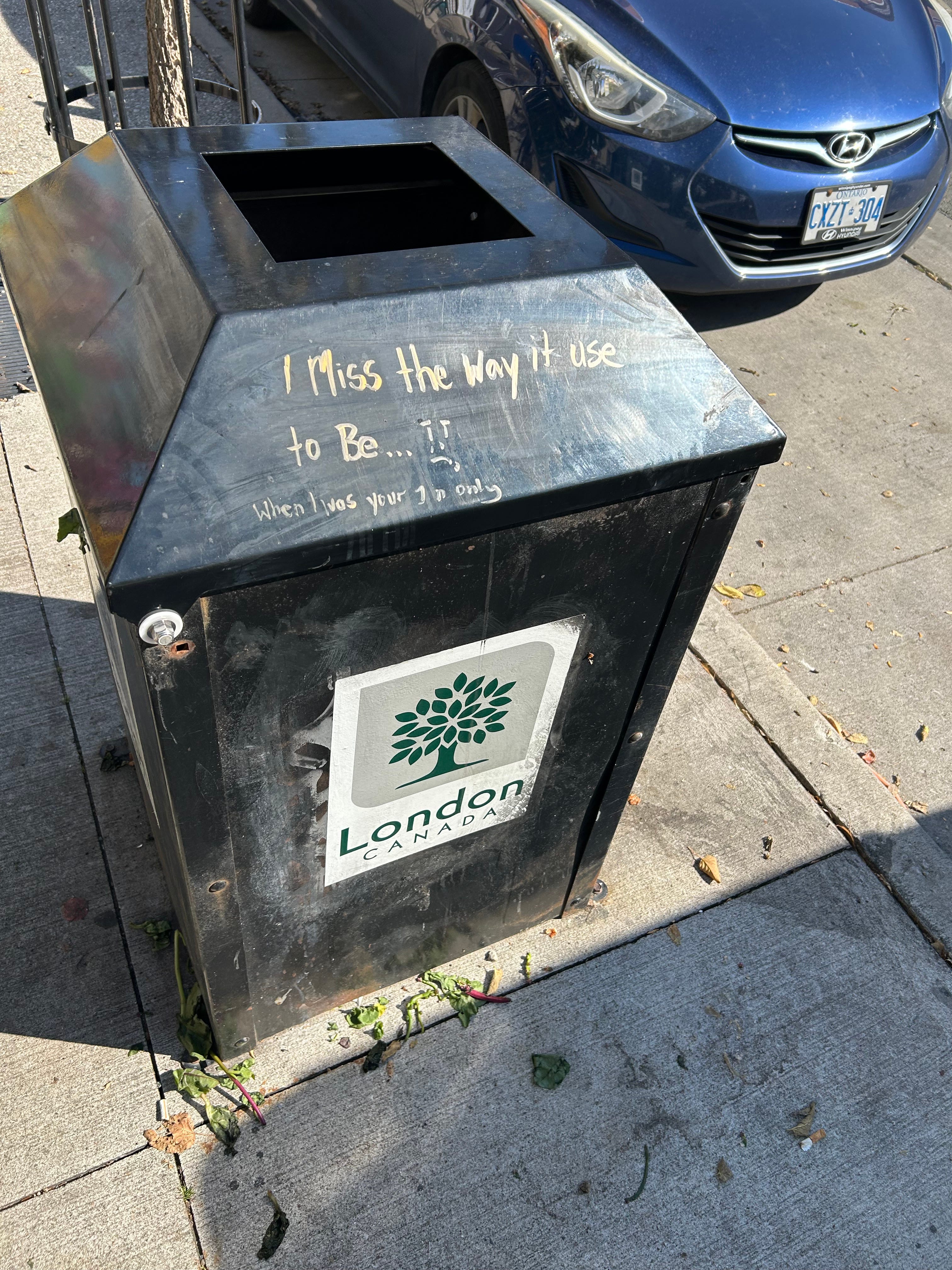
The homeless by-name list is at 2,391 people as of the end of September 2026, per the city’s own dashboard. One glaring note is that Indigenous people are over represented on this list; they make up under three percent of the city’s population, but just under 20 percent of the homeless population.
Over the last term, our municipal council tried a multitude of things to help mitigate the crisis: we aimed to construct 15 homeless hubs across the city, but could only manage to open two of them. These two hubs are each operated by Atlohsa and Youth Opportunities Unlimited and located within the complex of hospitals around Wellington Road and Commissioners Road East.
Neighbourhood opposition caused the City Council to scuttle the idea of a homeless hub at Wonderland Road North and Fanshawe Park Road West. The city was further shamed out of entertaining the idea of a hub at the former CJBK Studios on Wellington Road near Southdale Road East.
A HART (Homeless & Addiction Recovery Treatment) hub did open at The Salvation Army Centre of Hope on Wellington Street, about a year ago. After public shaming on winter temperature thresholds, council had to act on establishing newer guidelines for warming centres. Mayor Josh Morgan also used strong mayor powers to bring on the construction of modular shelters on Cheese Factory Road, funding which expires in the spring.
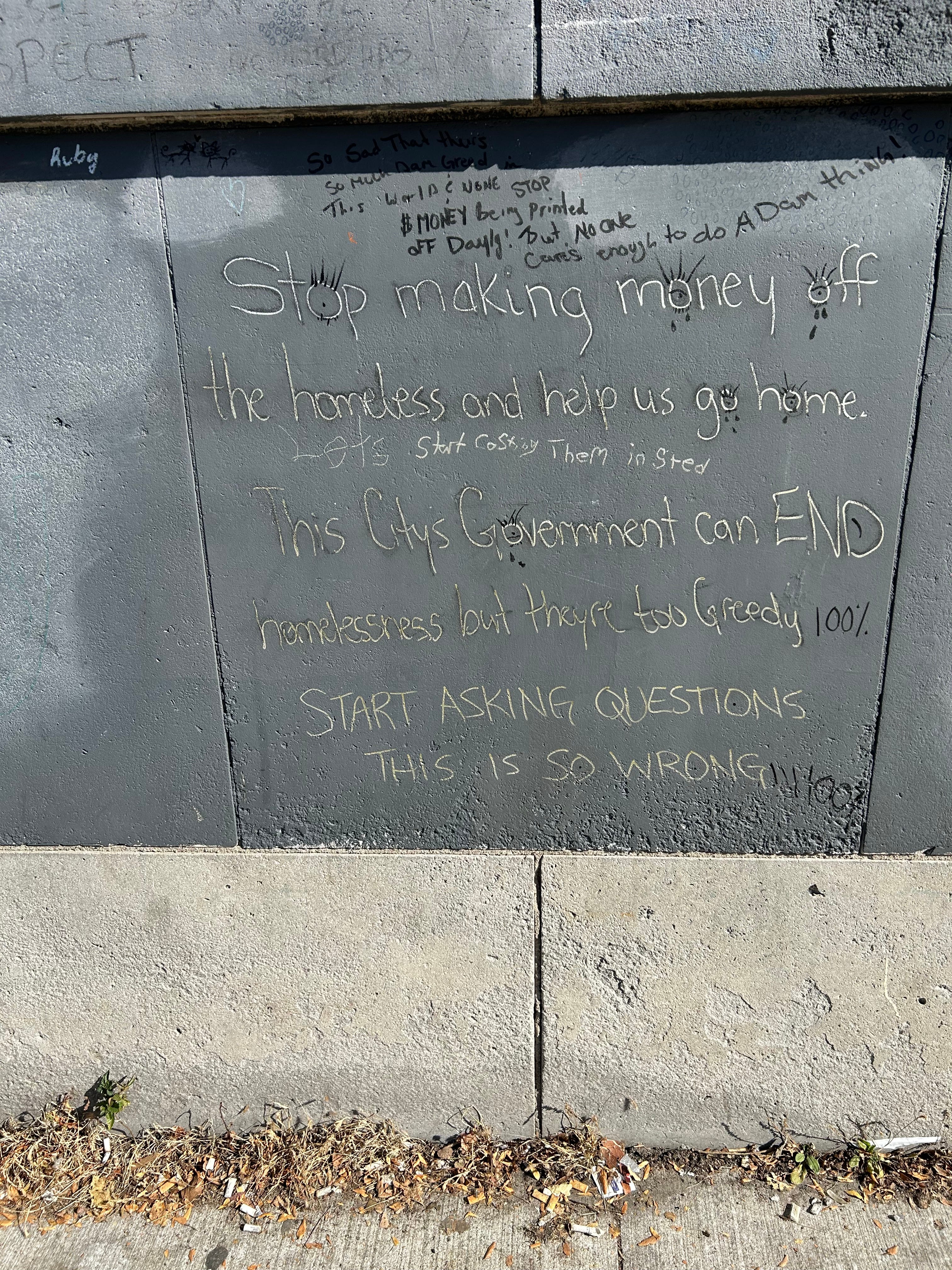
The discourse on homelessness is really contentious. Around the watercooler and on social media, people have staked out a side with their words and their ballots. But have they discussed it with the people who are at the center of these issues?
As you can see here, in this series of photos, a lot of people have opinions about homelessness, housing, funding for social services, and what should be done.
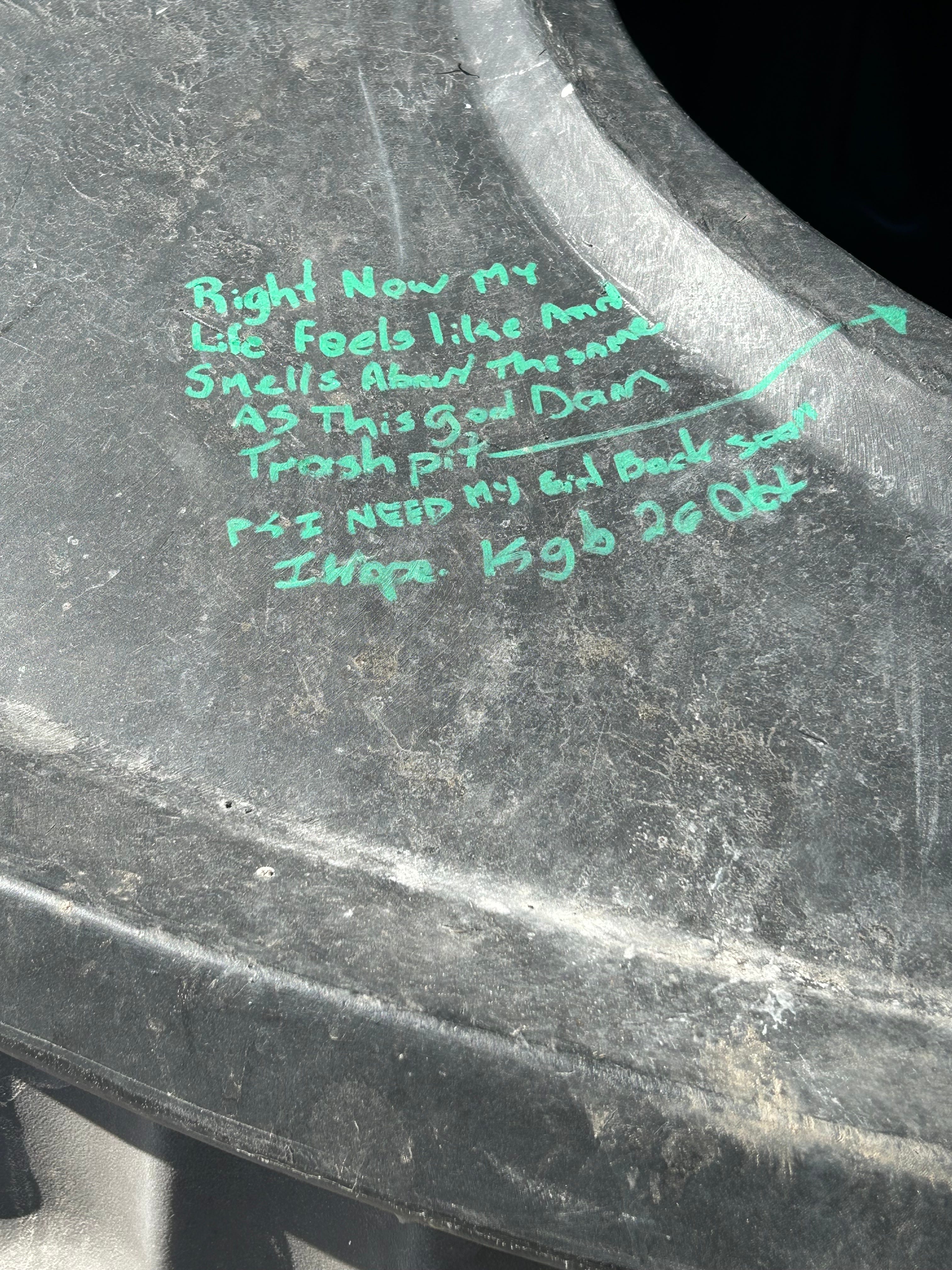
Some people have contrasting opinions. Some are not opinions about homelessness but about general minutiae of everyday life. Regardless, I wonder if their voices were heard amongst the election results? I wonder if whoever wrote these were engaged by London’s voters and council candidates?
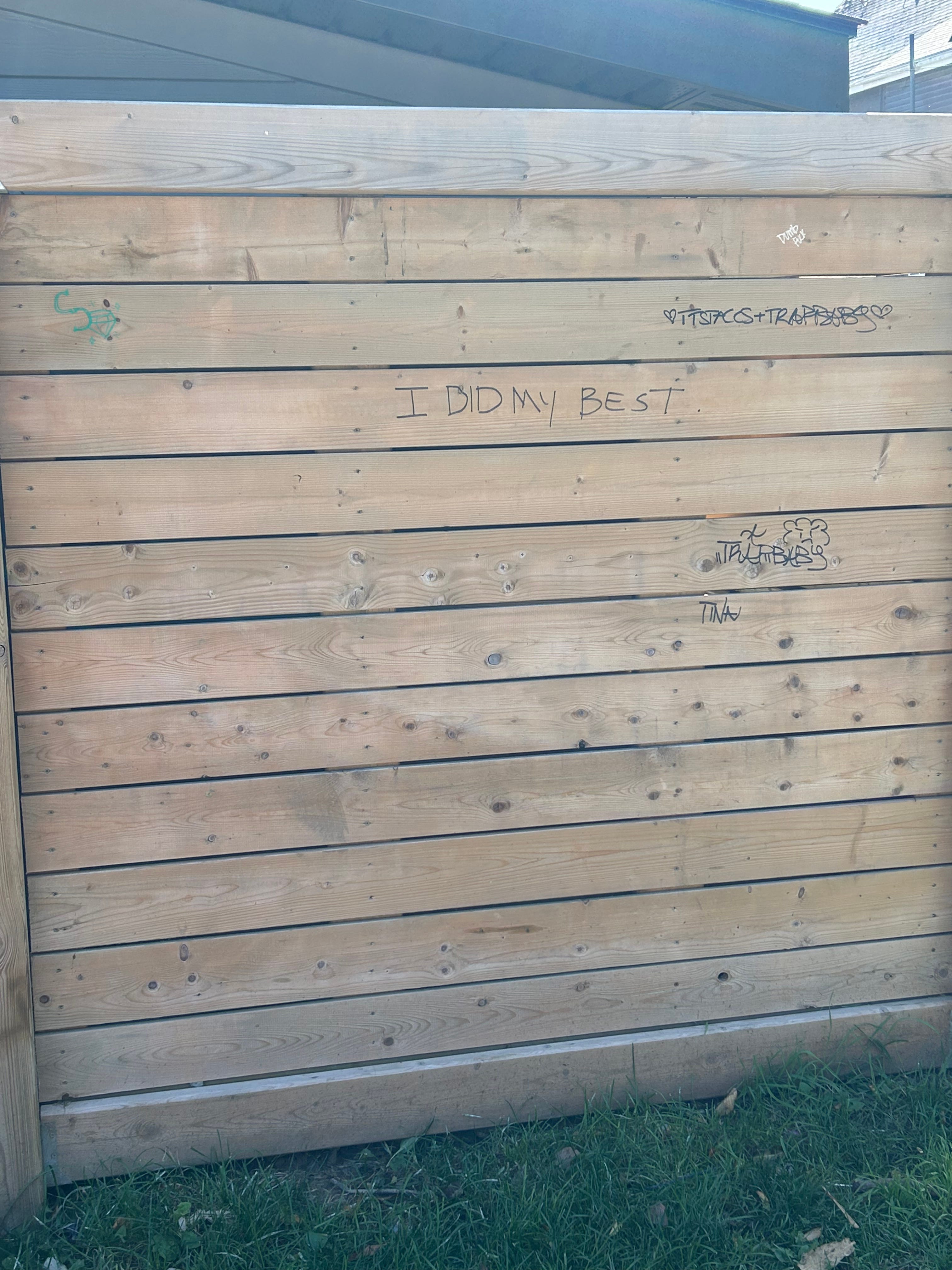
I kept walking along Dundas Street and cycling through the municipal parking lot that are along both sides of Dundas Street. I also walked through the alleys that connected to Dundas, which smelled of bodily fluids I could not readily identify.

You might ask, “Cedric, why did you even go here? It’s a sketchy place and it’s unsafe. You’re not supposed to go east of Adelaide.”
The answer is simple. It’s important to know what people are thinking in all areas of the city, and how they are living. I do not want to live in an echo chamber, and it would be wise for all Londoners to heed this.
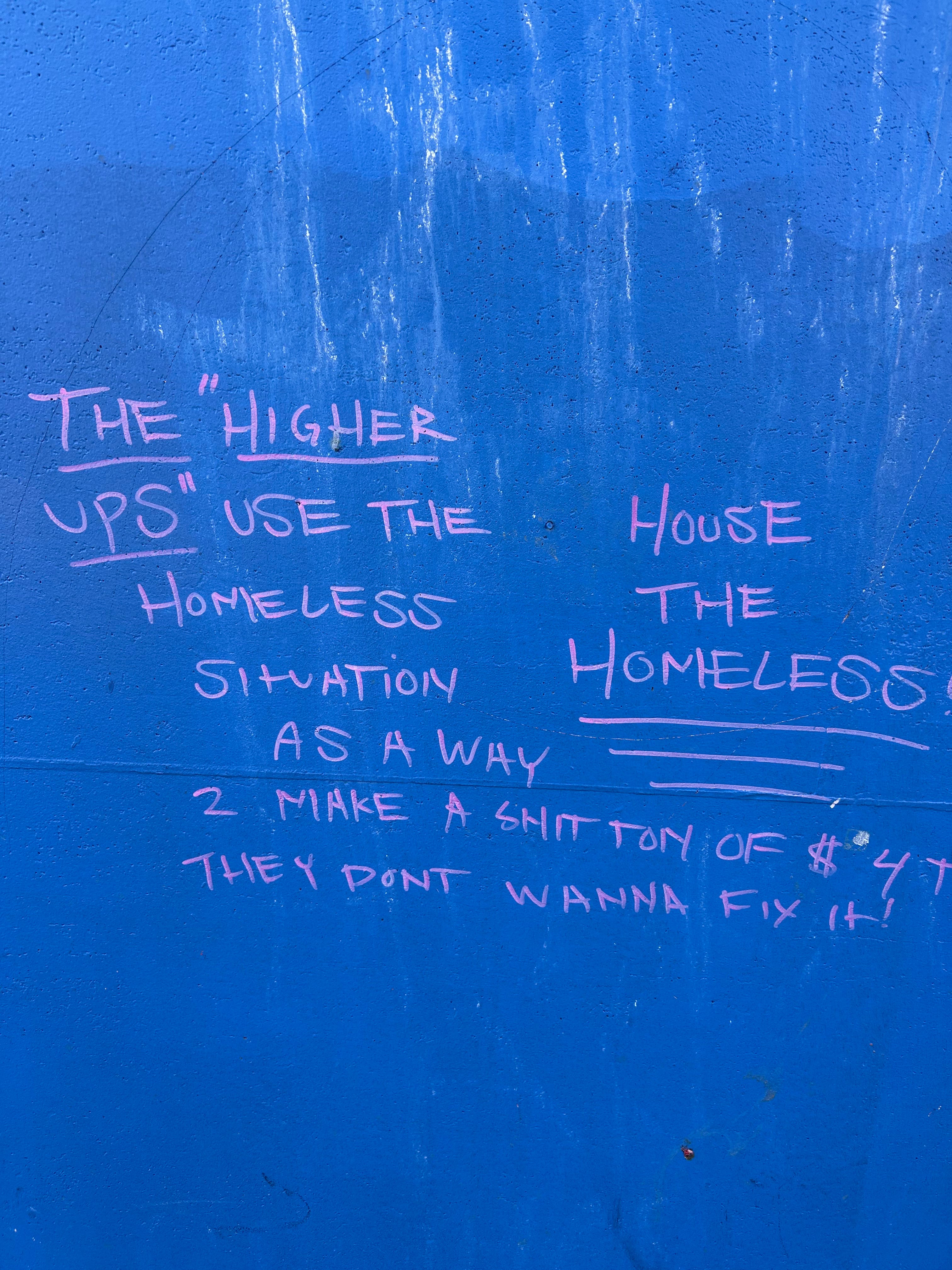
The election may be over, but did we listen to everybody? In 18 days, a new council will be sworn in and we can only hope that all voices in this city can be heard over the next four years.
Thank you for our time together today in exploring the area around Dundas Street and Adelaide Street at a level I think we all should get to know a little better.
Check back each Tuesday for my take on experiencing London from a fresh perspective. I am excited to bike around the city and report back to you. I welcome comments, suggestions, and topics to discuss each Tuesday. Please subscribe and let’s talk soon!
The Loon (London Ontario Online News) lineup
New content every day.

We’ve teamed up to send you a new feature every weekday:
Monday - Buckle Up - podcast with Matt Brown
SPONSORED BY HAMILTON ROAD BIATuesday - The City with Cedric Richards
SPONSORED BY LONDON BICYCLE CAFÉWednesday - City Hall Notes by Mike Donachie
SPONSORED BY SPERO LAWThursday - the Forest City Arts and Culture Roundup by Diana Tamblyn
SPONSORED BY DOWNTOWN LONDONFriday - Reflections with Steve Cordes
SPONSORED BY OLD EAST VILLAGE BIA
Also on Fridays: the local news ROUNDUP.
Every other Saturday: The Matt Brown Podcast. It’s the show about all things local, and maybe some other stuff too. SPONSORSHIP OPPORTUNITY AVAILABLE.
Great piece, Cedric, as always. Thanks for giving a voice to the voiceless.