


Welcome back to another look at The City with Cedric Richards, where you can expect a look at the Forest City with a fresh perspective. Thank you to all of you who have chosen The Loon in reading and subscribing to us each day.
Today, I’d like to make my way back to the city as a whole and talk about voter turnout. I mentioned in last week’s edition of The City that voter turnout in London increased from 25% in 2022 to 31% in 2026. That’s a good thing, even when people bemoan low turnout. In our post-annexation history, you have to go back to 1994 to find the highest voter turnout. The number was 43.39 percent, where first-term Board of Control member Dianne Haskett narrowly defeated three-term deputy mayor Jack Burghardt. A 33-year-old Stephen Orser ran for Board of Control, coming in eighth place.
But I’ve heard dismay over elections with turnout higher than 2026. London had two referendum questions in the 2003 election, One of which was about a smaller City Council, and the other being the abolition of the Board of Control. Both questions passed in the affirmative, but as turn out was under 50%, the referenda were considered non-binding. Interestingly enough, last week’s election had a similar voter turnout percentage to the 2003 election, when Anne Marie de Cicco-Best was seeking a second term herself, turning back a former city councillor on the right side of the political spectrum named Vaughn Minor.
The Methods
Much post-election discussion is centred on well-intentioned ideas to increase voter turnout. The idea of online voting has been floated as a way to bring people out to the polls and increase convenience to the democratic process. Per the Association of Municipalities of Ontario, it is mostly small and rural communities like townships that are using Internet and telephone voting as the sole electoral options for Election Day. It makes sense in those places, due to limited resources and scale. However, there are concerns raised about the security of that voting method, as well as the integrity of the vote. How would we know that the voters behind the screens are making their own decisions?
St. Thomas is one of those municipalities that offered Internet and telephone voting, queuing the boring clarion call of “if St. Thomas can do it, [London] can too”. I heard a bit of it during the aftermath of this election and the previous election. London is the sixth-most populous city in Ontario; London and the five larger cities conducted their entire elections by paper ballot, with some adding in vote-by-mail as an option. Other than Ontario’s big cities sticking with the paper ballot, there are about 80 other municipalities where you have to cast a paper ballot, places like Caledon, Kitchener, Amherstburg, Neebing, Newbury, and Gore Bay.
There are a lot of other ideas that people have, but they require changes to the Municipal Act, and there may be a wonder if the provincial government considers this a priority. 2020 saw British Columbia’s provincial Election Day occur on a weekend, similar to municipal election days in that province. Another idea is introducing officially recognized political parties much like British Columbia, Alberta, and Quebec. People also float the idea of incentivizing voters with treats similar to the democracy sausages in Australia (although, voting is compulsory there).
Maybe there’s the issue with how our votes are counted? Before ranked balloting was removed by the provincial government in 2020, London became the first municipality in Ontario to conduct a municipal election with this method. On that same day, Cambridge and Kingston passed referendum questions approving of ranked balloting. This could once again be a way to get people out to the polls who do not necessarily want to vote against a candidate, but want to vote for someone. However, because of how our Constitution works, this is something that the provincial government would have to authorize, and after banning ranked balloting in 2020, it would be up to them to have a sudden change of heart.
What about polling stations? Counting advance and vote-by-mail, we have hovered around 200 polls since the 2014 election. That is down from about two-thirds the amount from the 2010 election. Imagine living in a high-rise but you could go vote on the ground floor of your apartment. Imagine living in Glanworth proper, and you could walk down the street to the library to vote in the advance polls. About a few weeks ago on The Craig Needles Podcast, the panel lamented the logistical challenges in getting out to the advance polls as some wards did not have a polling station.
The Disparity Between Votes
There’s something of concern within the city, from the information we do have. West London turns out to vote, disproportionately more than East London and the core. Ward 1 consistently has the lowest voter turn out in the city. Ward 2 is very close to last place in turnout. In the last three elections, in terms of raw vote total and/or voter turnout, Ward 9 has had voters consistently turn out in the highest numbers, citywide. Part of this is because Ward 9 is one of the largest wards in London. The other part is frustration about the pace of development, in one of the fastest-growing areas of the Forest City. This term saw a lot of frustration with both infill housing and urban sprawl, with voters looking to vote against incumbent councillor Anna Hopkins, who was re-elected with just under 40% of the vote.
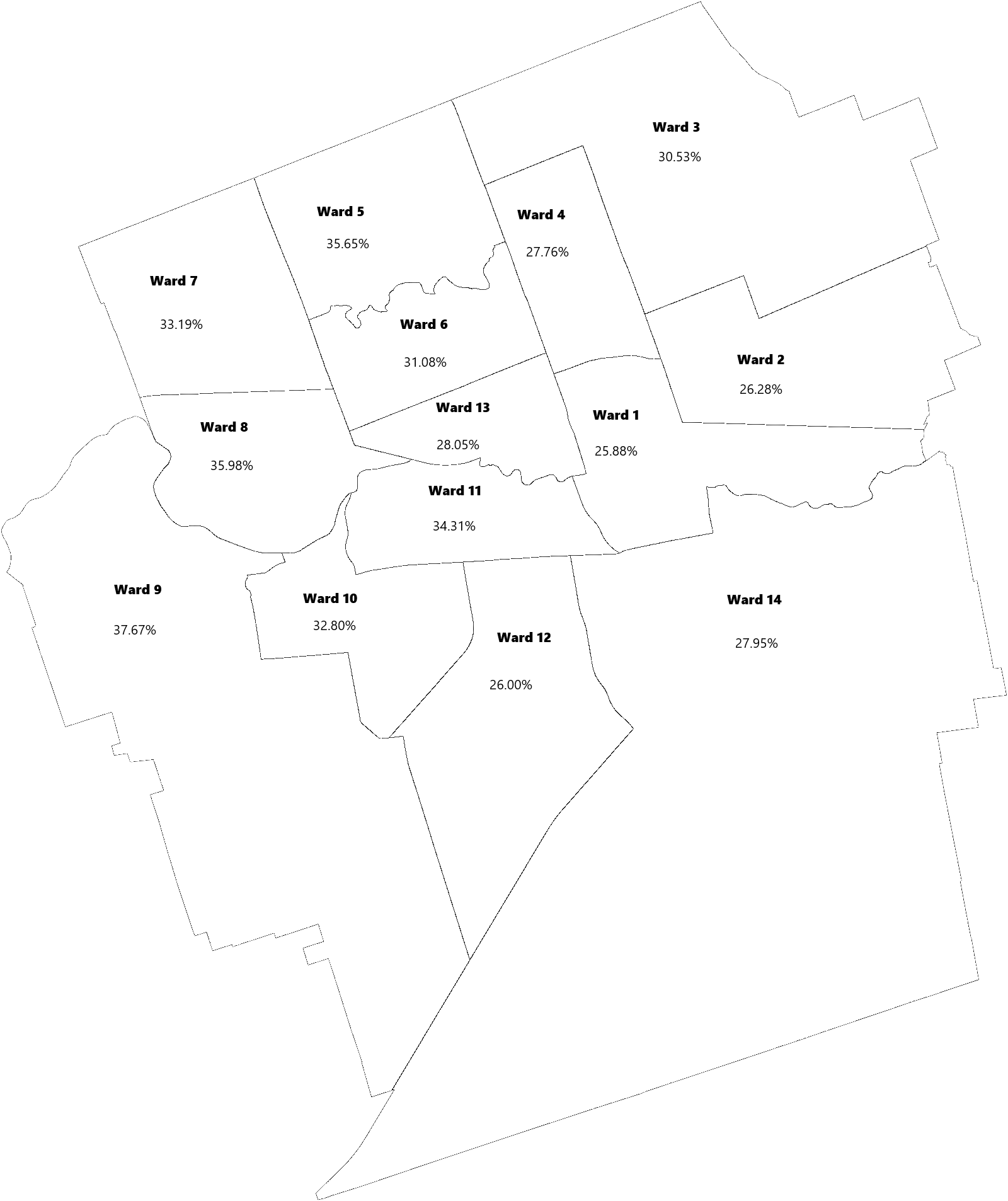
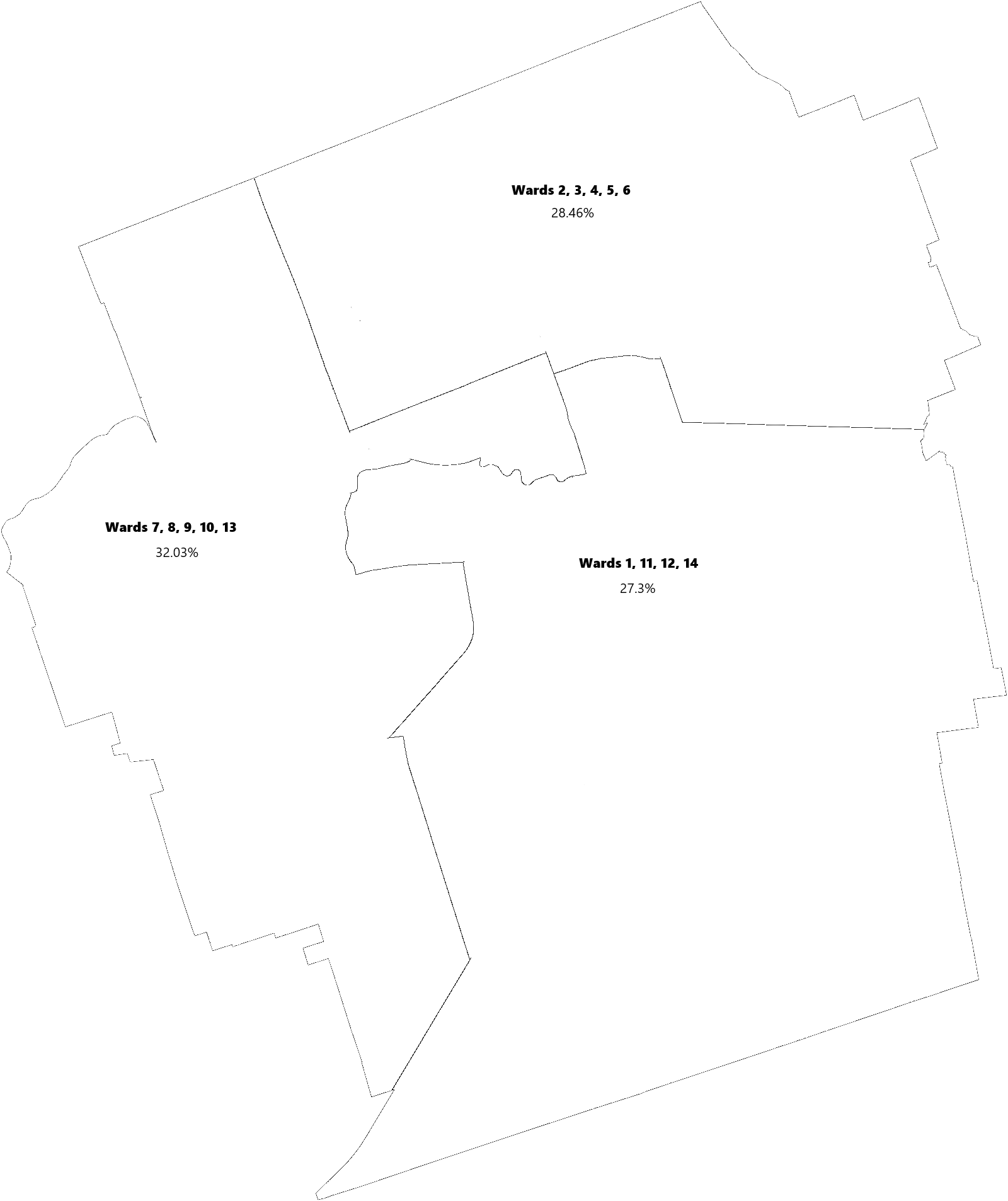
Among school trustee races, in Thames Valley, the constituency representing Wards 1, 11, 12, and 14 (southeast London) is consistently third and last among London constituencies in voter turnout. The constituency representing wards 2, 3, 4, 5, and 6 (northeast London) is second place, but still low. And the constituency representing Ward 7, 8, 9, 10, and 13 (west London and the core) is first and far out front in voter turnout.
In the elections for London District Catholic School Board, the same pattern repeats. In the northwest and west end of London, there is substantially a higher voter turnout than in the south and the east. In the six elections since 2006 for the constituency representing Wards 8, 9, and 10, there have been three acclamations, all of whom belong to Linda Steel. In the other three elections, twice this constituency has led voter turnout. Wards 5, 6, and 7 had the only constituency with over 50% voter turnout. The constituency of Wards 1 and 14 consistently has the lowest voter turn out.
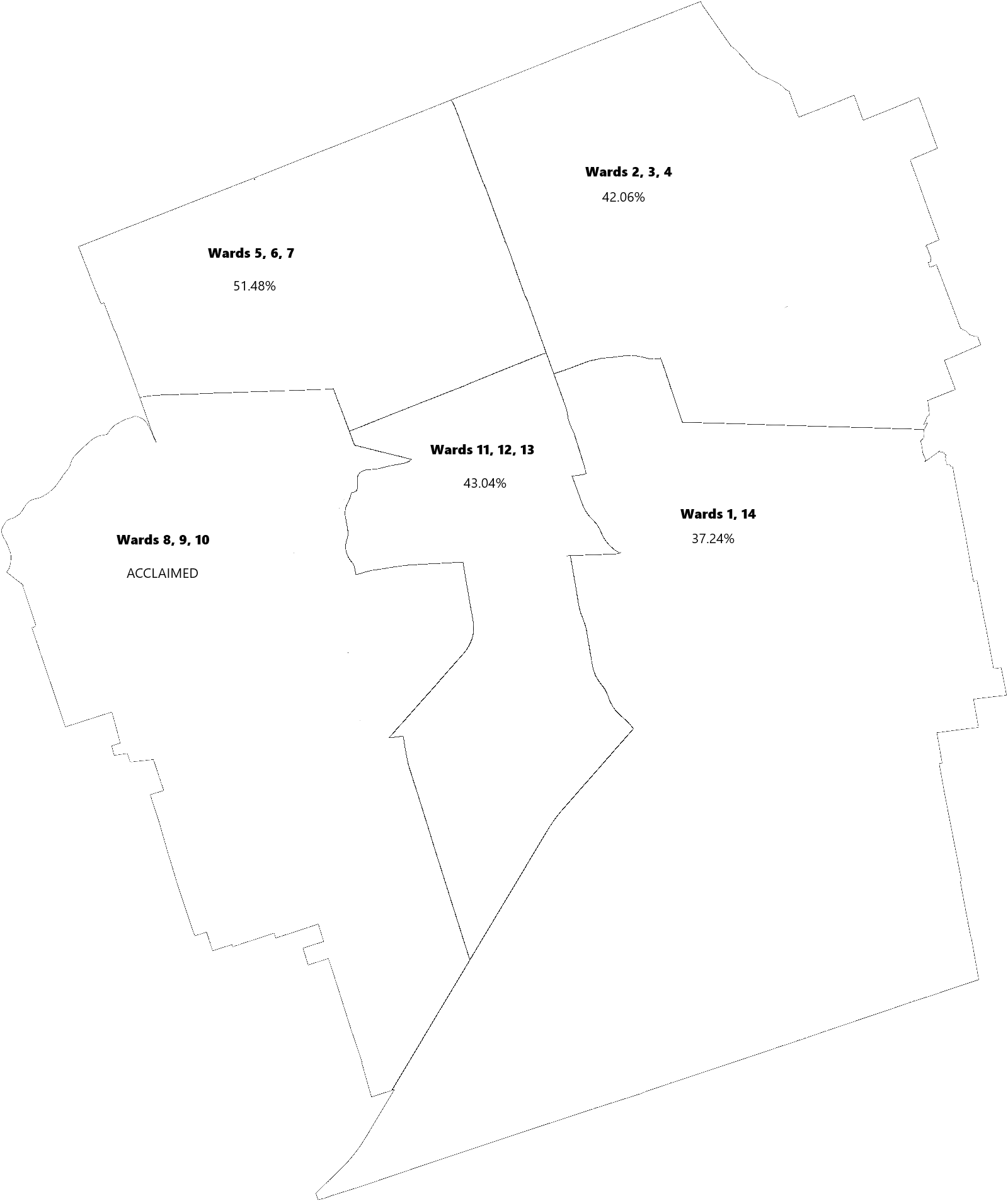
The elephant in the room is differences in demographics. In my dwelling about demographics mixes across London over the last year, I have noticed that the north and west ends of London have communities that have higher levels of education, higher incomes, higher homeownership levels. The core, east, and south parts of London, are on the lower ends of these quantitative measures. The result is a feeling like a vote does not matter in municipal politics. It means the apartment dweller on McNay Street whose door does not get knocked on by a candidate. It's the student being told that they're only here for seven months of the year, so they don't count as a Londoner. It's the shift worker in Old East Village who feels they may not have the time to look up what their candidates are about. Maybe increasing turnout could come from within? Maybe we could campaign like everybody’s voices matter, and not just the choir we preach to?
On a candidate’s end, especially citywide, they know that while every vote matters, most of the votes are in places like Hyde Park, Oakridge, and Byron, and in newer communities like Talbot Village, Fox Hollow, and Riverbend. This leads to nail-biters like last week’s election where Dan Meinen lost to Jonathan Sher by 82 votes, or in Ward 9 where Luke Thomas and Anna Hopkins alternated between first and second places during the live voting count. Or in Wards 5 and 8 during the ranked ballot election of 2018, which saw councillor candidates go the distance, and were some of the last ward races have final results released. And of course, there’s that one election where Josh Morgan lost to Paul Hubert by 23 votes.
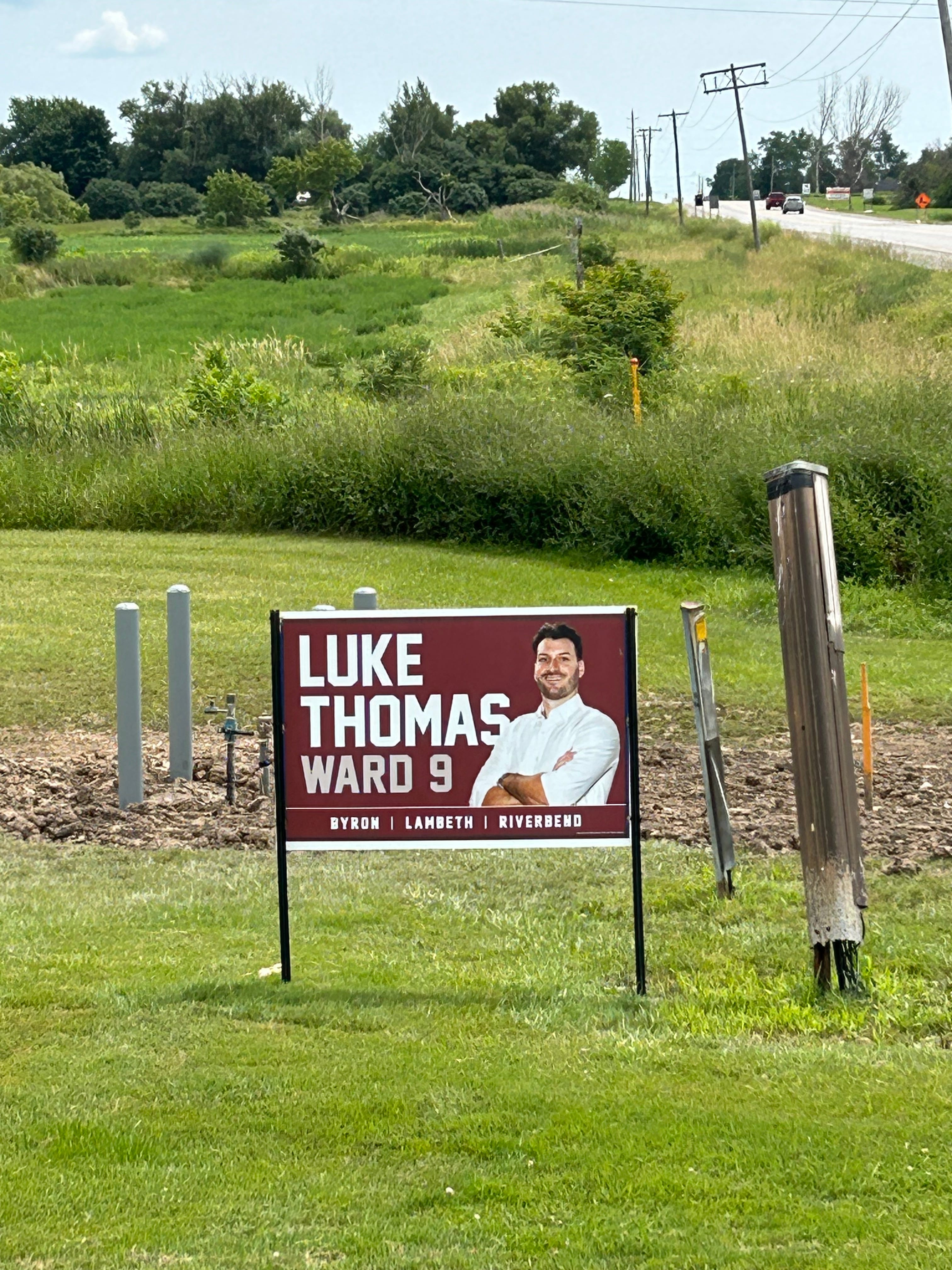
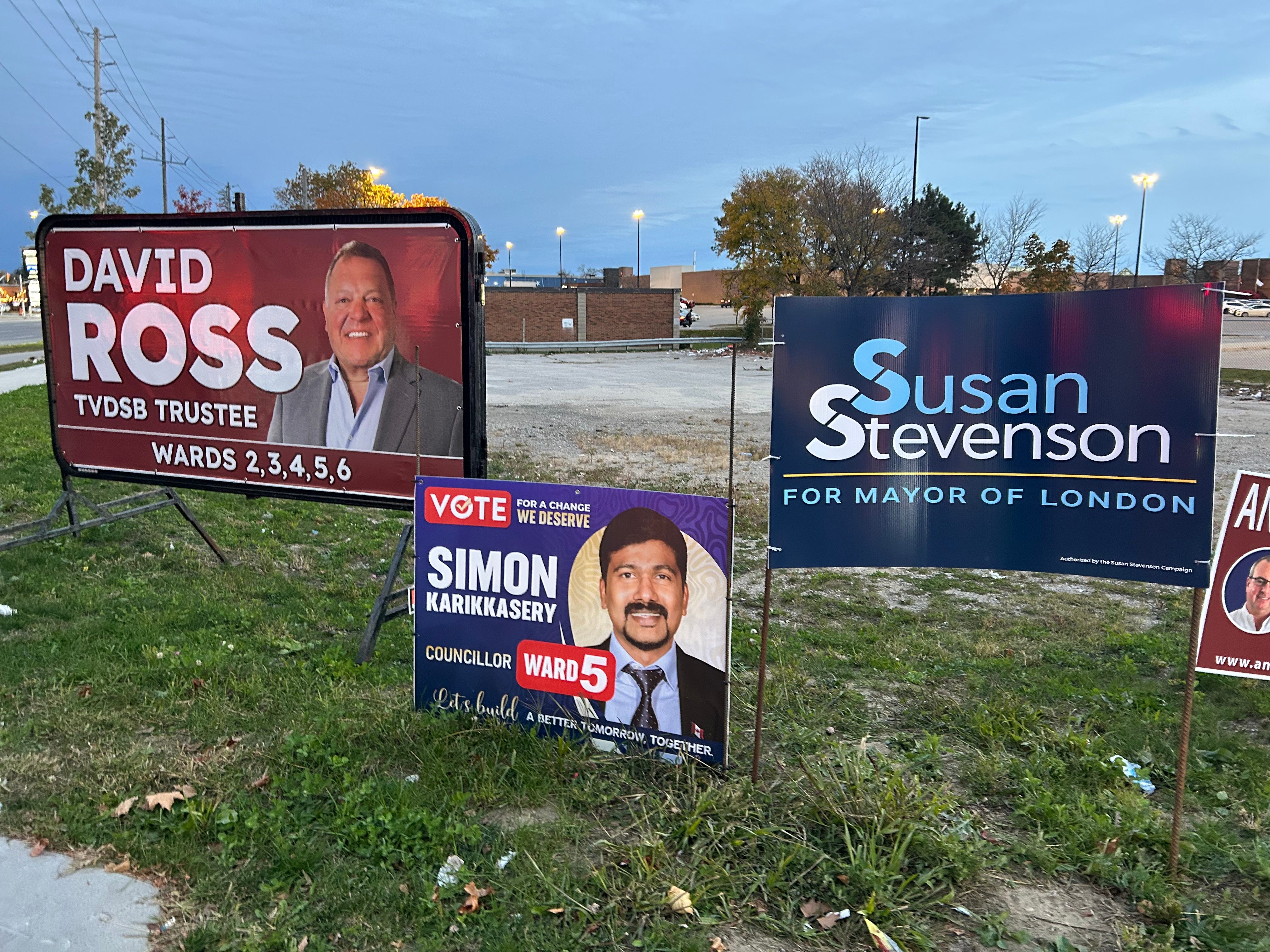
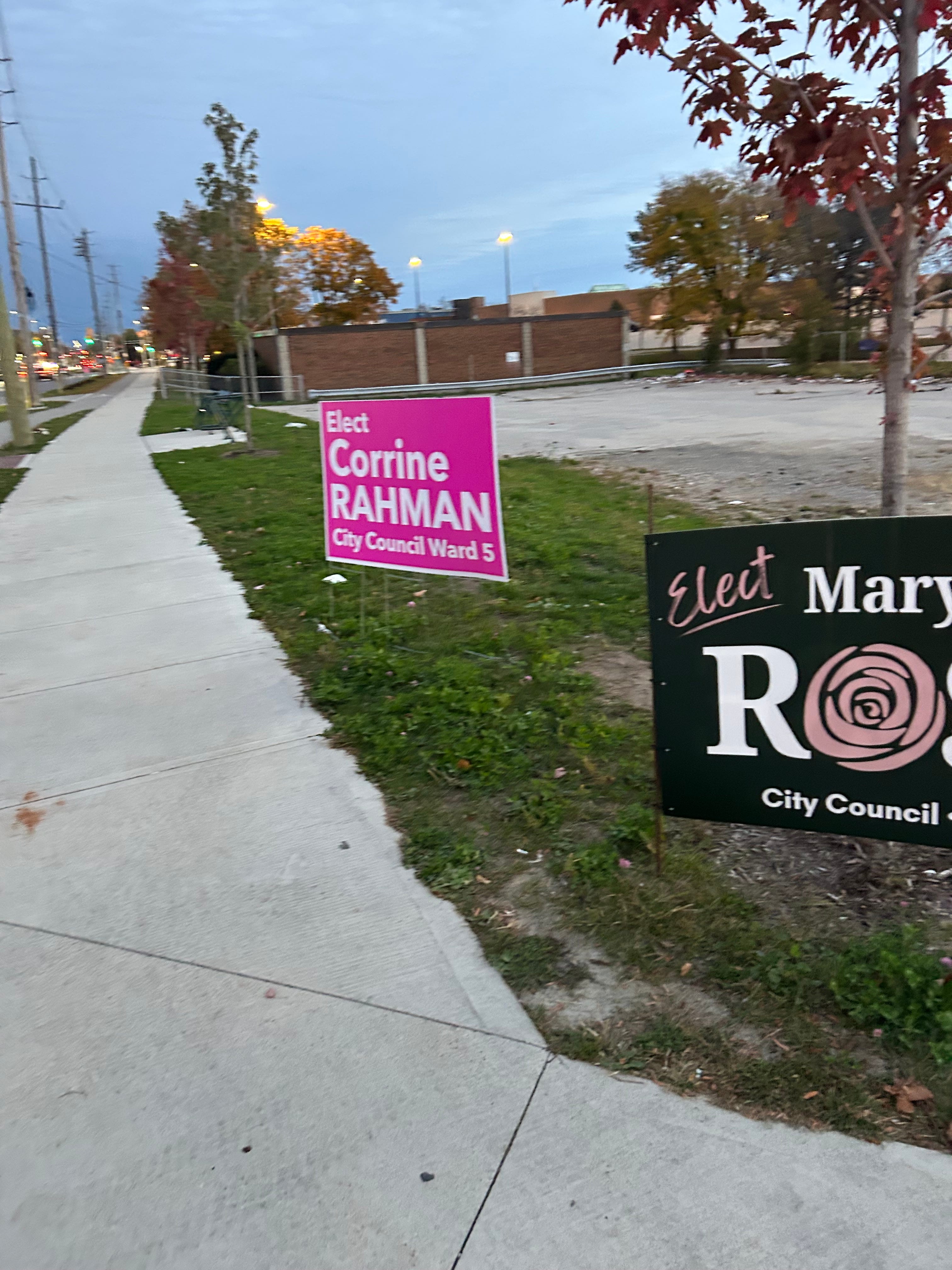
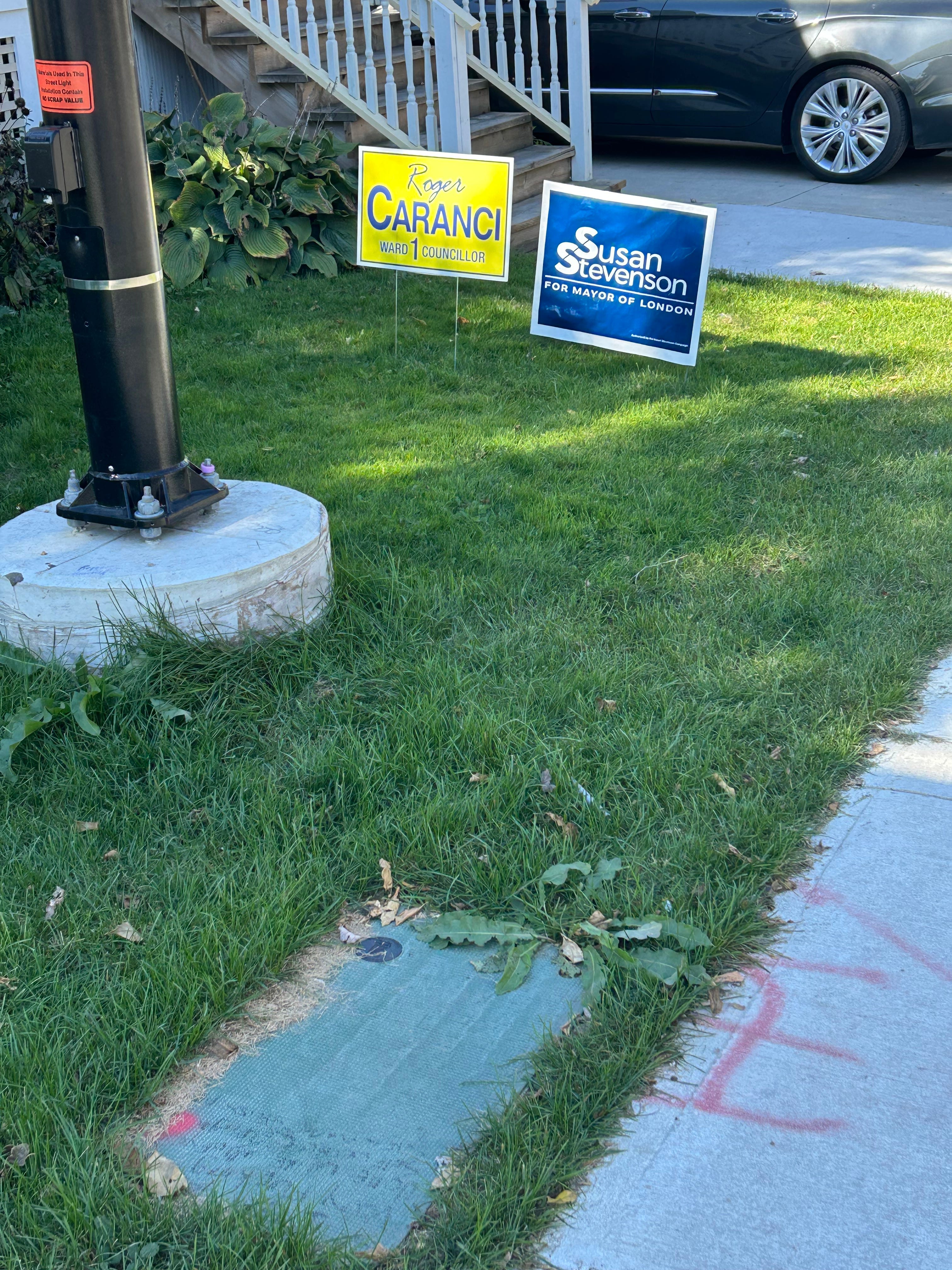
When I biked all over this city for the tour of wards, I noticed stark differences in outward political engagement. It is apparent common knowledge that people start paying attention to municipal elections after Labour Day. It’s when politicians really ramp up campaigns. It was literally during the season of spring that I saw candidates’ lawn signs pop up in the Fox Hollow neighborhood. In Ward 9, I saw mayoral and ward candidates’ signs in tandem on lawns in August. In Old South, the challenge was to try to find a lawn without a Skylar Franke sign. Throughout east and south London, the challenge was to find a sign on a lawn at all during the summer. A sole exception to this was on Queens Avenue, when I saw Roger Caranci and Susan Stevenson signs, together on multiple lawns.
The Takeaway
With this disparity between different communities in voter turnout, the best thing I believe we can do is to focus on what we can control instead of waiting for the provincial government to change its mind. We could make our political discourse safer to discuss the issues of the day. Our forums, whether online or in-person, should be more welcoming to non-voters as well as those who regularly participate in politics. We need to actively remember that our London includes all communities in the city limits, not just those we are demographically aligned with.
We also need to give up the idea that directly paying property taxes infers a better or morally superior stake in political participation in our city. We all contribute to London in different ways; there is no singular Forest City experience. We all get the same vote, and we must treat it that way.
I hope you enjoyed our time together today. We processed some numbers on voter turnout, and when the city releases more in-depth numbers, we’ll go through those numbers too. I believe that we can and should find ways to increase voter turn out as a whole in London. But we should also find ways to fix the disparity between different areas in London. Not only should every vote count in London, but that vote should count, no matter what community you may live in.
Check back each Tuesday for my take on experiencing London from a fresh perspective. I am excited to bike around the city and report back to you. I welcome comments, suggestions, and topics to discuss each Tuesday. Please subscribe and let’s talk soon!
The Loon (London Ontario Online News) lineup
Local independent journalism bringing you new content every day.
Find our editorial standards and policies here.

Meet the Londoners who team up to send you a new feature every weekday:
Monday - Buckle Up - podcast with Matt Brown
SPONSORED BY HAMILTON ROAD BIATuesday - City Tours with Cedric Richards
SPONSORED BY LONDON BICYCLE CAFÉWednesday - City Hall Notes by Mike Donachie
SPONSORED BY SPERO LAWThursday - the Forest City Arts and Culture Roundup by Diana Tamblyn
SPONSORED BY DOWNTOWN LONDONFriday - Reflections with Steve Cordes
SPONSORED BY OLD EAST VILLAGE BIA
Also on Fridays: the local news ROUNDUP.
Every other Saturday: The Matt Brown Podcast. It’s the show about all things local, and maybe some other stuff too. SPONSORSHIP OPPORTUNITY AVAILABLE.