


Welcome back to another look at The City with Cedric Richards, where you can expect a look at the Forest City with a fresh perspective. Thank you to all of you who have chosen The Loon in reading and subscribing to us each day.
Wharncliffe Road and Oxford Street is a real point of contention. During rush hour, it is a meeting of two roads that are congested for blocks. You’ve heard the stories about it in the last council term. Funding for traffic improvements at the corner were deferred indefinitely to prioritize funding an overrun of bus rapid transit construction in the south end. Ward 6 candidate Ian Sterling Leishman brought this up to attack Sam Trosow at a recent all candidates meeting. Mayoral candidate Kirsten Krose walked down the street at this corner while shooting a recent campaign video.
It’s a tough intersection for traffic, but there are communities that live around these four corners, that get overlooked when we talk about the place.
This week, let’s go to the oldest part of West London, somewhere adjacent to Old North. Maybe this is a part of “Old Northwest?” The City of London has a different name for the area. About a decade ago, the City unveiled a secondary plan that is still on the books today, with a few revisions. They referred to the area as The BIGS, an acronym that stands for Beaufort, Irwin, Gunn, and Saunby, four neighbourhood streets that cross each other.
You may know about Blackfriars, which is immediately located just west of the downtown core. It was once part of a separate municipality known as Petersville, incorporated in 1874, being named after the Peters family who owned wide swaths of land in the area. Notable members of the family included Samuel Peters Junior, who was City Engineer for London and his son, Colonel John Peters. The younger of the two had apparently failed to live up to a promise to dedicate land for a school and a town hall. In a moment of resentment, the people of the village changed its name to London West in 1881. The flood that came in 1883 not only caused many casualties for the people in the village, but was a slow death knell for the area. On December 13, 1897, London West and London formally amalgamated as one, with the future Blackfriars area being known as Ward 6 on City Council.
From the core, let’s go on the Kensington Bridge. From here, we cross into the west of London. I remember going on this bridge eastbound on family car rides, and feeling such a pronounced bump at the first lip of it. The bike path on Riverside Drive continues as two-way until Wilson Avenue, where a traffic light controls movement of all kinds. Wilson Avenue was known as Centre Street while London West was a village, but was renamed as Wilson in honor of the final village mayor, Dr. John Wilson.
There has been some construction along Wilson for much of the last few months, requiring a quick detour. All of the cul-de-sacs along Wilson connect to a path.
The Thames Valley Parkway has a spur that continues along the west side of the river, along Blackfriars as part of the West London dyke. This dyke is the newest iteration of a history of flood control measures that stemmed from the major floods of 1883 and 1937.
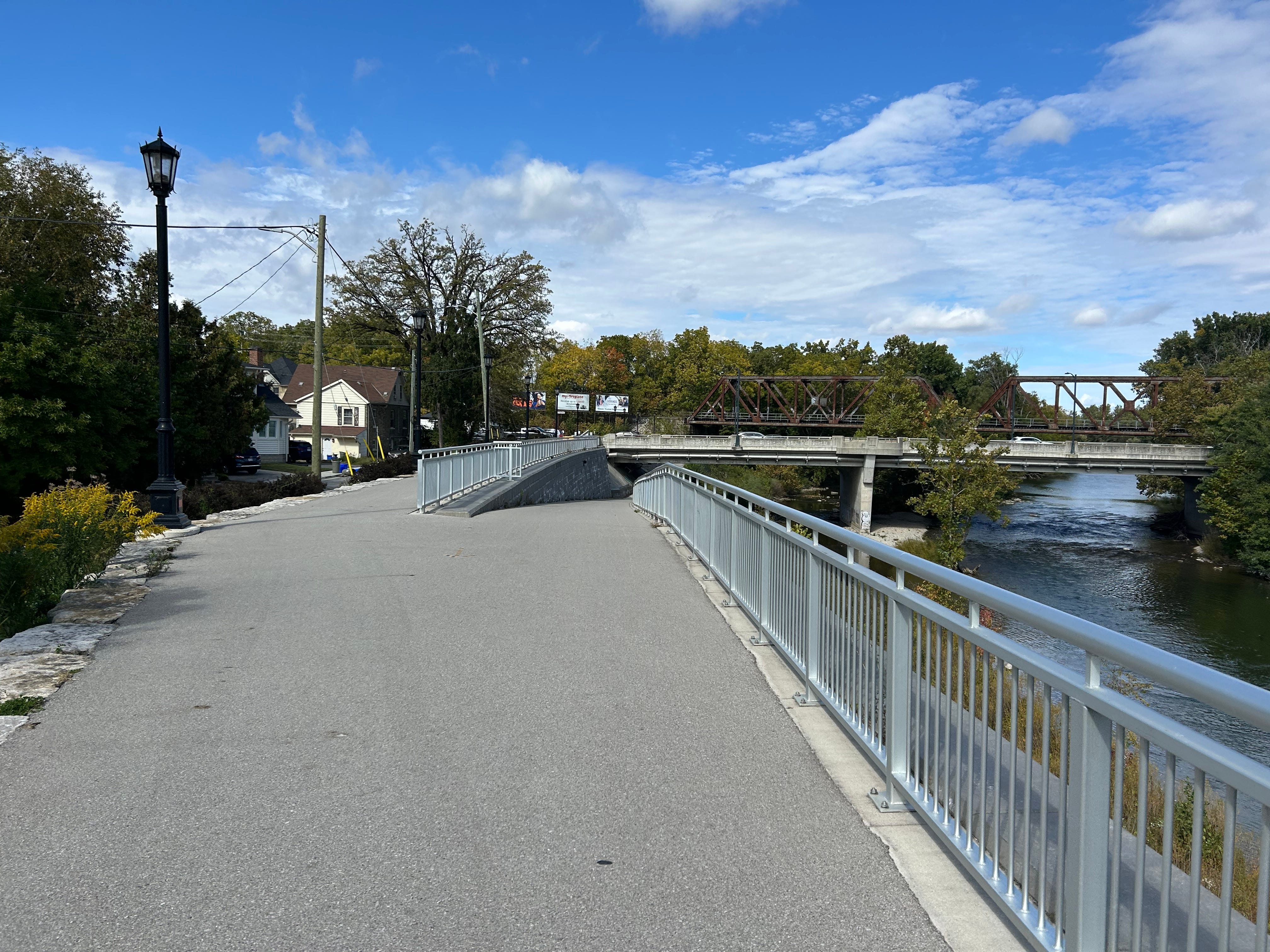
The path runs under the Norman Bradford Bridge along Oxford Street. There is no way to continue north of Oxford except for going onto the sidewalk along Oxford to continue this journey. The first intersection west of the river is Gunn Street, a tiny street with its own underpass.
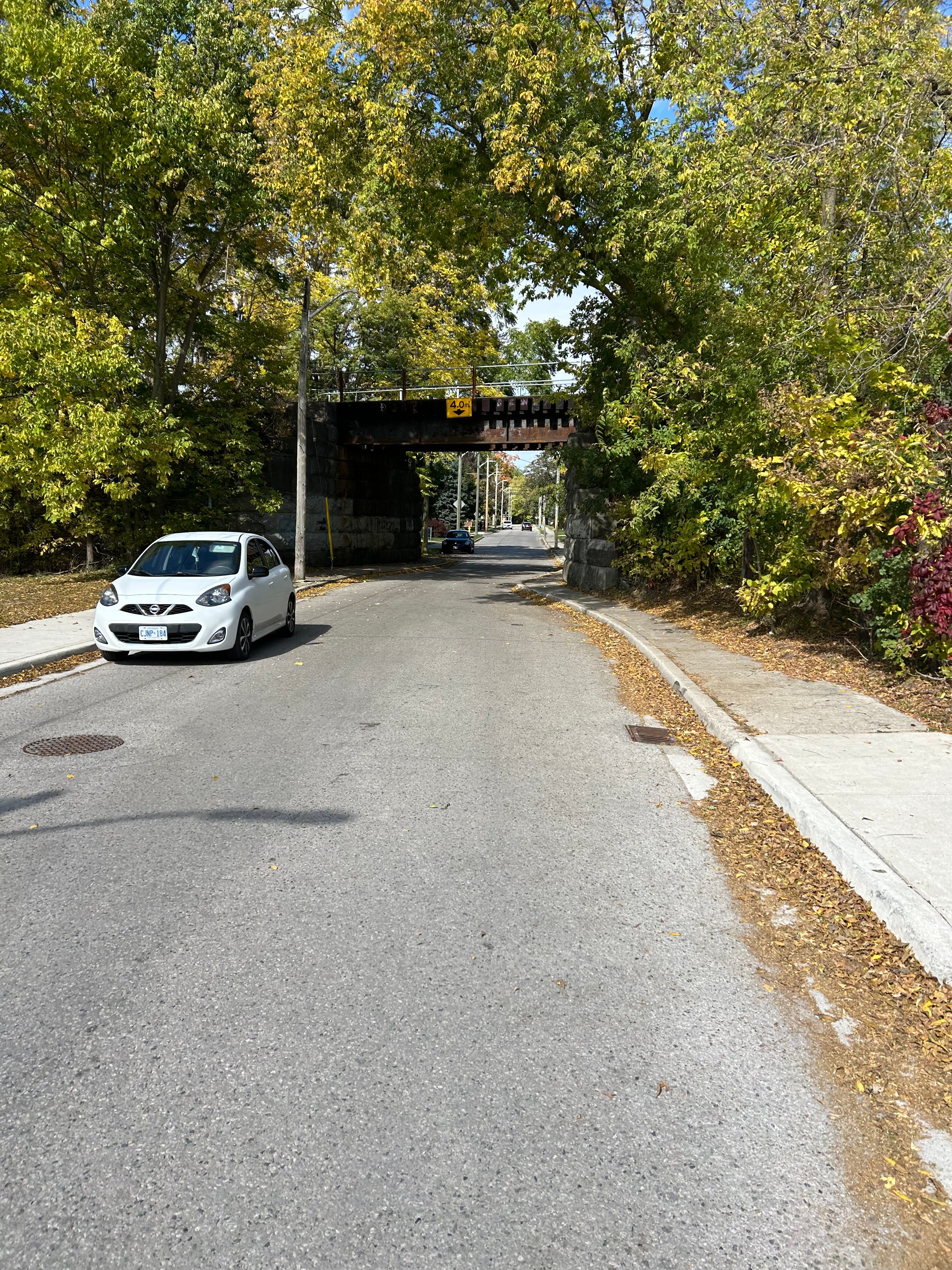
Saunby Street reaches a dead end east of Gunn Street, leading to a short little trail in which you can see the Thames River up close and personal.
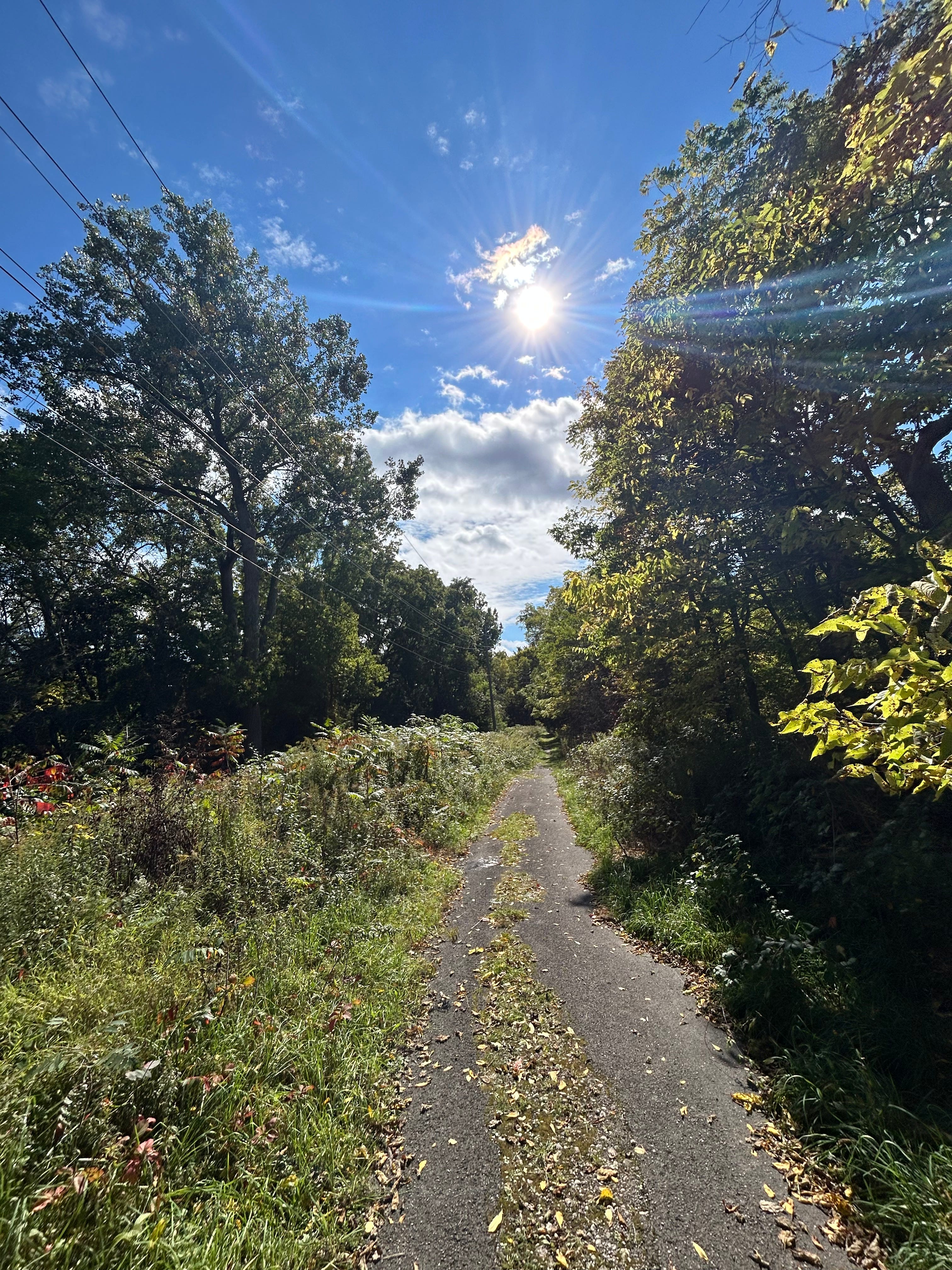
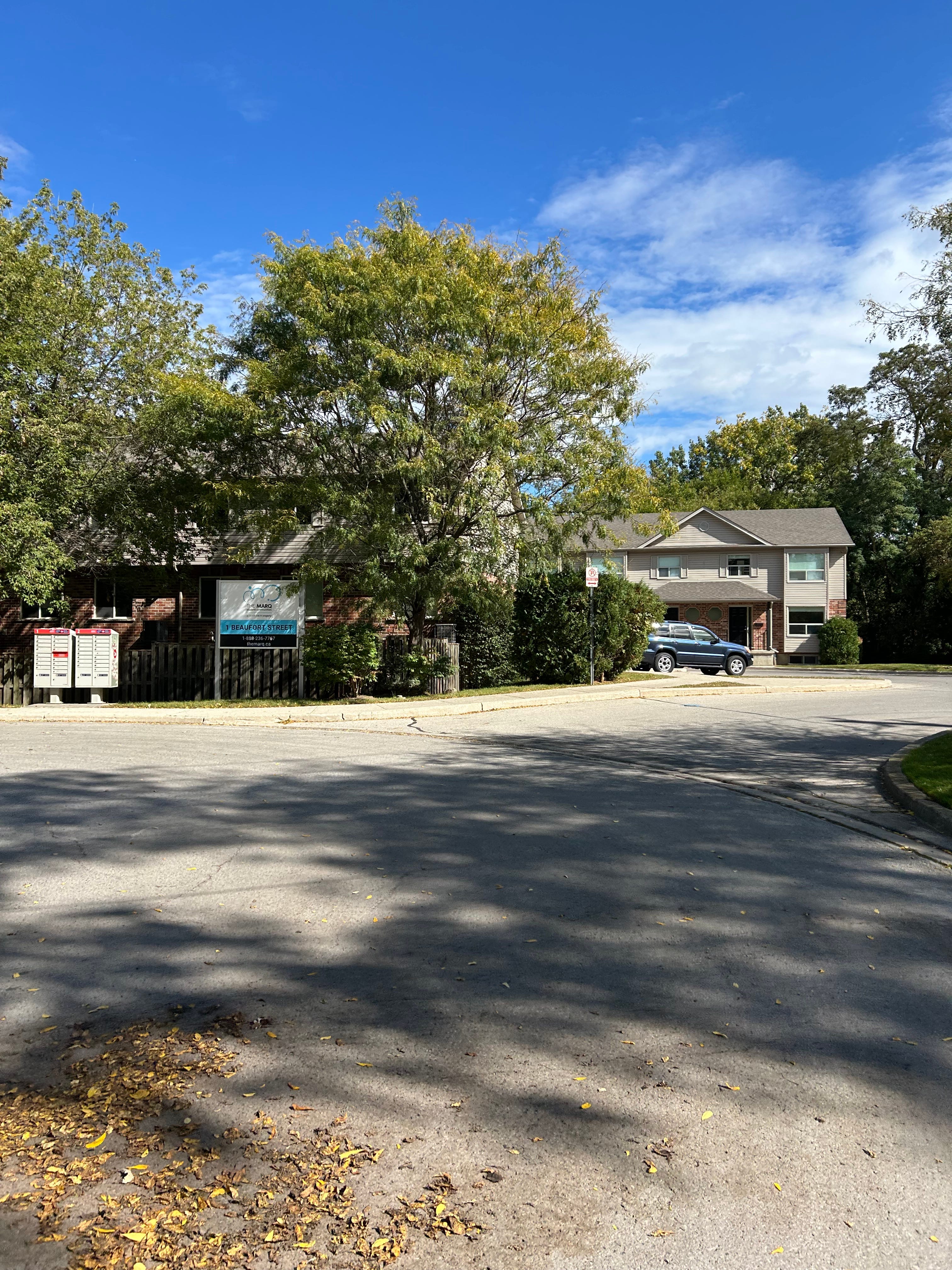
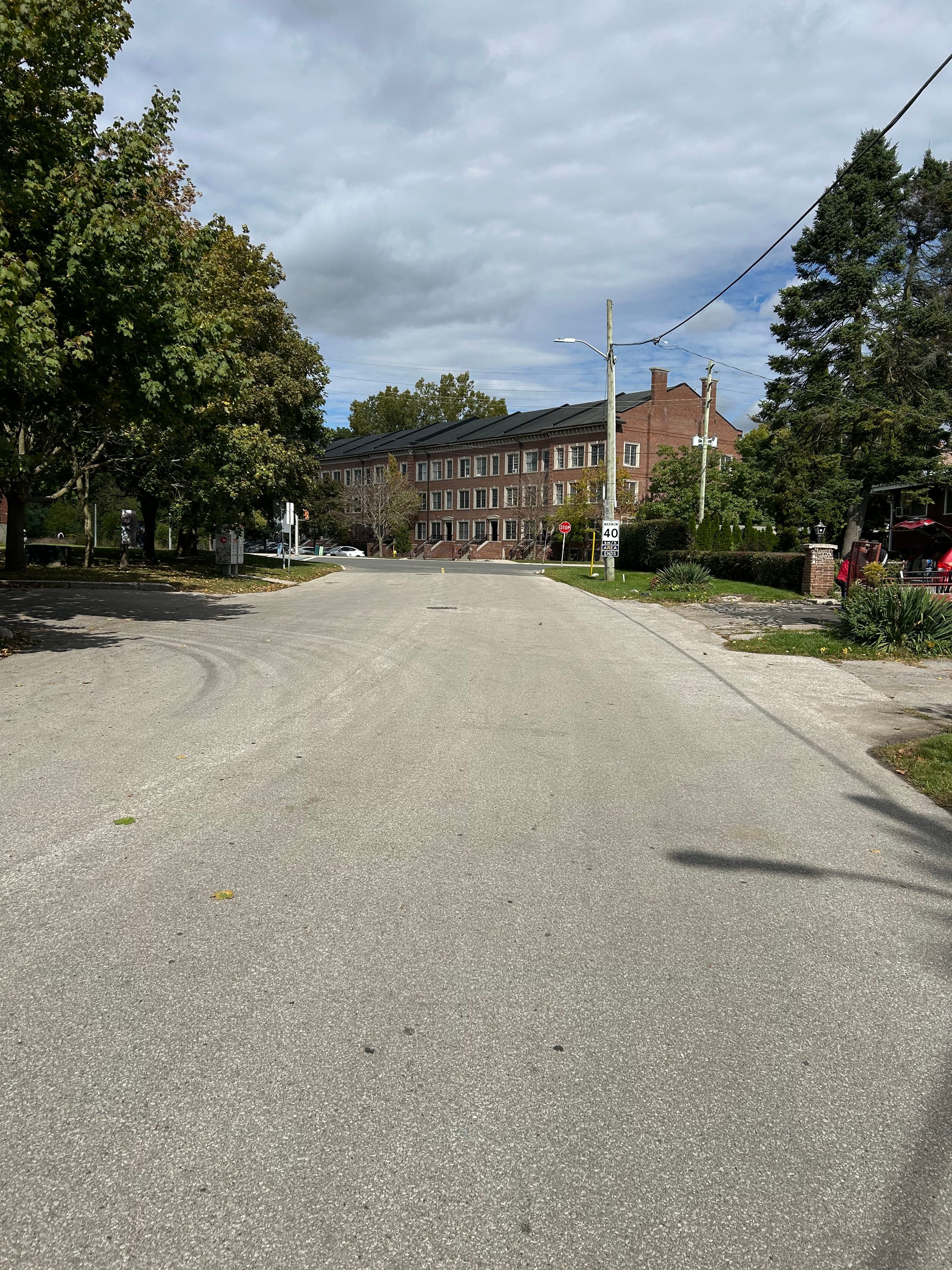
It’s one of the few trails in the city that is paved, albeit with plants growing in the cracks. The trail ends where Beaufort Street ends, leading to a very important little neighbourhood connector. 1 Beaufort Street, formerly home to a mill, is now the site of a student-oriented townhouse complex.
7 Beaufort Street is the home of London Waldorf School, a private school that existed across a series of sites since 1980. It is one of two private schools in the area, the other being the Christian Academy on Mount Pleasant Avenue. First opening in 1980 in a farmhouse near Westmount, the school later moved sites to East London with a Hyde Park satellite site. In 1996, the school moved into the former London Tennis and Badminton club, where it has remained since.
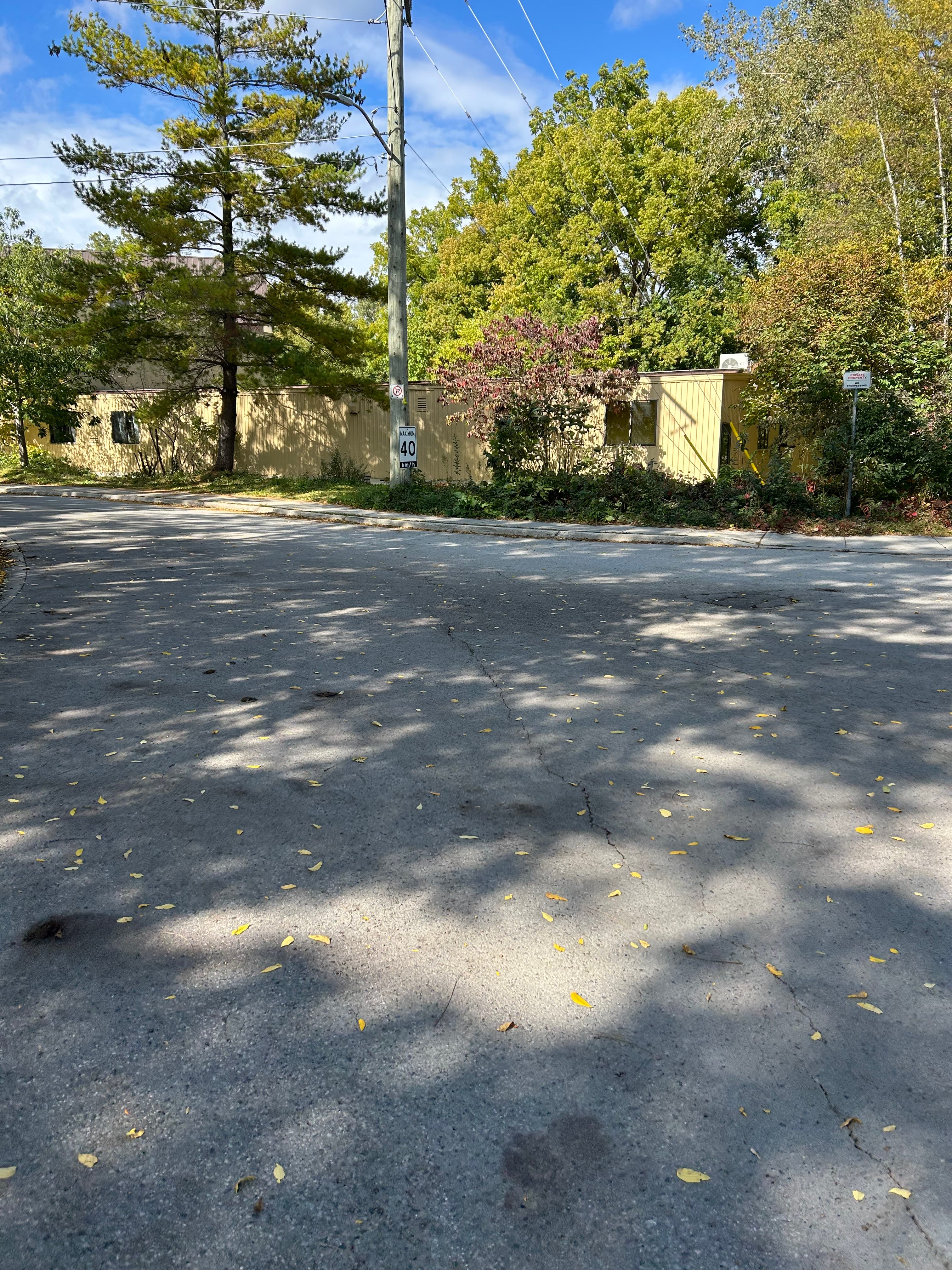
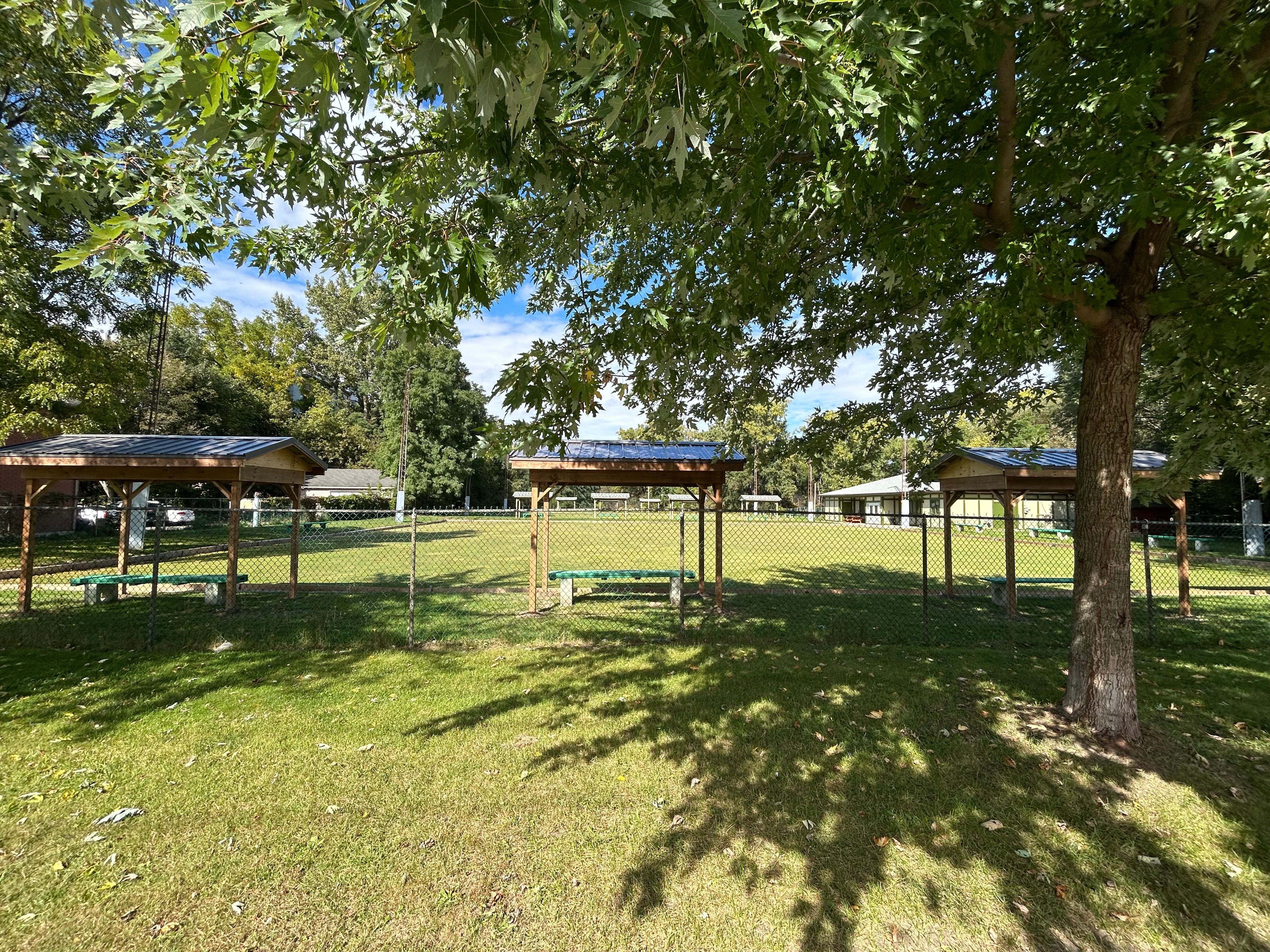
Right beside the school is the Thistle Lawn Bowling Club on 25 Beaufort Street, which is a popular place to be on hot summer nights. Along the driveway, there is a path that connects to a pedestrian bridge that is like a side door to Gibbons Park. Beaufort Street ends at Wharncliffe Road North.
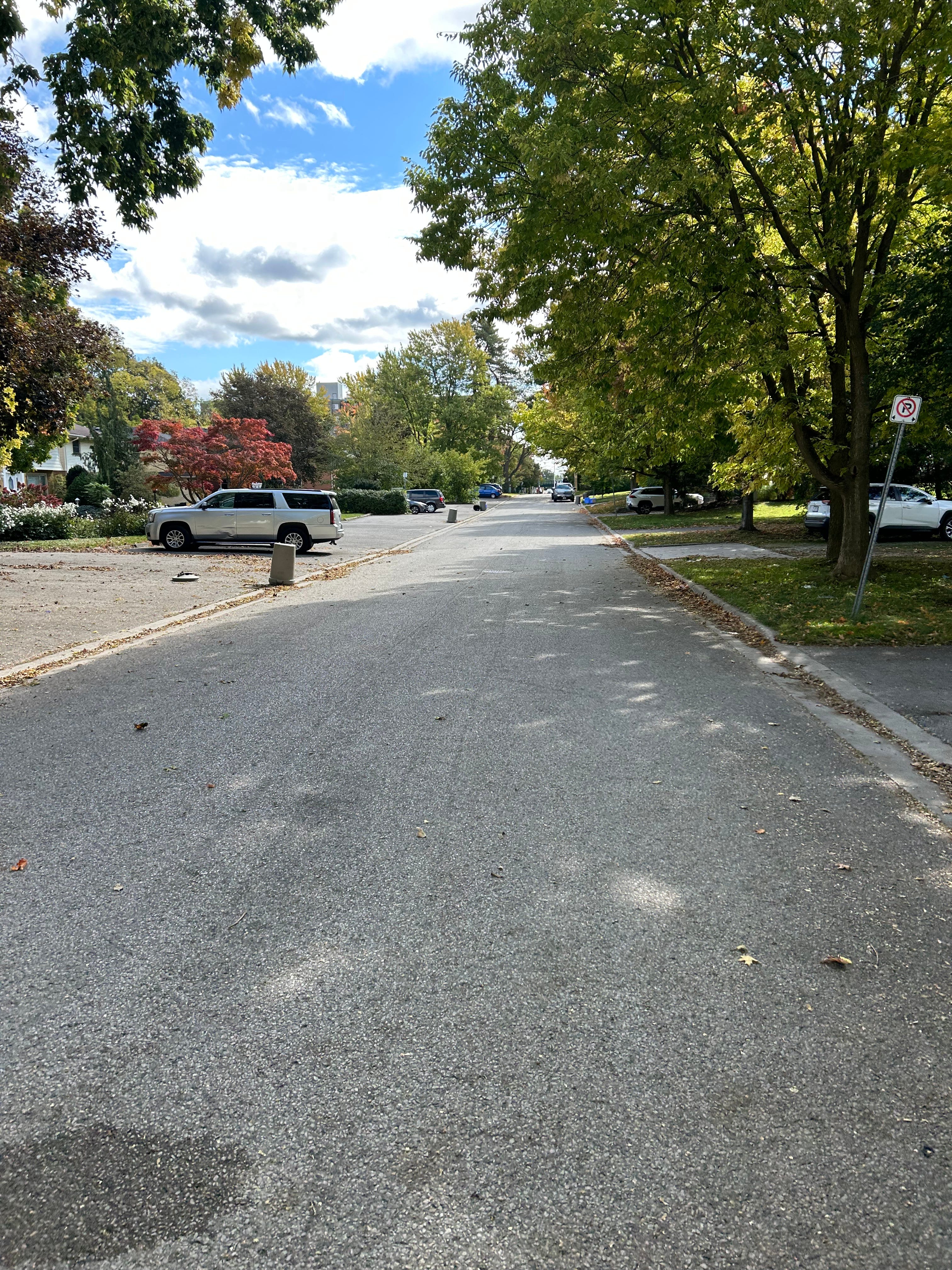
Wharncliffe Road North, one of the major arterial roads of the west of London, quietly comes to an end as a neighbourhood street at the corner of Cedar Avenue, overlooking the Thames River. A lot of houses here are large and have wide setbacks, but are divided into smaller units and are generally occupied by students and young professionals.
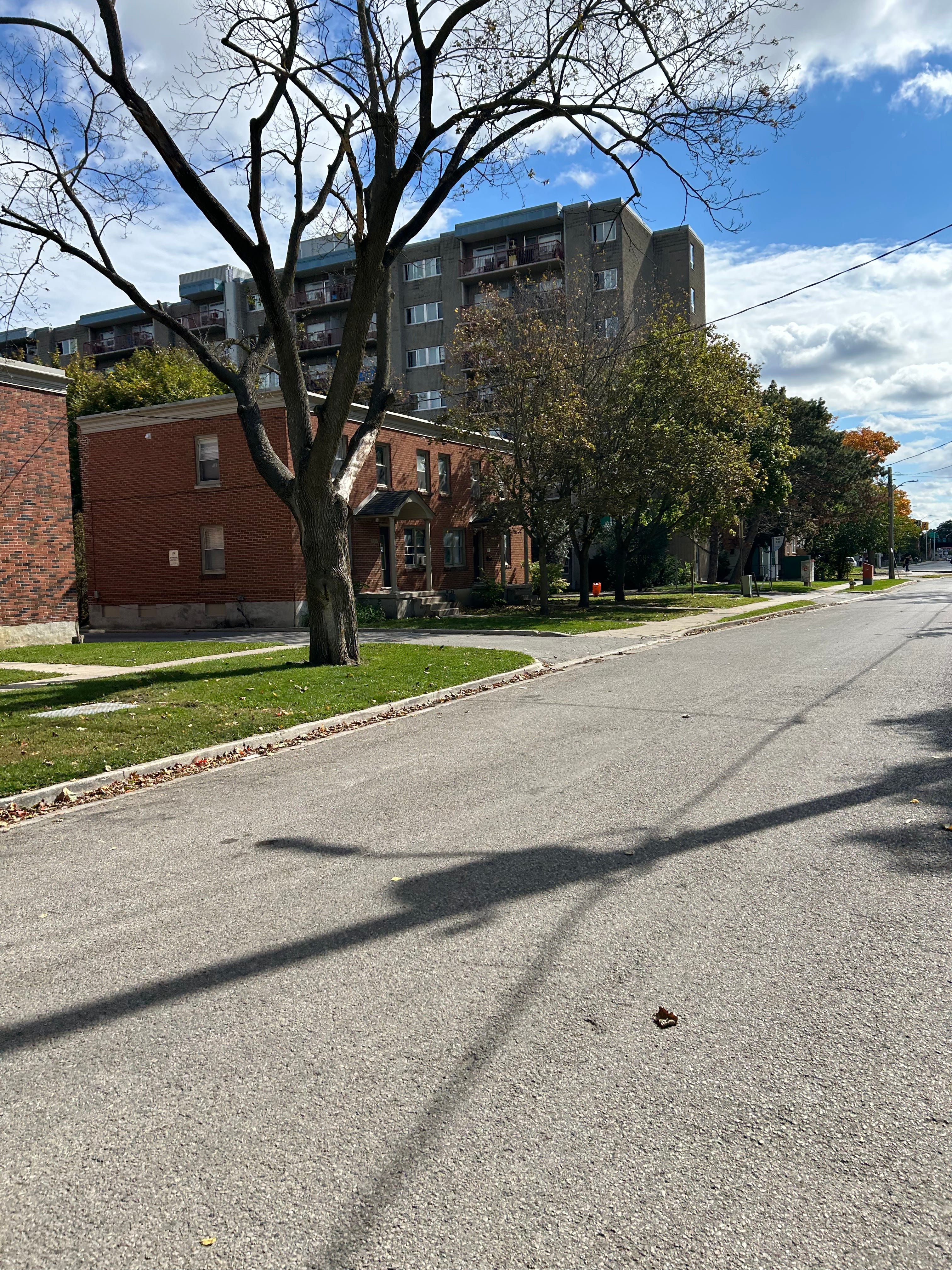
Approaching Western Road, the corner densifies, with some student-oriented mid-rises and the tallest building in the area being a London Middlesex Community Housing-owned apartment building.
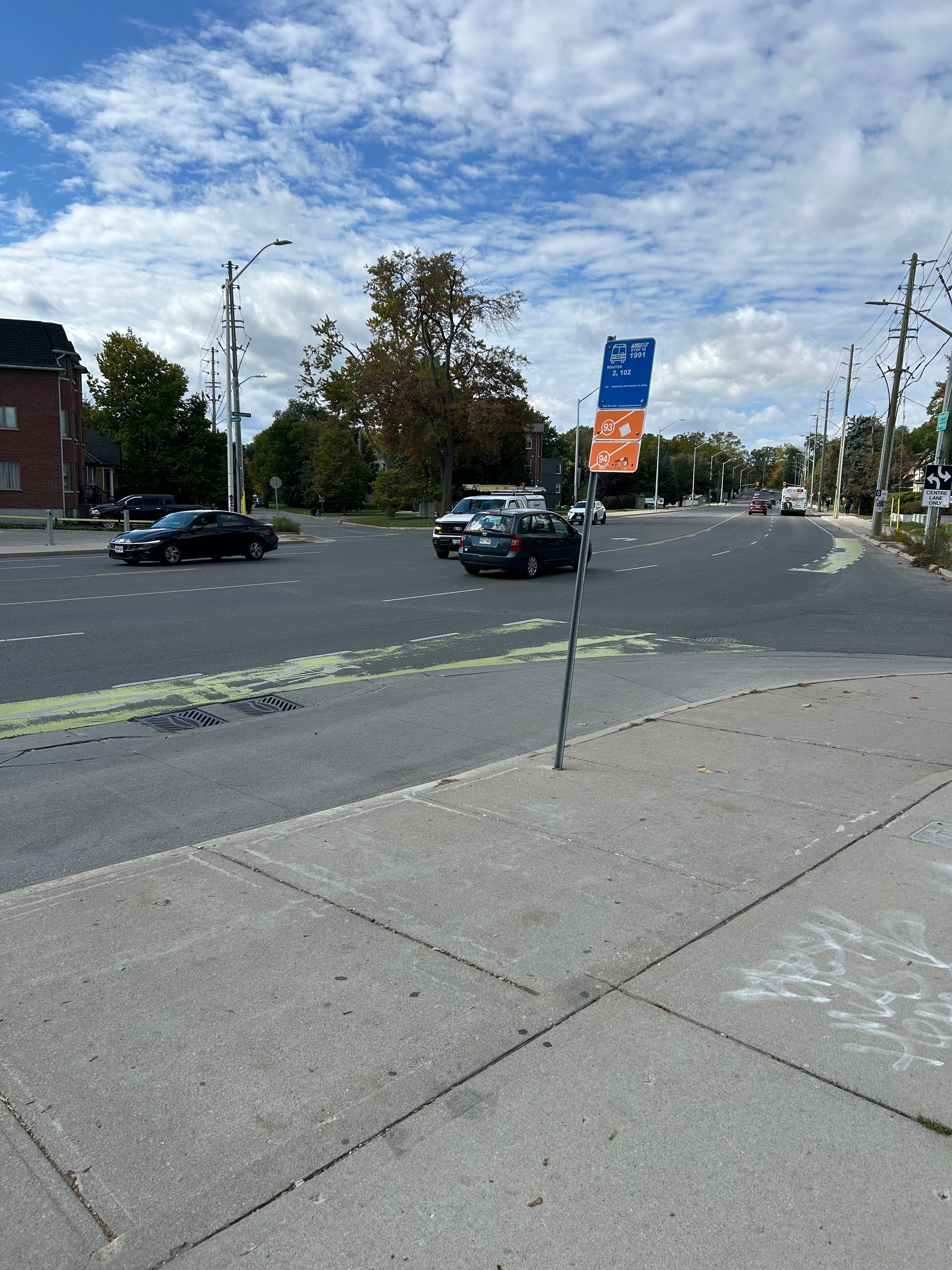
A lot of buses pass through this spider of an intersection where Western, Wharncliffe, Essex and Beaufort meet. During the hour that I was in the neighbourhood, about 12 buses passed by, most of them terminating in the north at the university. Elsewhere across the city, I imagine there are a lot of Londoners who are saying, “you’re welcome”. A lot of discourse on transit in the city, often pits the needs of students versus the needs of the rest of Londoners.
Essex Street is home to many multiplexes, and a few apartment buildings closer to Western Road.
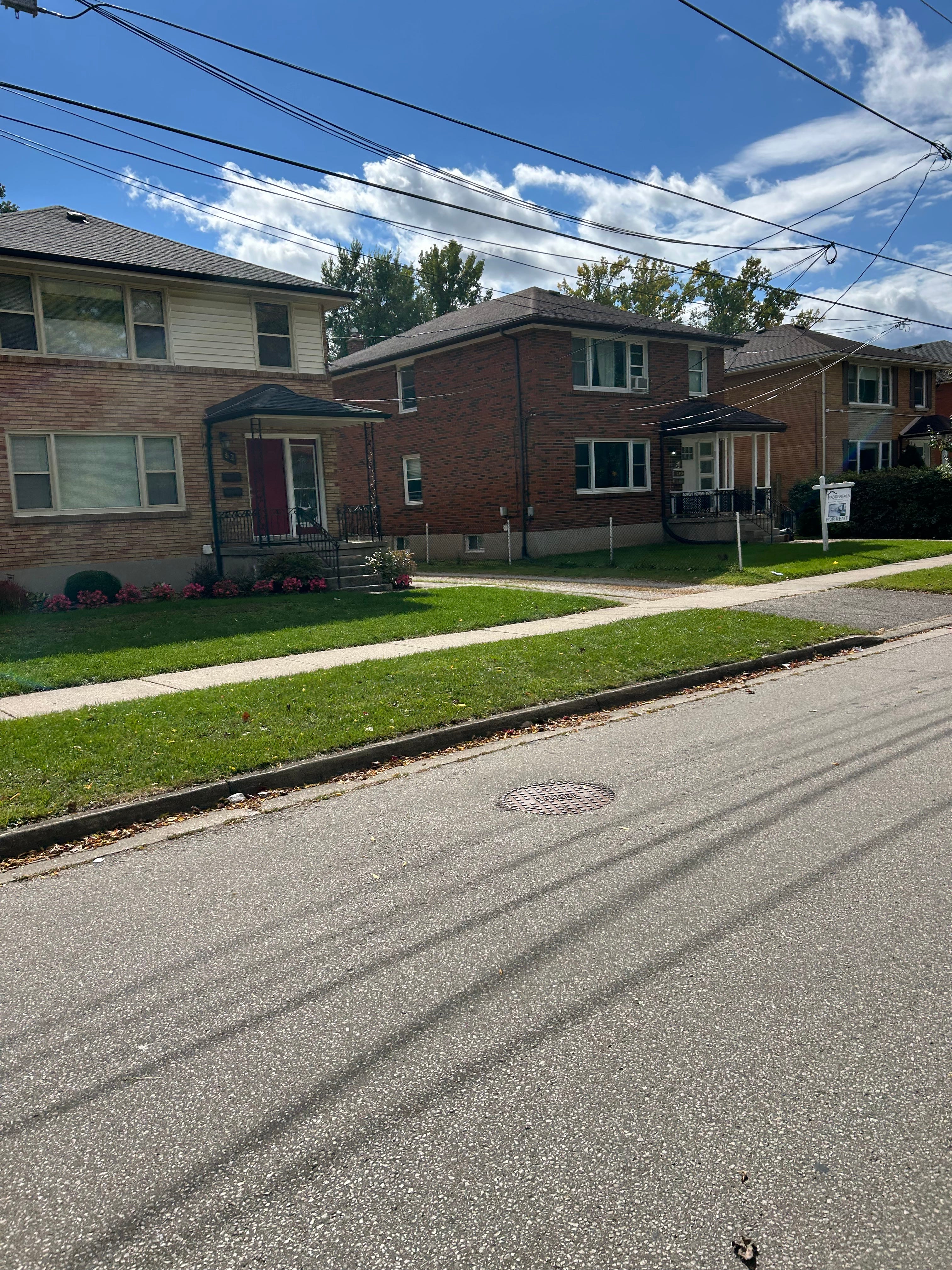
There are no houses for sale, only those for rent. Essex Street quietly dead-ends west of Hollywood Crescent, with a walkway to connect to Platt’s Lane, which connects to the Cherryhill area via a famous one-lane subway.
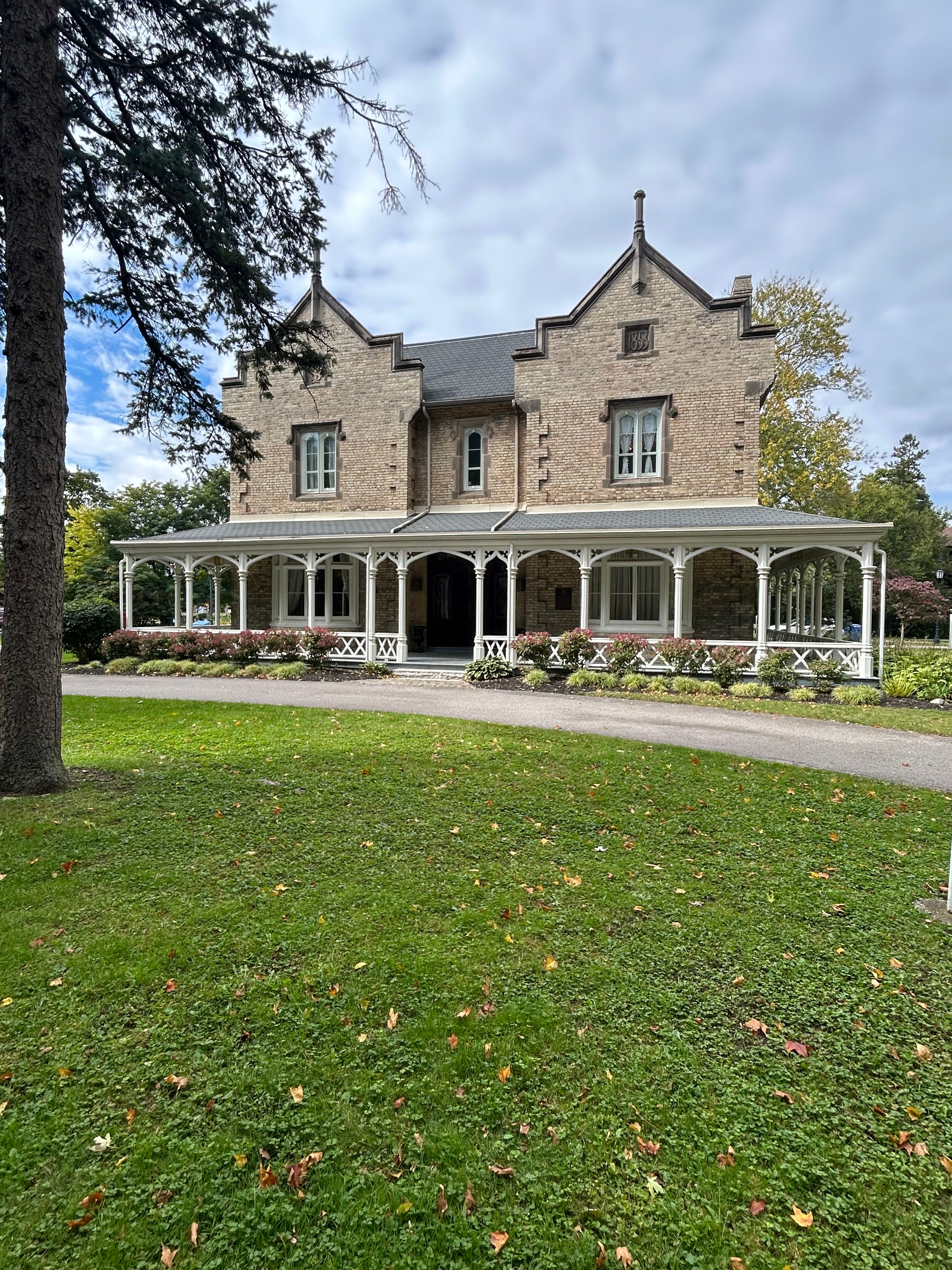
This area is also home to Grosvenor Lodge. It has been more than a quarter-century since I last visited, for a school field trip. The land was owned by the Peters family, and this mansion was inhabited by them, being built by Samuel Peters Junior in 1853. Until the 1970s, generations of the family lived in the house, and it was ultimately designated as a heritage property by the City of London, who acquired it around the same time.
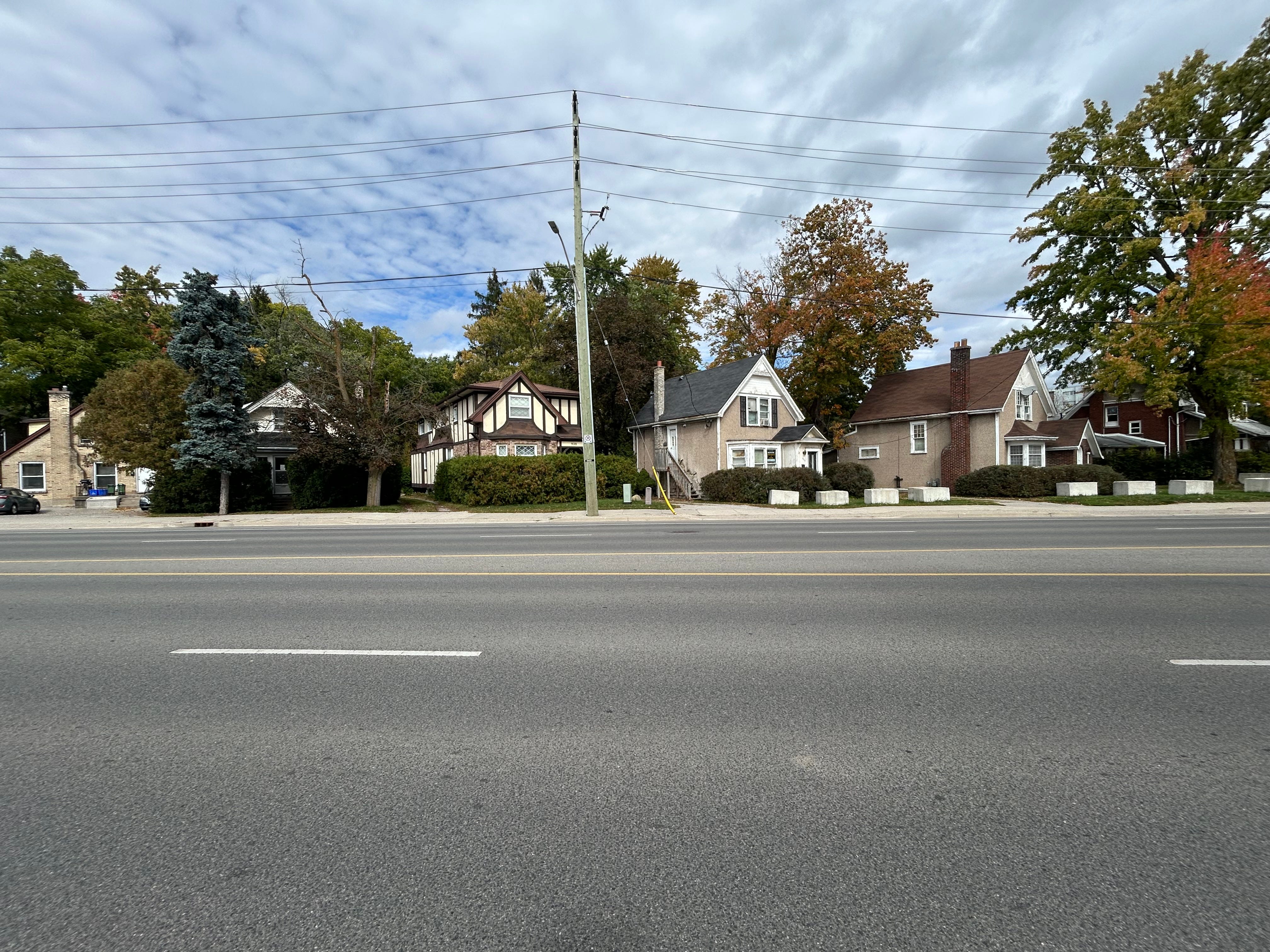
Where Wharncliffe transitions into Western Road, century-old houses stand out amongst all of the student apartments and townhouses.
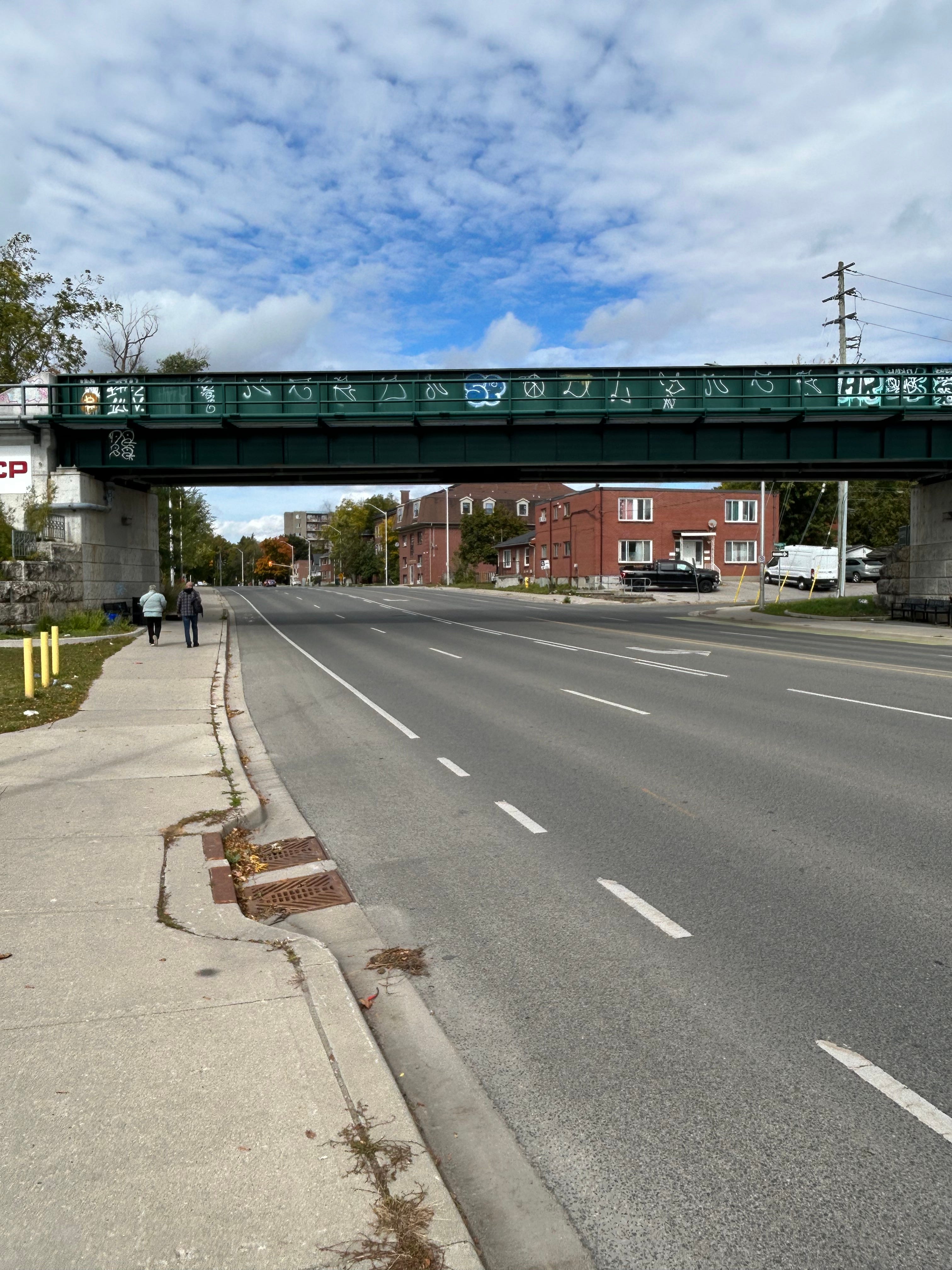
The area’s southern gateway is the CPKC underpass along Wharncliffe Road, which was widened in 2017, doubling the road’s lanes from two to four. There may or may not be another road widening to accommodate a future rapid transit corridor that will run to London’s north end.
And now we are at one of the most contentious intersections in the city. It is not a fun place to be unless you’re hungry. I have enjoyed the odd visit to Btrmlk as well as Mr. and Mrs. Bao.
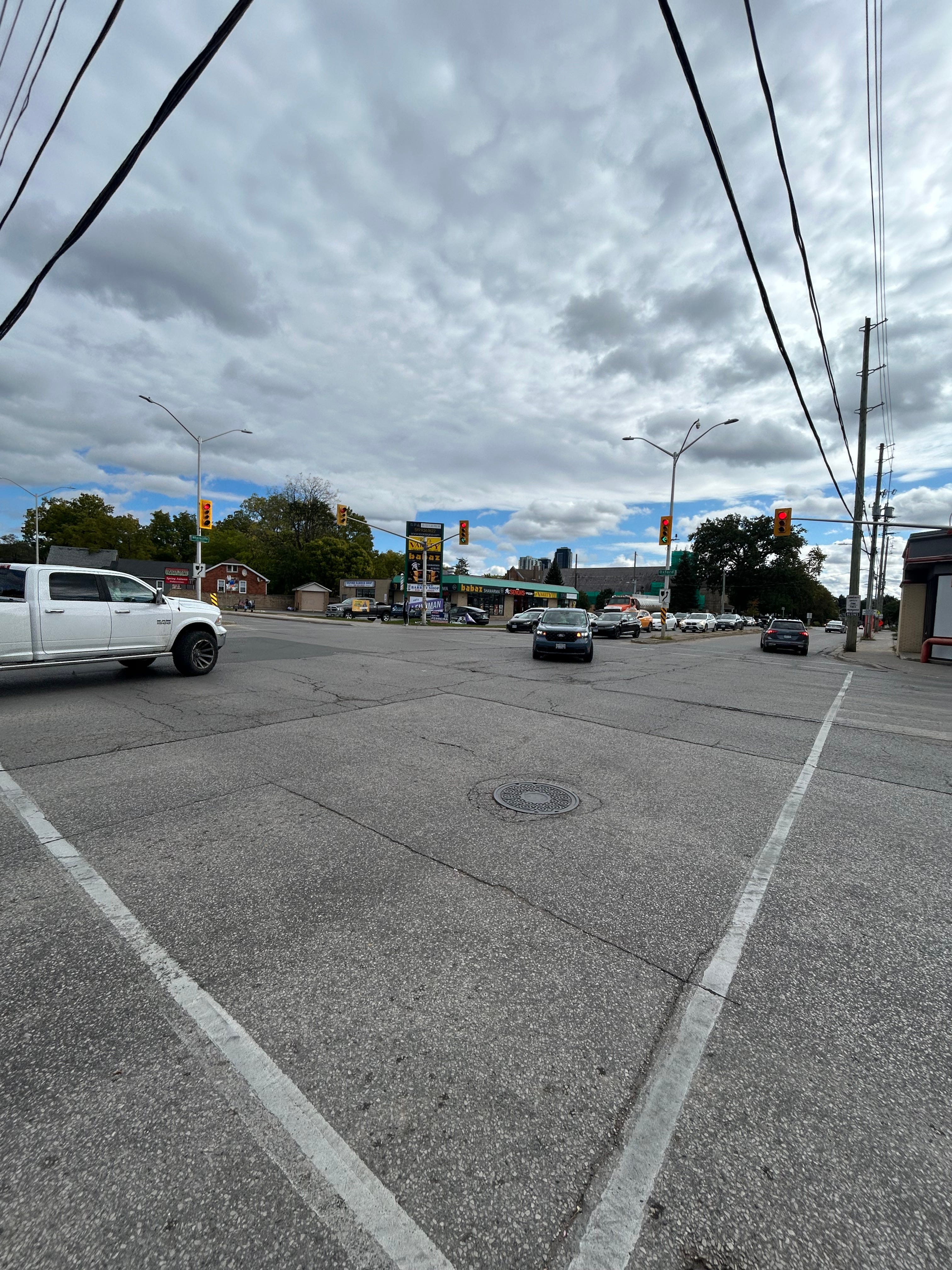
Currently, the intersection is outfitted with advance green lights that allow most cars to move through, but with the intersection of three express bus routes, there has to be a way to optimize things. The original project, funded along with the rapid transit routes, would see the construction of east-bound and westbound queue jump lanes for buses. The building at the southwest corner, currently occupied by a real estate firm, would have been demolished to accommodate the eastbound lane.
I hope you enjoyed our time together today. We were halfway between Blackfriars and Western University. While it’s the postseason in the majors, we were in the BIGS during the playoffs of the municipal election.
Check back each Tuesday for my take on experiencing London from a fresh perspective. I am excited to bike around the city and report back to you. I welcome comments, suggestions, and topics to discuss each Tuesday. Please subscribe and let’s talk soon!
The Loon (London Ontario Online News) lineup
New content every day.

We’ve teamed up to send you a new feature every weekday:
Monday - Buckle Up - podcast with Matt Brown
SPONSORED BY HAMILTON ROAD BIATuesday - The City with Cedric Richards
SPONSORED BY LONDON BICYCLE CAFÉWednesday - City Hall Notes by Mike Donachie
SPONSORED BY SPERO LAWThursday - the Forest City Arts and Culture Roundup by Diana Tamblyn
SPONSORED BY DOWNTOWN LONDONFriday - Reflections with Steve Cordes
SPONSORED BY OLD EAST VILLAGE BIA
Also on Fridays: the local news ROUNDUP.
Every other Saturday: The Matt Brown Podcast. It’s the show about all things local, and maybe some other stuff too. SPONSORSHIP OPPORTUNITY AVAILABLE.
Thank you for the lovely trip around Wharncliffe and Oxford! I am in my 17th year teaching at Jeanne Sauvé French Immersion Public School and I love the neighbourhood. I’m pretty sure Blackfriars is part of Ward 13 though?