


It’s Tuesday, and you know what that means. Welcome to a look at The City with Cedric Richards, where you can join me on a journey through the Forest City with a fresh perspective. Thank you to all of you who have chosen The Loon in reading and subscribing to us each day.
To bring you my first Tuesday column not covering a city ward, it would be apropos if I talked about cycling, given that this column’s sponsor is the London Bicycle Cafe. And it’s a little bit of a hot topic, as we are in the middle of a municipal election.
I was recently asked by someone close to me if I had heard about an all candidates meeting where a candidate said that nobody rides bicycles in the bike lanes in this city. My first gut feeling was to think “that’s not true, I see cyclists in this city, each and every day, and yes, even in the winter in bike lanes”. But I gave it some time and wanted to discuss how we discuss cycling ridership.
As a longtime cyclist, I have seen and heard it all when we talk about cycling, who cycles, and the things that they are seemingly at odds with.
“I have an older clientele — they park right in front. It will hurt my business. I have been here 14 years and I am lucky if I see one or two bikes a day. This is asinine, just asinine.”
“We love new things happening in cities, we want cyclists to feel safe, but the city has a lot of vehicles.”
“This is not the time to be discussing cycle lanes. We need to focus on small business survival, safety, public transit and housing.”
I rode my bicycle to the farmer’s market in several years ago, where a vendor bluntly told me that the recent installation of bike lanes on Dundas Street were detrimental to the operation of local business and bus transit.
It’s enough to make you feel big - and small. You may be only a small amount of the population, a minuscule segment, but enough to affect public works and the local economy. It’s also very odd. You can be a cyclist and support local business. You can own a bike and ride transit or drive a car, like many cyclists in the city do, including myself. You can ride a bike and care about all of the kitchen table issues that make up our elections. And in a free society, it should not have to be one or the other. Many things can be true at the same time.
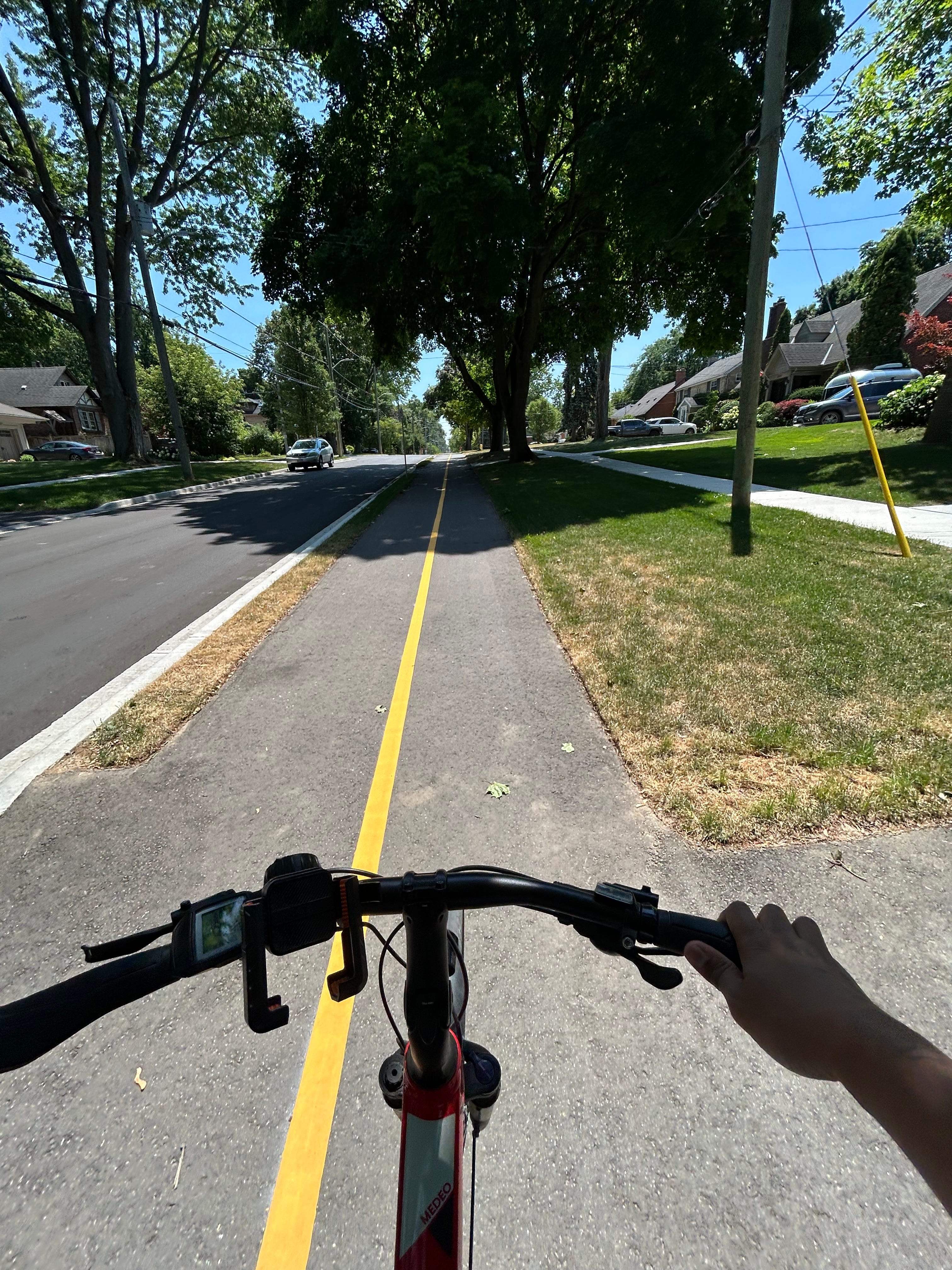
But I keep going back to that word, nobody. I think that word “nobody“ really needs to be unpacked. What exactly is nobody? Who gets to define nobody? If we do not see nor know anyone who cycles, do they exist? It is not “nobody” that cycles in this city. I took a look at some data in the eco-counter website, and the City of London has 12 counters that measure bicycle ridership. They each tick a bicycle that crosses past it. A disproportionate number of them are located in the core, but there are some located in Masonville, Argyle, and Westmount. These counters combined have measured nearly 295,000 bicycles this year, to date. It is down about 40,000 from last year to date, but it is a substantial number. The number does not count individual cyclists, and these 12 do not capture the entirety of the usage of cycling infrastructure in London. There are bicycles passing through these counters, on other bike lanes painted or protected, on the Thames Valley Parkway among other bike paths, or taking the full lane on our roads.
Bike lanes exist throughout London, and they take many shapes and forms. In the outer suburbs, there are protected bike lanes and multi use pathways along arterial roads. On roads like Commissioners, Wonderland, Adelaide, and Fanshawe Park Road, the protected bike lanes were where I started to feel confident as a cyclist. Amongst some other arterial roads, bicycles and cars are separated by a thin layer of paint. And then there are some streets and roads where all users of the road are required to “share the road”. The painted bicycle figures on the road are referred to often as “sharrows”.
Regardless of the true number of cyclists in the Forest City, it does not matter how substantial the ridership is, but each bicycle that passes through those counters and elsewhere is somewhat of a transportation hero. Their presence on a bicycle means one less person behind the wheel on our very congested roads. It means that the money spent on gas, insurance, or repairs has a chance to be directed towards the community and our local economy. With each move of their pedals, each bicycle rider is sending forth a “tiny ripple of hope”, to paraphrase former United States Attorney General Robert F. Kennedy.
There are quite a few cyclists on our roads and paths, but there are a few things that affect ridership from reaching its potential:
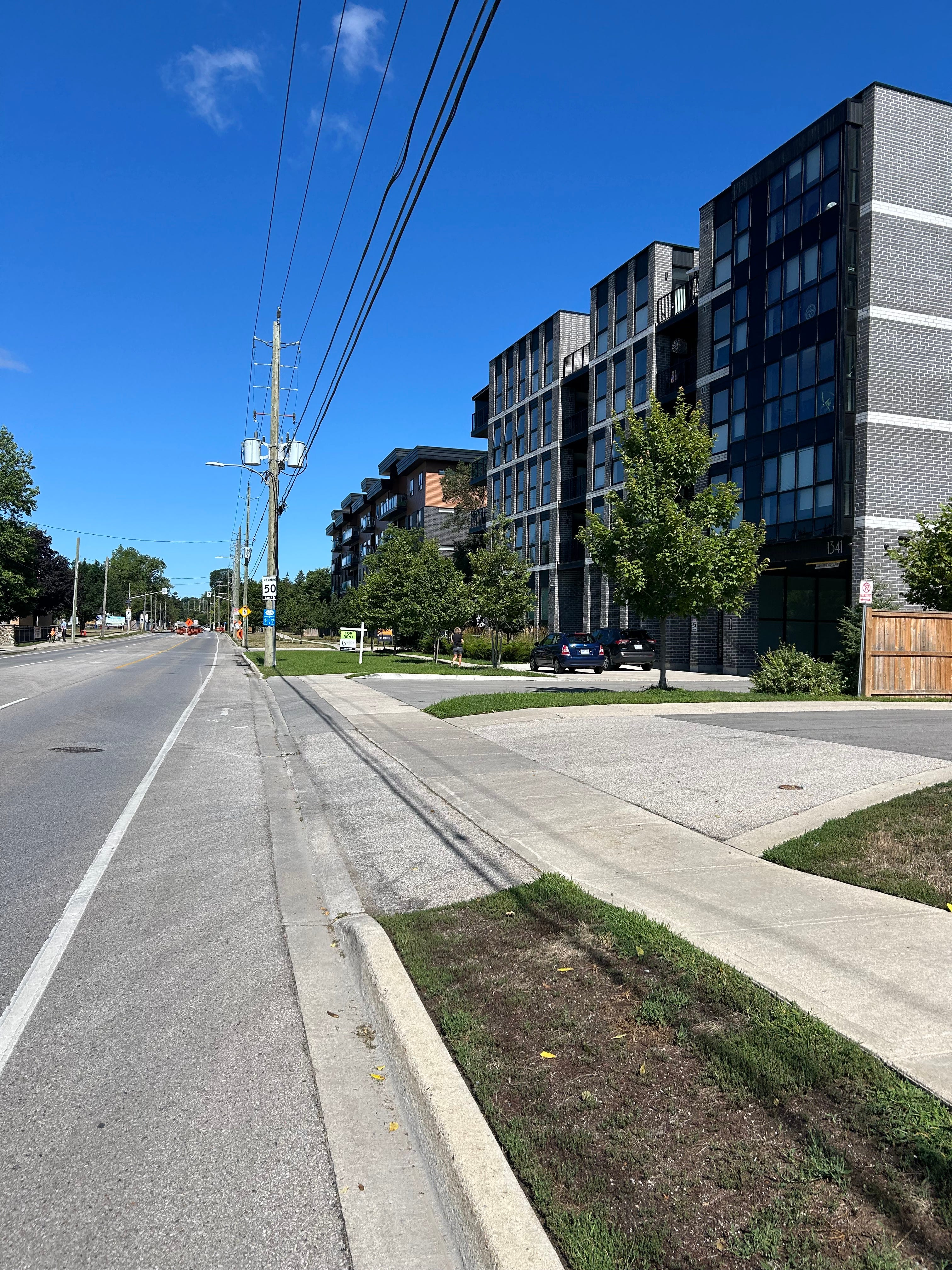
Paint isn’t infrastructure. And where there is paint, there is danger. In my tours of London’s city council wards, I saw a lot of places where paint divided cyclist from car, and wondered if anybody actually rode their bicycle in that lane. Northwest London was the biggest offender in this. There are some bike lanes along Sarnia Road and Fanshawe Park Road where the lane was in the middle of a through lane and a right-turn lane. Basically, a cyclist in Whitehills would be in the middle of live traffic. I have biked through here in the past, and had to use the right-turn lane for my own safety.
Even when you’re not in the middle of two car lanes, being beside one is too close for comfort. This is very obvious along Wonderland Road between Riverside Drive and Oxford Street. Wharncliffe and Southdale is another example, where bike lanes appear and then disappear. A few barriers along some of London’s busiest thoroughfares could go a long way in increasing ridership.
The canonization of the Thames Valley Parkway
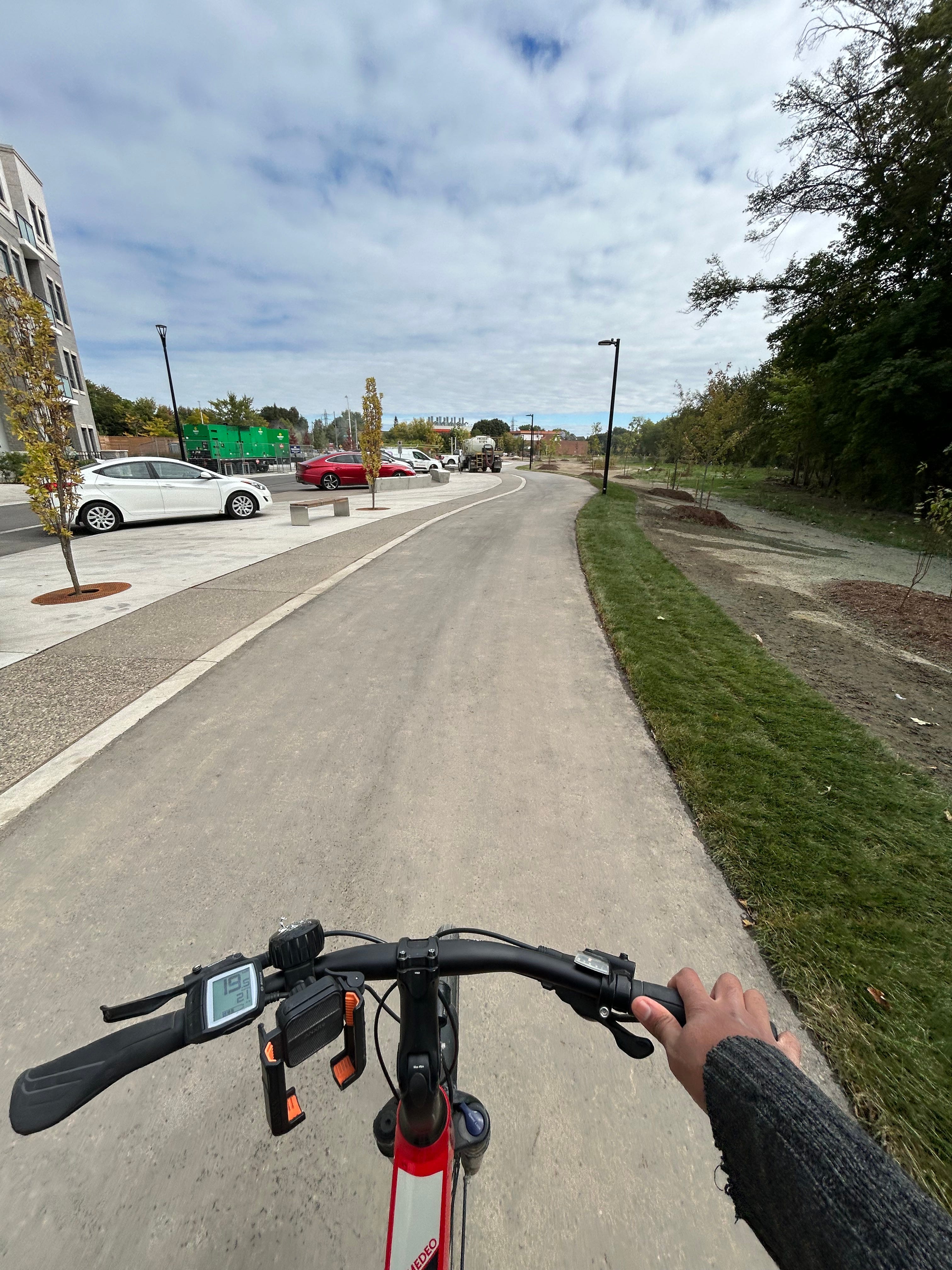
The Thames Valley Parkway is a tremendous place for recreation uses, cycling among them, but it is not a be-all, end-all of our cycling network. In some parts of the network, there are a lot of safety issues centering around visibility and access points. If someone feels unsafe on a section of the path where there are few indicators of escaping, it brings forth the question of whom the path is really for. I have my own unfortunate experiences with the TVP in this fashion. And if someone like me has safety concerns about it, imagine the concerns of someone less privileged who uses these paths. While it is a great way to seamlessly access the west end, the northeast, and the southeast from the core, there are so many other origin-destination pairs that are hard to reach in the city from this path, such as Argyle or Hyde Park. The Thames Valley Parkway should be paired with a road-based network that allows cyclists to access as much of the city as practicable.
An incomplete network
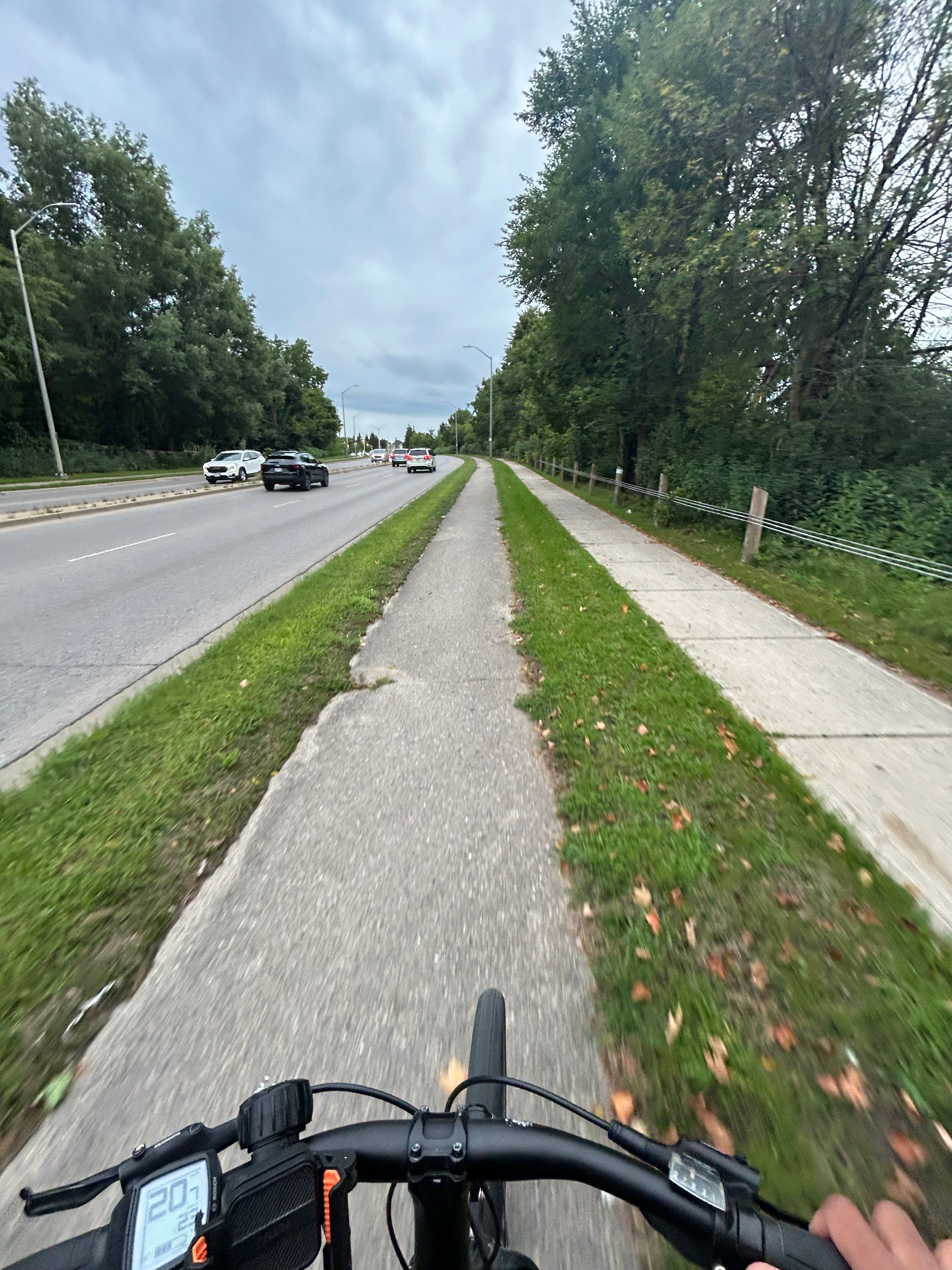
There are a lot of great places and roads to cycle on in this city, but there is so much room for improvement. There are many gaps in this city where the cycling network could be joined. There is an opportunity to create a cohesive, city-wide system in cycling.
In Westmount, Wonderland Road has a wide gap between Commissioners Road and Southdale Road. This is something that should be considered in the revival of the Wonderland Road widening environmental assessment. I remember making a journey to the Bostwick branch library that involved a meander off of Wonderland and into the Westmount neighbourhood, a route that would look non-sensical if a car took it.
Oxford Street is another example. There are protected bike lanes along Oxford in Oakridge and around Fanshawe College. Why not make an effort to join the two segments? Joining together gaps like these could make for the start of an all ages and abilities bicycling network.
These are only three of a handful of concrete ideas to share on what is affecting London’s cycling ridership. No matter what the number is, it is a non-zero number of people on two wheels, and each bicycle is a tiny ripple of hope for our road network.
Check back each Tuesday for my take on experiencing London from a fresh perspective. I am excited to bike around the city and report back to you. I welcome comments, suggestions, and topics to discuss each Tuesday. Please subscribe and let’s talk soon!