


August 18, 2026
As noted in last week’s 14 Wards profile, we would be taking a break for one week and providing a special treat for readers and subscribers to The Loon.
While I’m not covering a ward this week, I’m doing something that is the same as the last several pieces I have published here. Every week that I have been with The Loon, I am observing, thinking, and making mental notes about the city and what it means to be a Londoner. I do this every week because I feel there is something rewarding about being present in your city and thinking about how it takes shape. Every week, I hope that you, the reader, may find something new to observe in this city and come away with a new way of seeing London.
The City column won’t always take the following form, but you can take it as a little preview of what is to come. What each column will have in common is that it starts with being present, in person, and engaging with the city as it is.
Even though I have a car in the driveway, I explore the city through walking, cycling, and taking transit. Despite the fact that a majority of this city (like nearly every city in Canada) uses a car to get around, it is so much better to be a person of a city and walk, roll, cycle, or bus around than it is to drive. Not because of any moral posturing, but because you get an extra-special view of a place like this and can start to think deeply about it, and you can develop follow-up questions for things that you see. If you take a walk, for example, it is a good way of being present with your surroundings. You’re interacting with the city in multiple ways that are not possible if you’re driving. Every week, I feel accomplished that I’ve found something new about a city where people perceive nothing new to happen.
I think that if you move through the city like this, you’ll start to develop an emotional connection that can lead to a better life in a place like this.
I walk every day, with the goal of observing and remembering things. The Downtown Loop is London’s first piece of completed rapid transit infrastructure, located along King Street, Wellington Street, Queens Avenue, and Ridout Street North. Here is what I observed walking along these streets during a lunch.
Observing The City
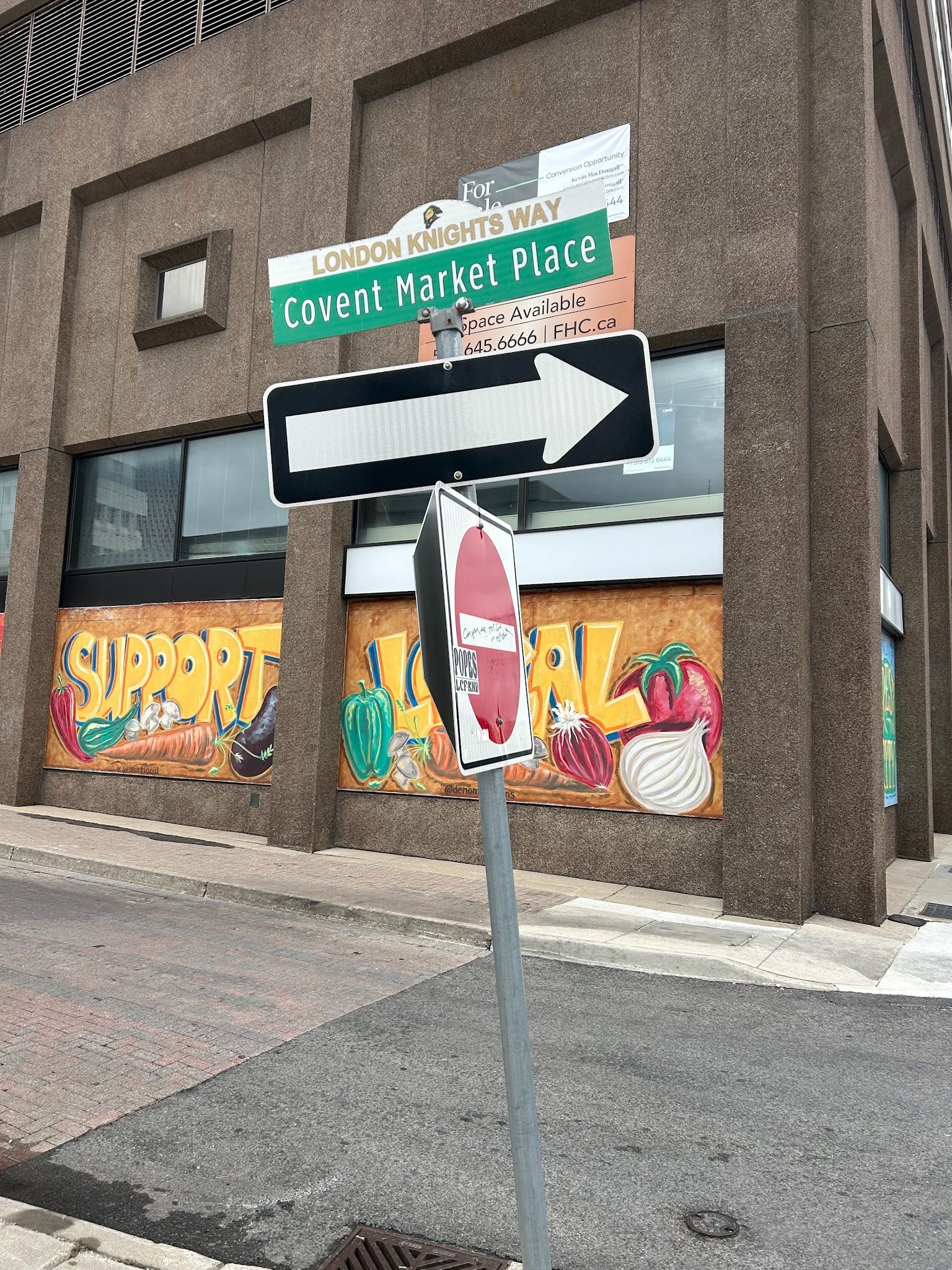
Covent Market Place is ceremonially subtitled London Knights Way, and has been since 2012, when our local Ontario Hockey League team won the league’s championship. But I do wonder about the accolades that the London Lightning received, when they won the National Basketball League of Canada’s championship in 2012 and in 2013.
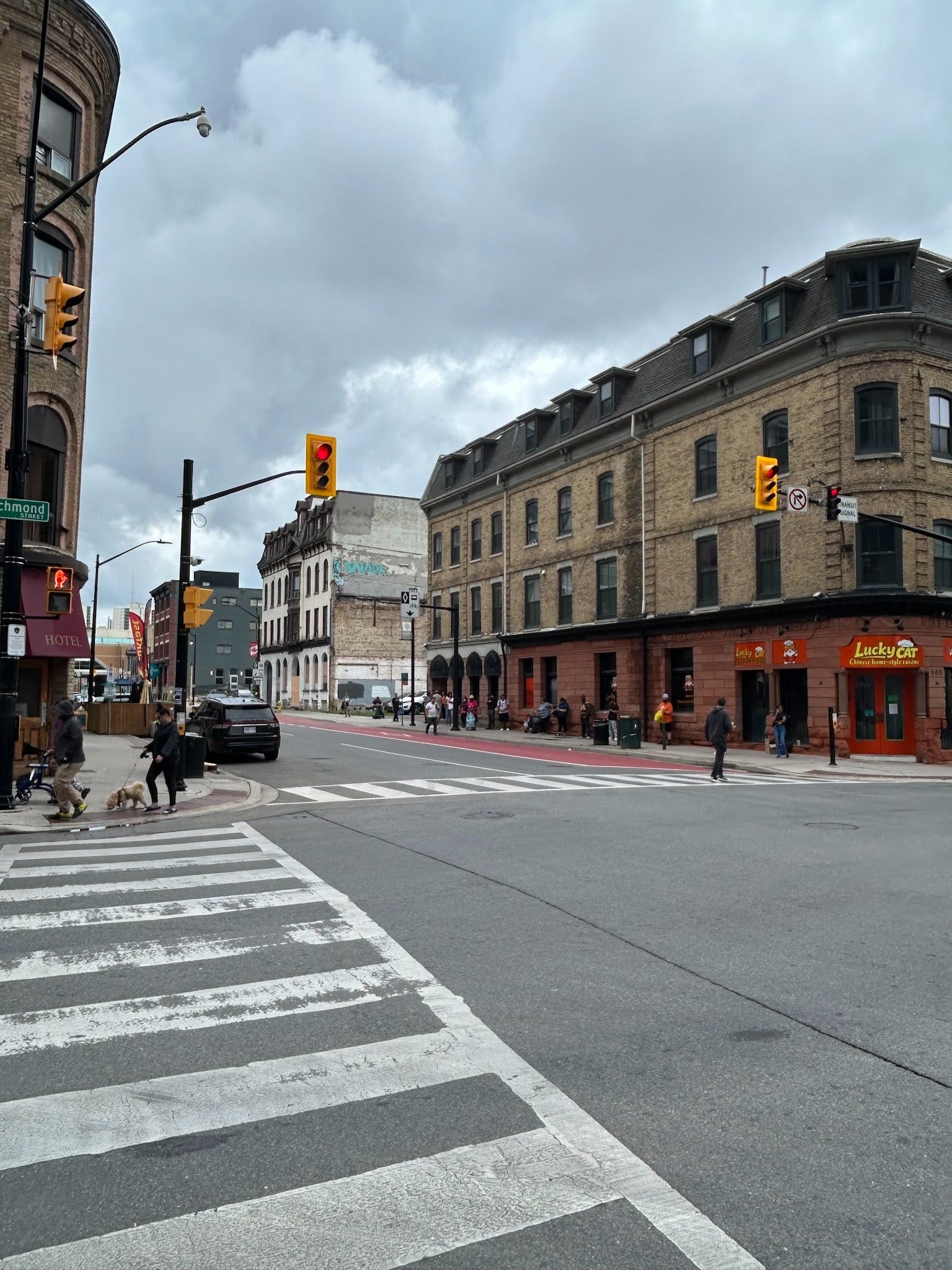
Richmond and King are part of a set of blocks that the Downtown London BIA has referred to in the past as South Row. It’s a very old and gritty part of downtown London. I like examining all the bricks and inscriptions and old murals, and popping into some of the shops.
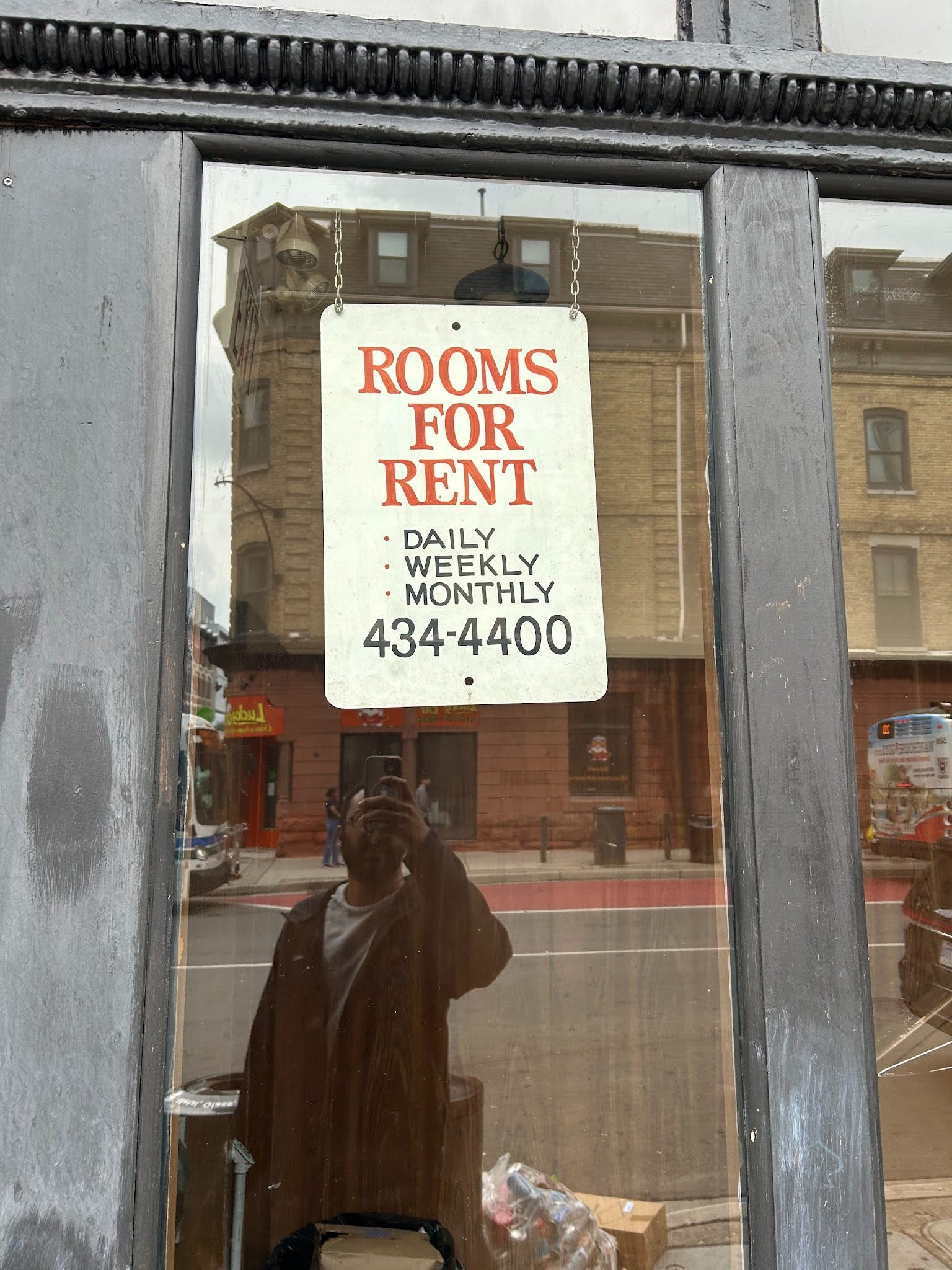
This is a sign on the Richmond Tavern advertising room rental rates. Remember seven-digit phone numbers? Ten-digit dialing became mandatory in this area in 2006 with the introduction of the area code 226. I appreciate a sign like this with that kind of phone number because it shows consistency through the decades.
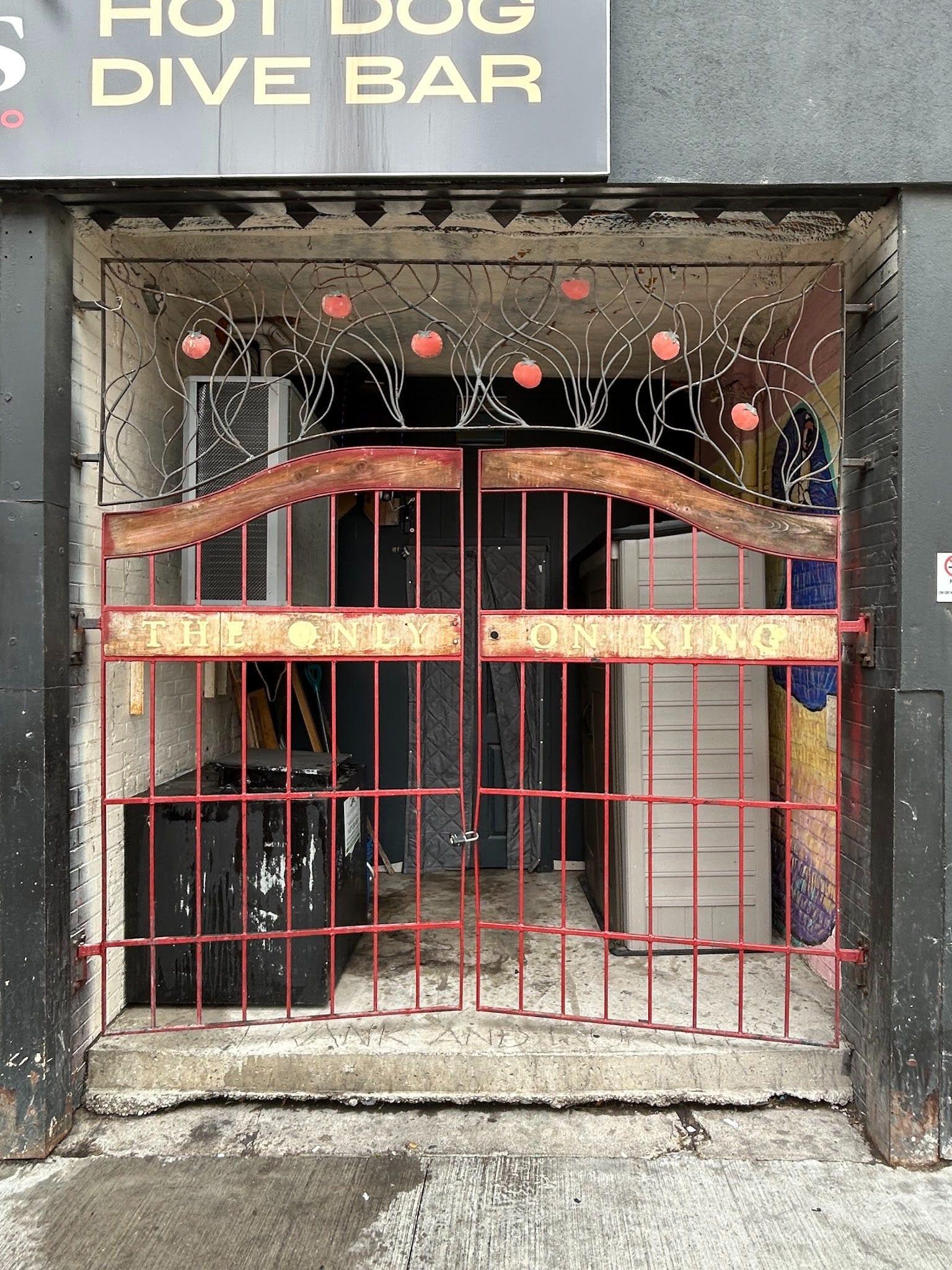
The Only on King restaurant closed nearly a decade ago, but the sign remains on the gates. I wonder what the story on the mural is behind those gates?
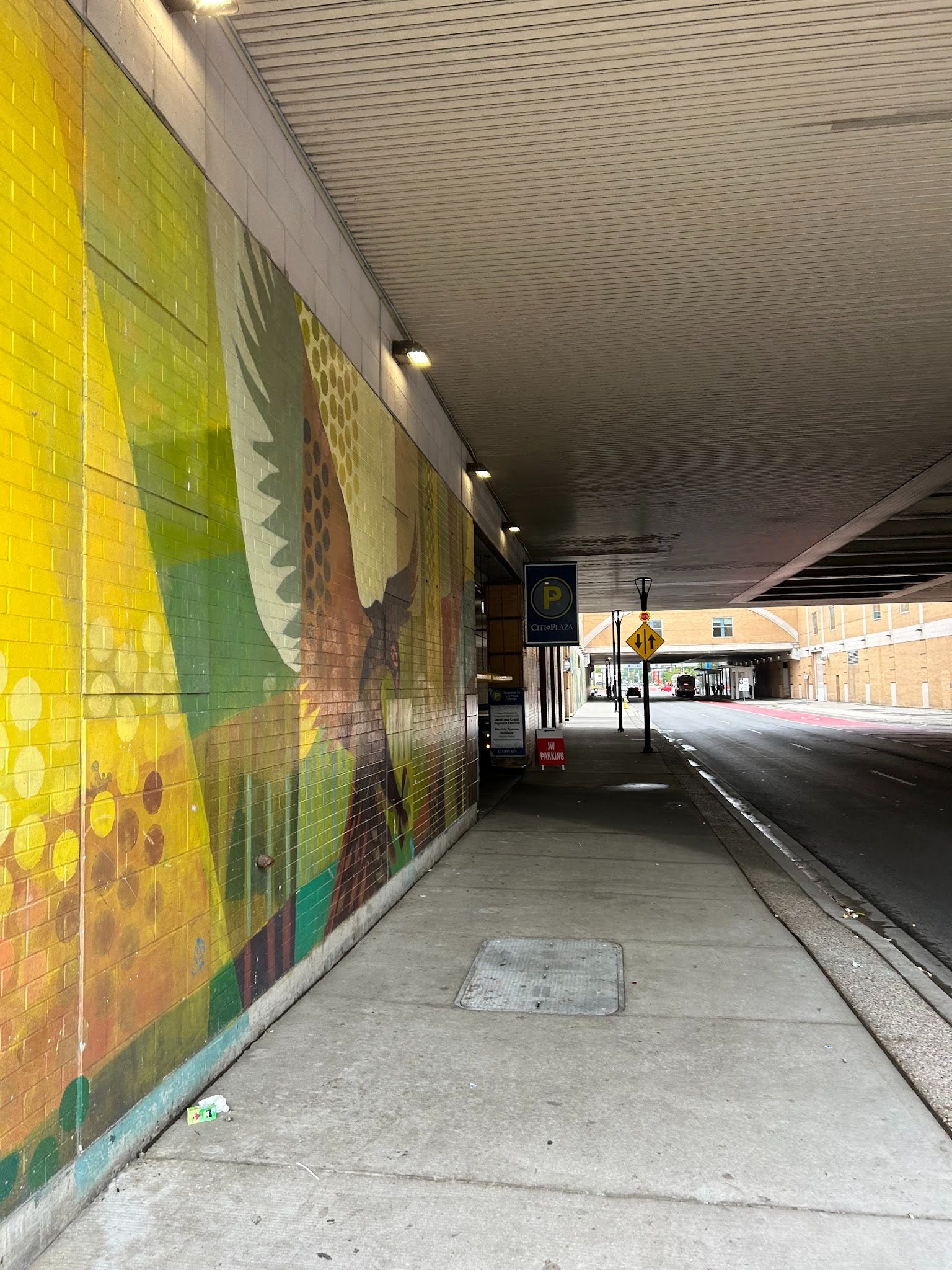
Every Londoner has likely passed by this mural along King Street for years and have wondered what it is supposed to represent. During the summer of 2007, six Argentine artists and three artists from Vancouver, British Columbia, painted a mural along the part of King Street that lies under twin pedestrian overpasses that connected both parts of the-then Galleria London mall. The project was coordinated by local artist Sylvia Curtis-Norcorss, and some of the Argentine artists belonged to an artist collective known as “La Raza”. This mural depicts Argentine flora and fauna. Since I learned about the origins, I have appreciated this mural every time I walk by it.
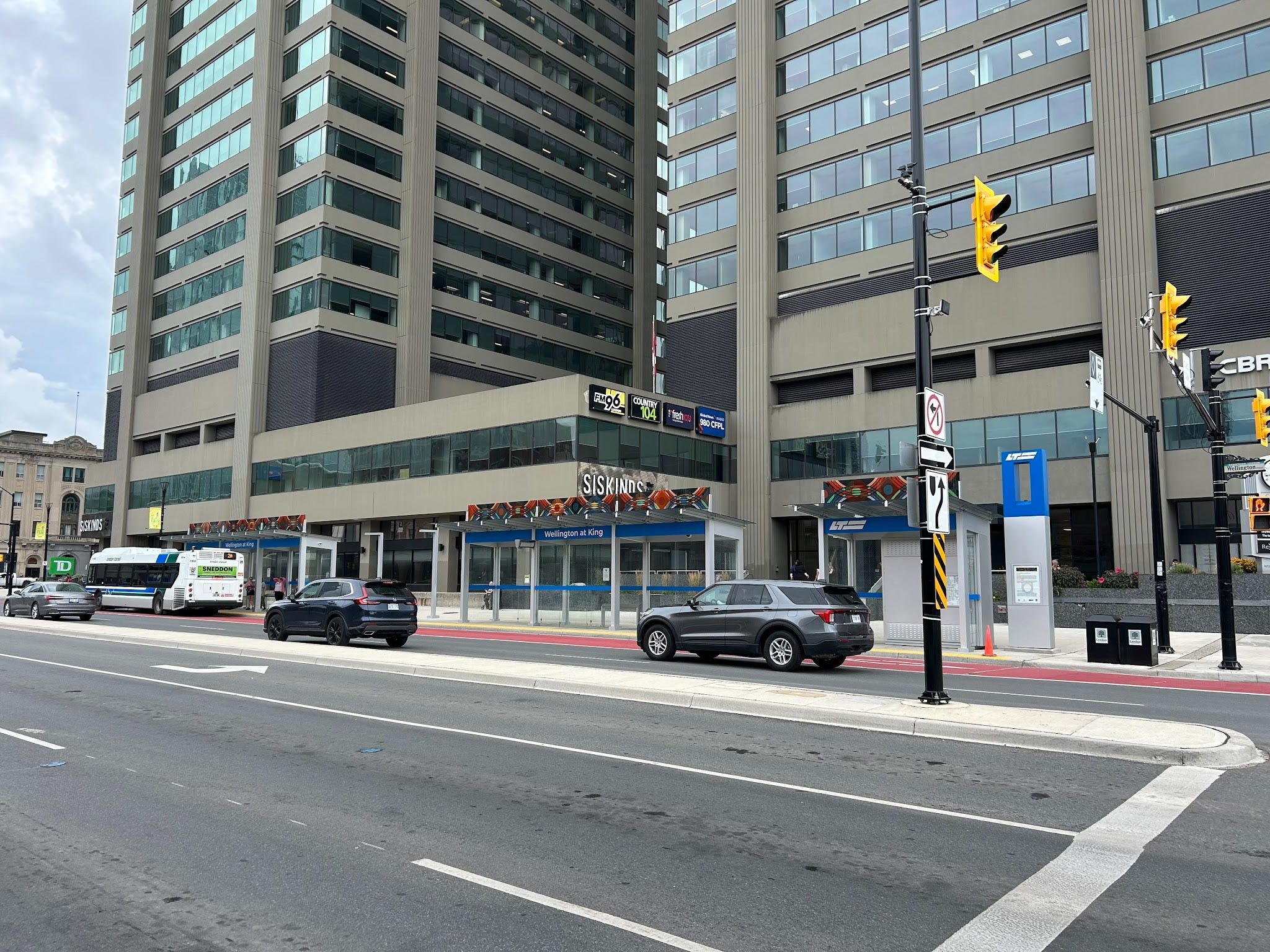
This year, art has been popping up on the shelters of rapid transit stations in downtown and old east village. The shelter at King and Wellington Street had artwork unveiled in June 2026. Tova Hasiwar, originally from East London, created this piece based on the city’s UNESCO City of Music designation. Hasiwar also created a wonderful mural on a wall of the old St. Regis Tavern in Old East Village.
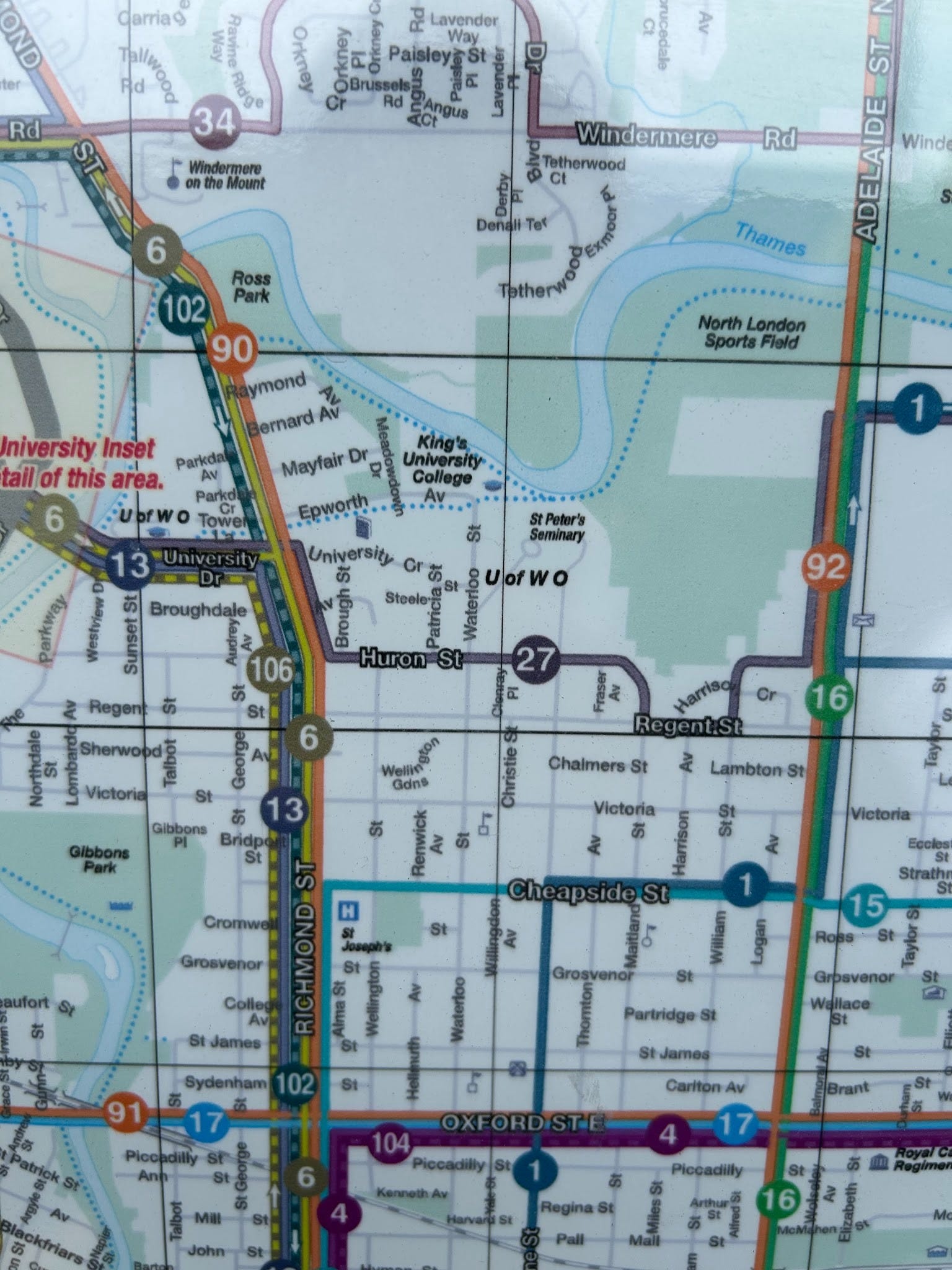
If you look closely at the bus map inside the shelter, and zoom in on University Crescent, you will notice a symbol for a library. There has not been a library in that area since 1995 when the library moved to Masonville, at North Centre Road.
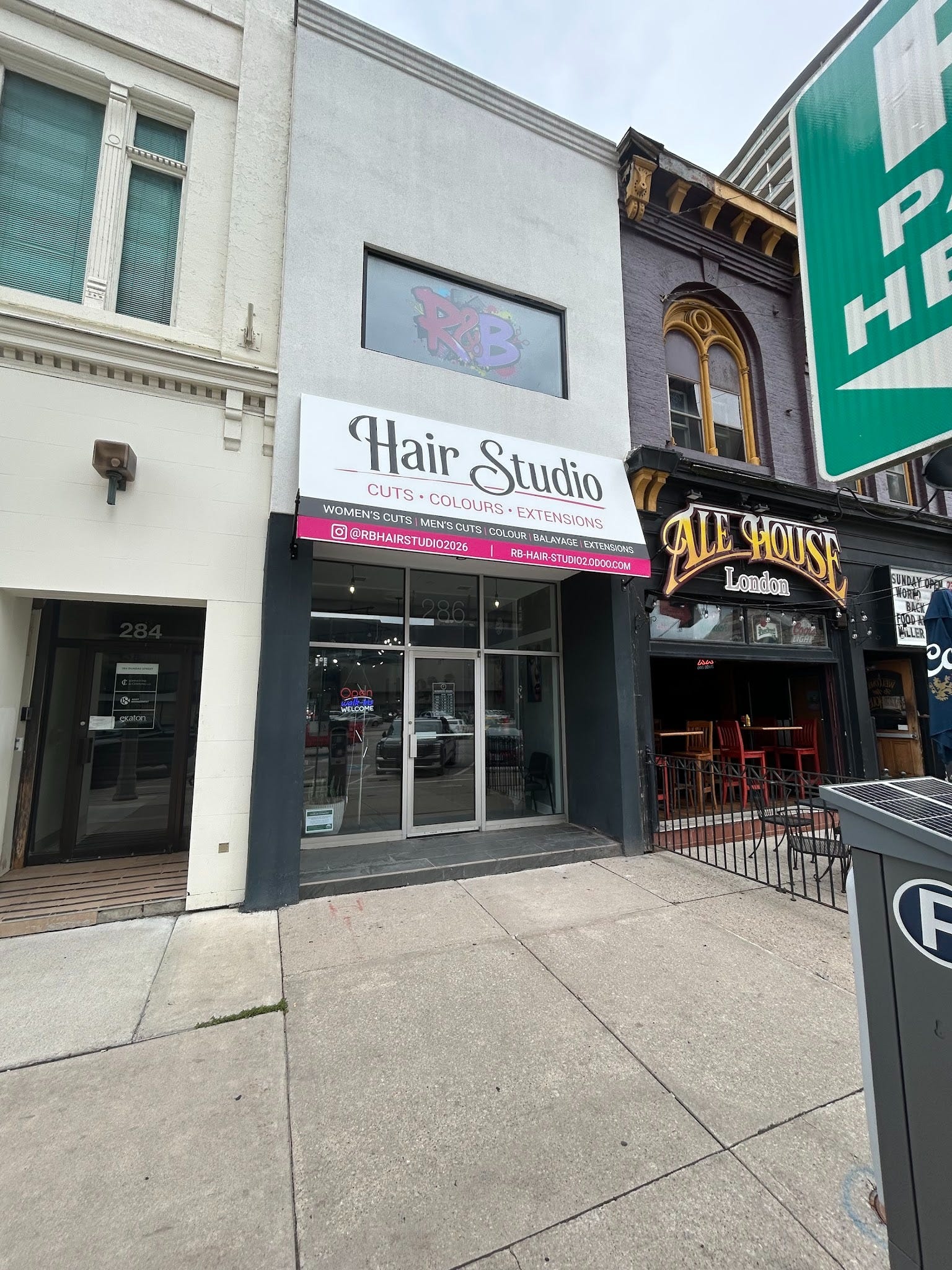
There was a hair salon that previously occupied this space for the last few years, and they recently closed and moved to Woodfield. A new salon quickly moved into this space. I often wonder if this salon will outlast the previous one in this space.
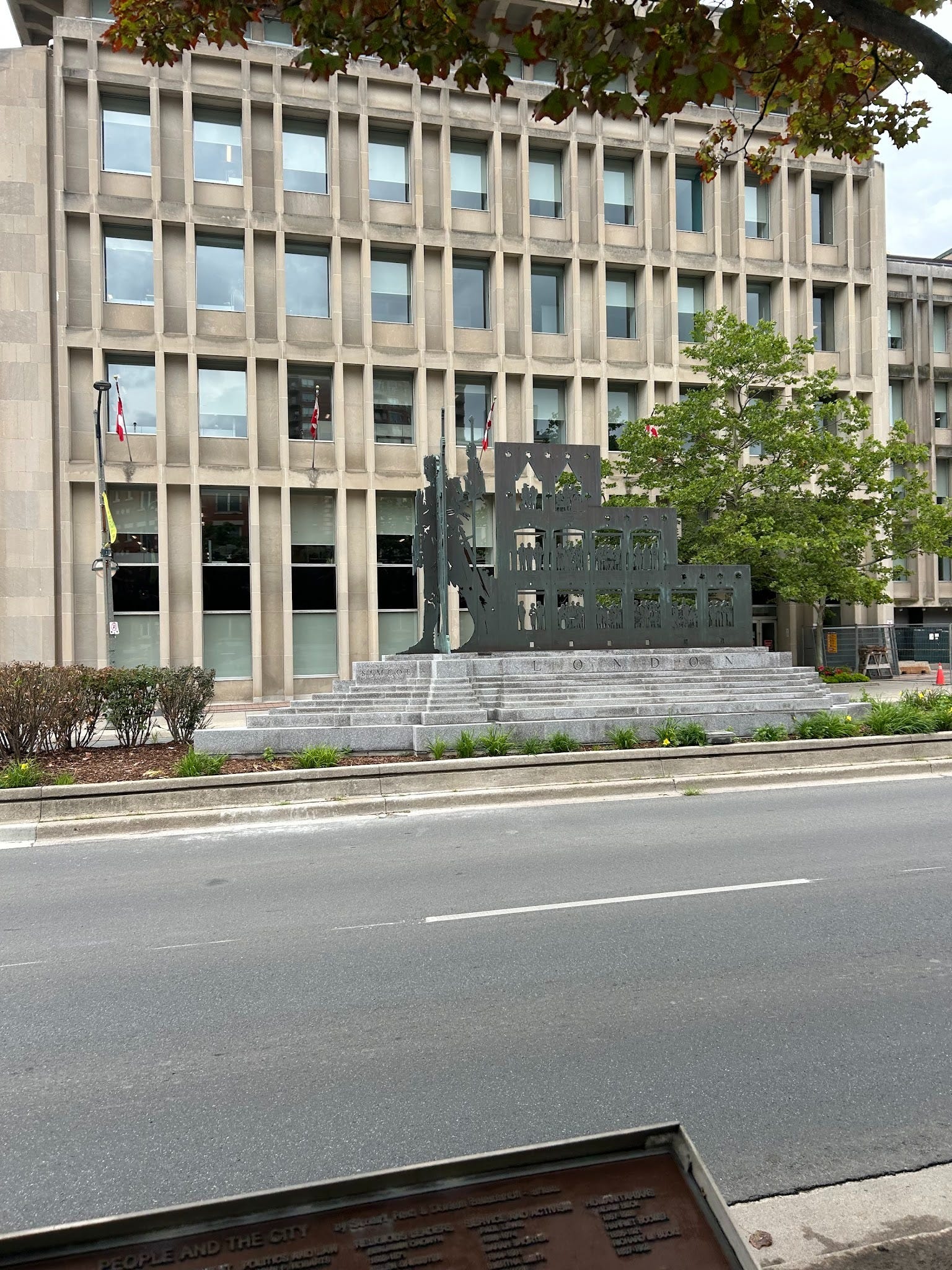
The sculpture is named “People And The City” and was unveiled in 1991 amid some controversy about its location. I would often pass by this sculpture as a small child but not know what it meant. Only within the last decade, did I find out that the symbolism was explained through a small plaque viewable from the sidewalk on Wellington Street. It feels complex and frustrating to interpret art this way, just so much logistics to view a piece of art.
FURTHER LISTENING: Click below to listen to an audio newsletter from Larry Cornies about this monument. Very thoughtful insight within.

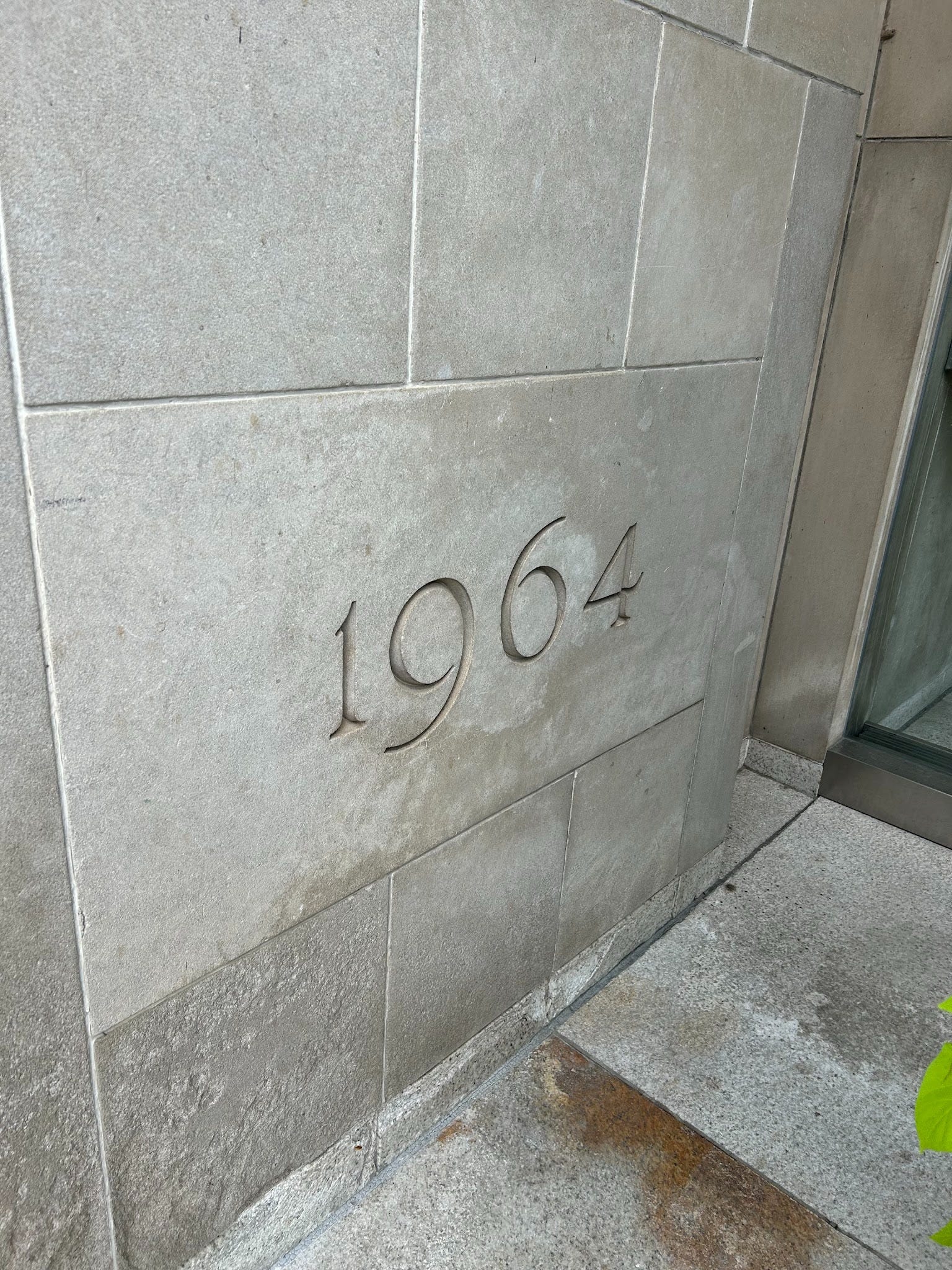
I love a good inscription about when something was constructed. I see this typeface a lot on mid-20th century buildings. It’s very good in providing context to the viewer about the era in which something was built, what was standing alongside it, and what it has outlasted.
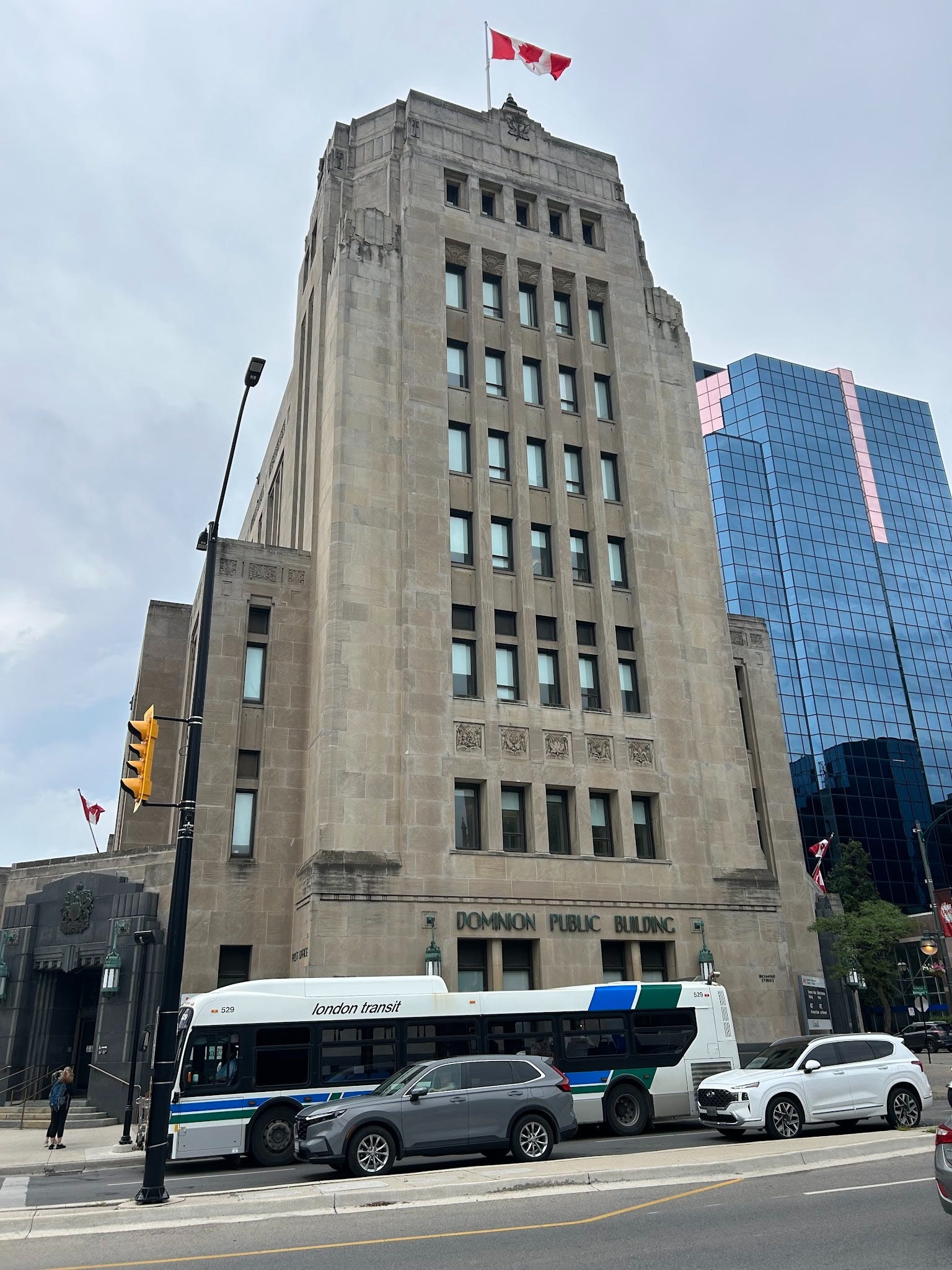
The Dominion Public Building is an Art Deco building that was constructed in 1935, that houses some federal government offices. At the time of its opening, it was London’s tallest building. Of course, it has now been made humble by the construction of the City Centre Towers and One London Place in the last half-century. I do like to wonder, when the Dominion Public Building opened, did Londoners feel that this was the pinnacle of skyscrapers, that nothing could be built higher? Did Londoners themselves feel small, compared to that building?
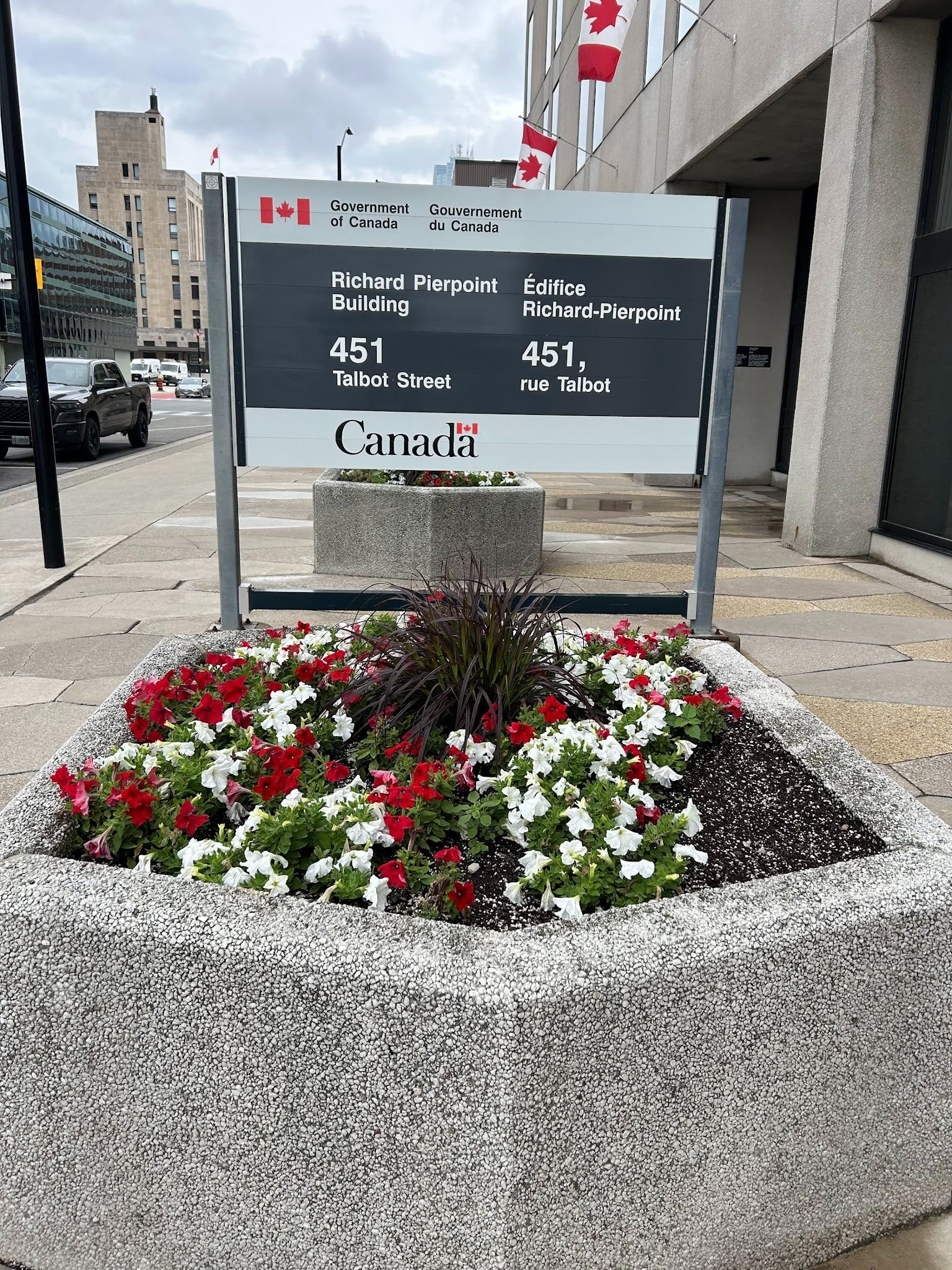
This building is clearly named after someone named Richard Pierpoint. But I often think about how many minds does it go through to know who he was or even to look up who he was? Richard Pierpoint was a slave from what is now Guinea-Bissau who was brought to British North America via the Atlantic slave trade. He fought alongside the British as a Black Loyalist in the American Revolutionary War. He also took part in the War of 1812 during the latter half of his life, taking the lead on creating an all-Black militia known as the “Coloured Corps”. The building was constructed in 1976 and was named Pierpoint in February 2013 to commemorate both Black History Month and the 200th anniversary of the War of 1812. Some follow-up questions that come to mind are: why would this specific building be named after Richard Pierpoint, and how many people know about Canada’s and Britain’s roles in the slave trade?
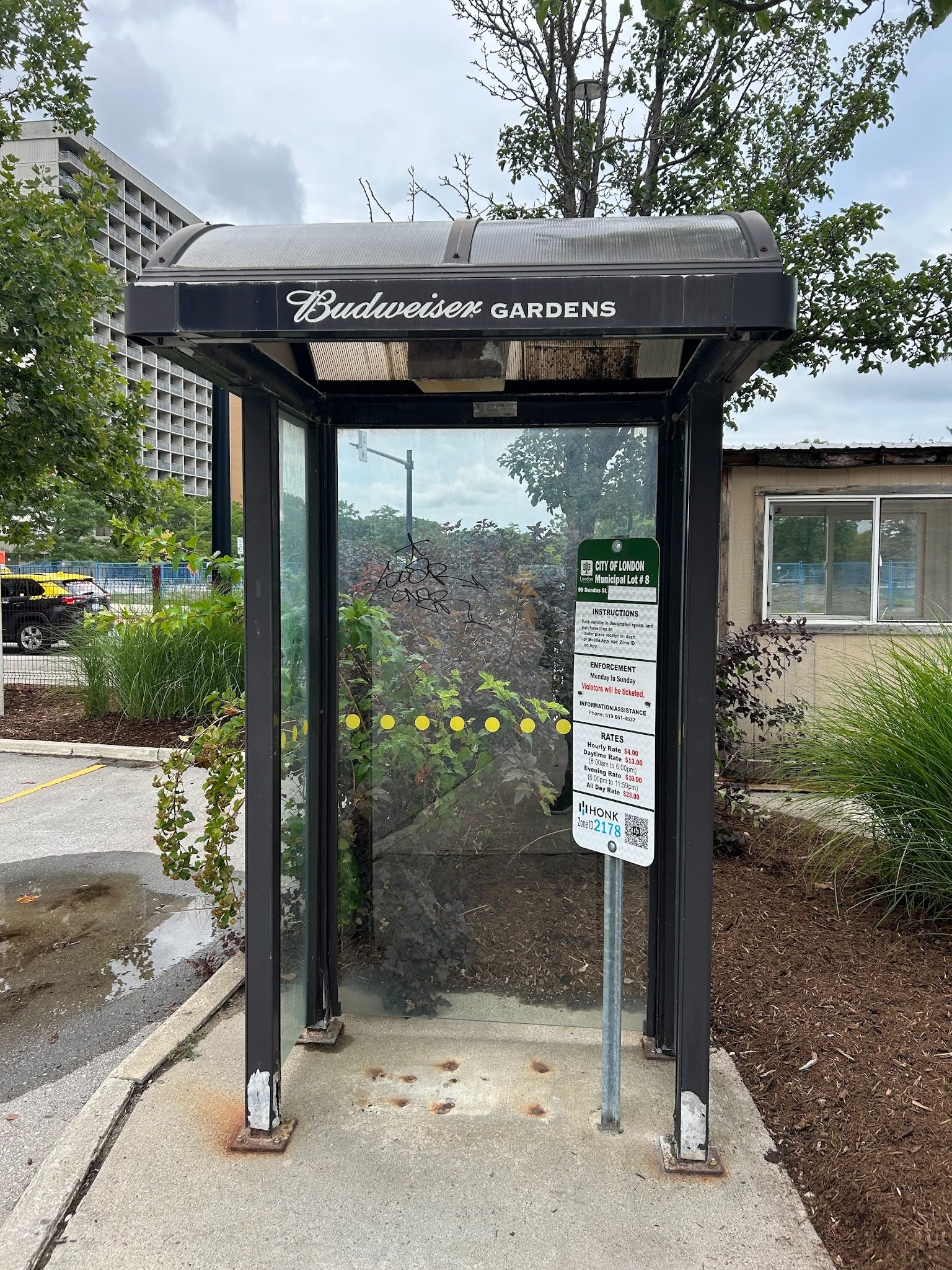
Here is a structure, which once housed a parking meter. Do you still call it Budweiser Gardens? Or do you still call it the John Labatt Centre?
The Takeaway
I hope you’ve enjoyed our walk together, because I know I did. I hope you learned something new this week, maybe this can give you a starting point to chart down a list of your own observations on your daily journeys through the Forest City. What have you observed along these stretches of King Street and Queens Avenue? Let us know in the comments!
We will return with an all-new ward profile with 14 Wards of London, Ontario next Tuesday. See you in the south end of London for that one. In the meantime, thank you for reading, and consider a subscription to receive a fresh and daily look on the city that we call home.
Fantastic article Cedric. I learned many new things!
Thank you for your kind mention of my monuments piece, Cedric. Much appreciated. Keep on rollin’!