


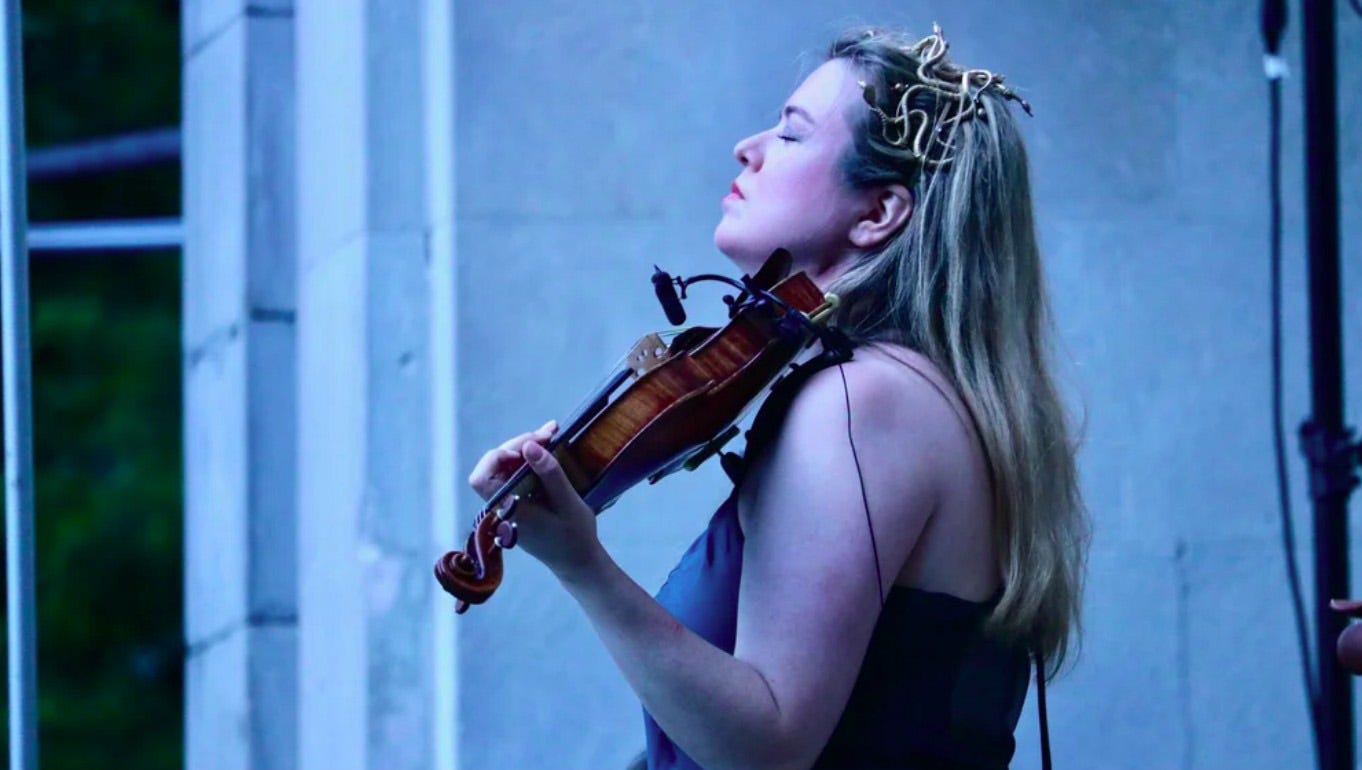
Last week, I shared Part One of my in-depth interview with celebrated violinist Lara St. John. This week, the story continues with what happened after Lara finally spoke publicly about her experience with sexual abuse: hundreds of people from the classical music world reached out to share their own stories of sexual abuse, setting Lara on the seven-year journey that would ultimately become the documentary Dear Lara.
I’ve really enjoyed having the opportunity to tell Lara’s story in this longer format, and I’d love to do more features like this for The Loon. Let me know what you think in the comments.
Long-form, independent local journalism like this is made possible by The Loon’s paid subscribers. Thank you for supporting the work we do!
Content note: This article discusses sexual abuse and suicide.
Part Two of a Two-Part Feature on The Loon
Part Two of this article contains:
Dear Lara: Choosing What Comes Next
Messages from Other Survivors
Why a Documentary Film?
Bringing Dear Lara to the Screen
Making Room for Dear Lara
When Survival is no Longer the Goal
Choosing What Comes Next
Where to Catch Dear Lara
Dear Lara: Choosing What Comes Next
In Part One of this feature, I wrote about the Lara I knew as a classmate growing up in London, who would disappear from our classroom to perform concerts halfway around the world, then return and seemingly pick up where she left off.
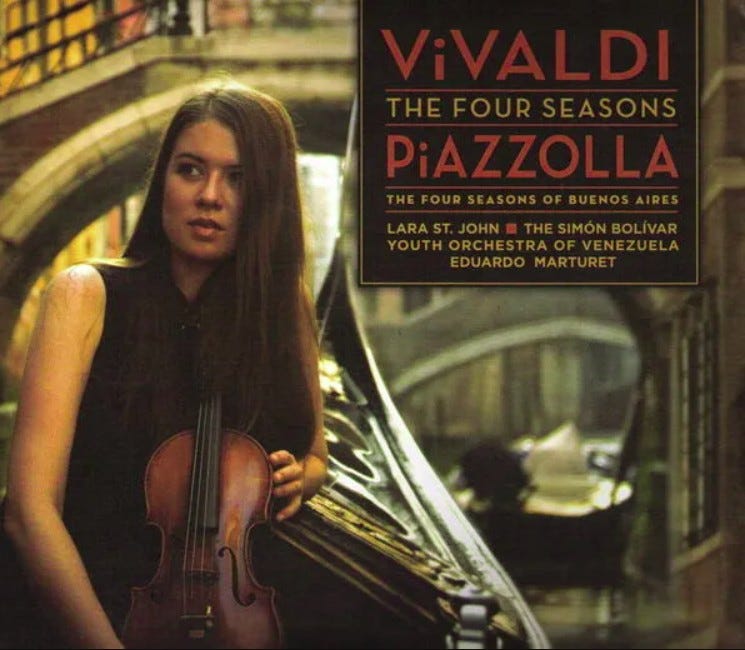
I also wrote about the part of Lara’s story I didn’t know. At 13, Lara left London to study at the prestigious Curtis Institute of Music in Philadelphia. There, Lara says she was sexually abused by her major violin teacher, Jascha Brodsky, beginning during her first year at the school.
For decades afterwards, she built an extraordinary international career as a celebrated violinist and largely tried to leave what happened to her at Curtis in the past.
Then, in 2018, she decided she was done being quiet.
Lara contacted the Philadelphia Inquirer about what happened to her at Curtis.
The resulting investigation was published in July 2019 in a 5,000-word story and appeared on the front page of the newspaper’s Sunday edition. As Lara states:
”That, of course, resounded far and wide in the music world. And that’s when people started to write and started to call.”
Messages from Other Survivors
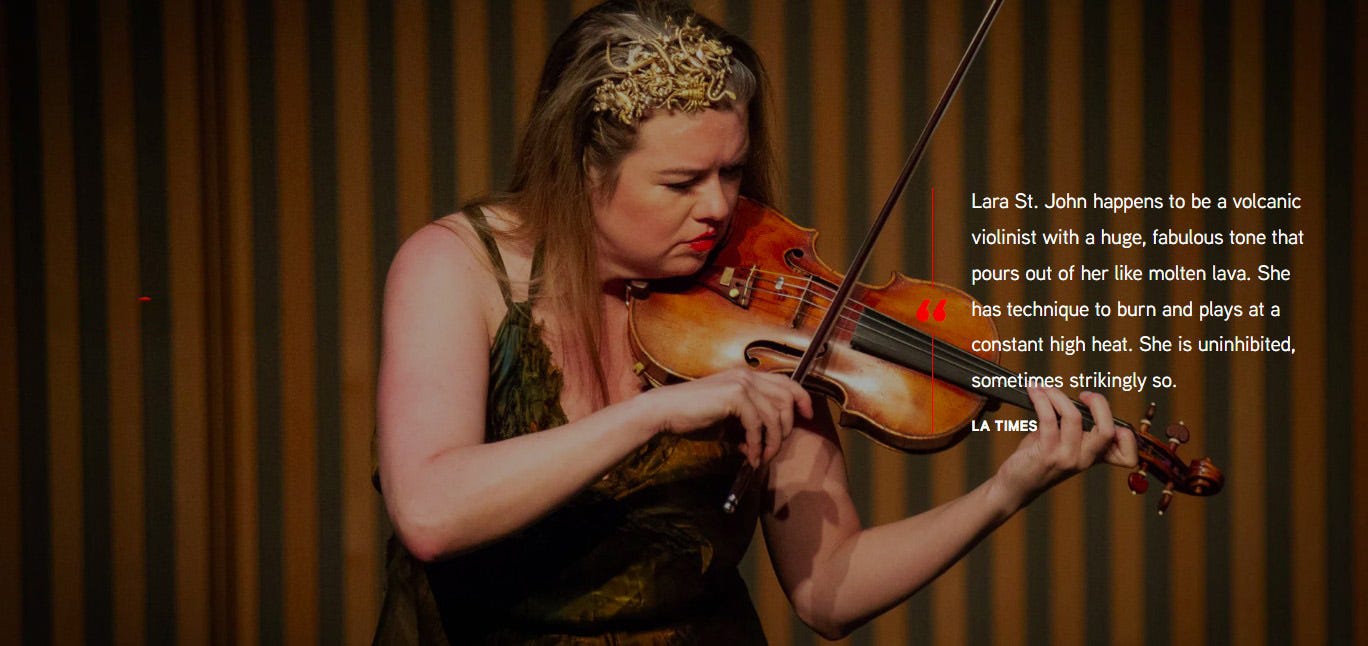
After the article appeared, something happened that Lara hadn’t anticipated. People started telling her their own stories of sexual abuse. At first there were dozens of messages. Then there were hundreds.
Today, Lara estimates that the number of people who have contacted her with their stories is approaching 1,000.
They reached her mainly through social media. Some had experienced sexual assault and abuse in music schools. Others shared experiences from orchestras and elsewhere in the classical music world.
And suddenly Lara found herself on the receiving end of an enormous collection of stories about abuse, vulnerability and power.
“It was just so much to deal with,” she remembers.
She needed help simply organizing everything. It took her months before she could work her way through all of the messages. Then she spent hours and hours trying to respond to people individually.
As Lara worked her way through the messages, she began to see a pattern.
Again and again, people described situations where someone in a position of authority held enormous influence over a young musician’s education, career and future. These were environments where young people were particularly vulnerable and where challenging the person with that authority could come at a significant cost.
For Lara, the common denominator was power.
“These things seem to happen where people are the most vulnerable,” she says.
Especially, she adds, where teachers, coaches and other adults hold enormous power over young people.
And as the stories accumulated, Lara began wondering what she should do with them. She could write a book. She could write an article. Neither felt sufficient.
“And then I thought, you know… I think I should make a movie.”
Why a Documentary Film?
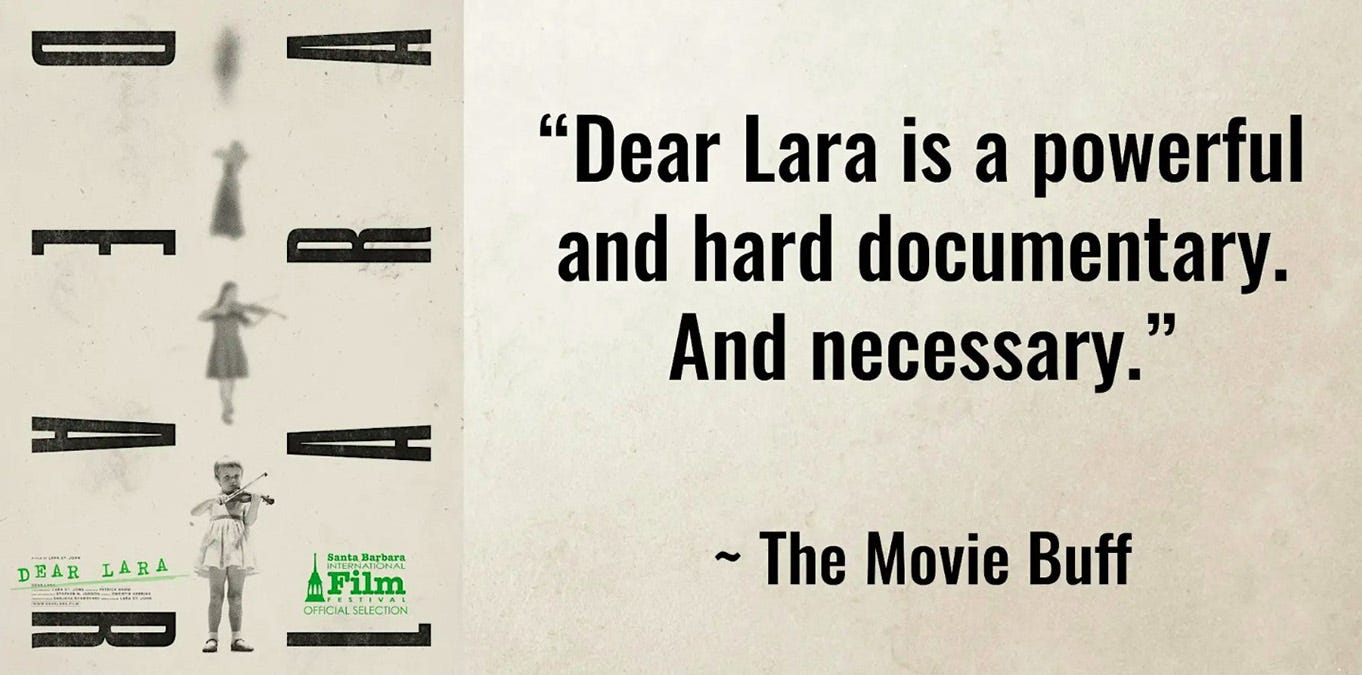
Lara had never directed a film before, but film offered something the other formats didn’t.
“It would have more longevity,” she says. “It would have more impact.”
More importantly, it offered a way to bring stories together that had previously existed separately.
“Some people knew this story. Some people knew that one,” Lara explains.
And a documentary could put them together.
“In, like, 94 minutes, you learn a hell of a lot.”
The resulting film, Dear Lara, moves beyond Lara’s own experience to examine sexual abuse and institutional responses to it within the elite classical music world.
When Lara interviewed people for the film, she says she deliberately avoided telling them what she wanted to hear.
“I gave them no guidance. Just said, tell us your story.”
Then came the enormous task of turning those stories into a film. It would take seven years.
Bringing Dear Lara to the Screen
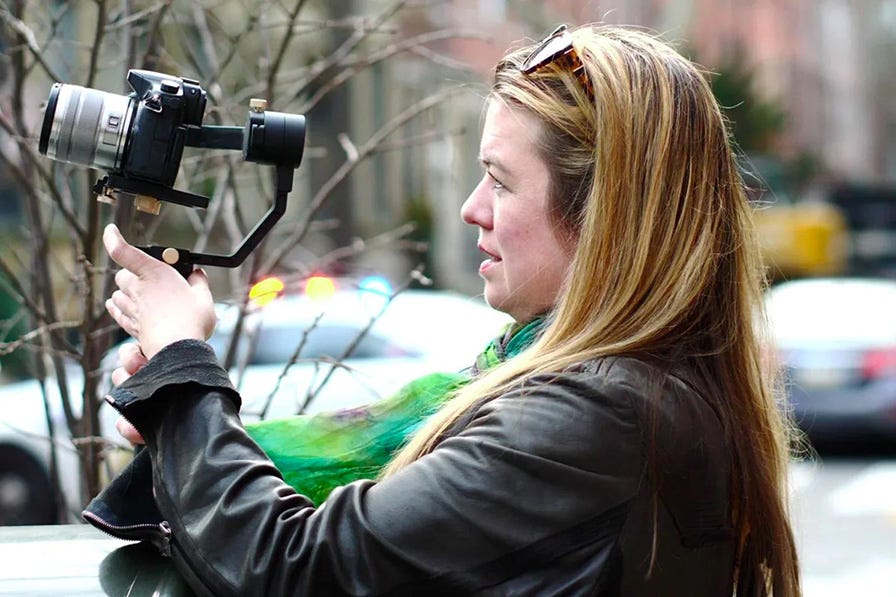
Making a documentary, Lara discovered, is very expensive. She travelled all over interviewing people for their stories. She bought film equipment, which she taught herself to use. Then there were producers, an editor and many lawyers to hire. And because Lara was self-financing the project, ultimately the money had to come from somewhere.
“I used to have an apartment, actually, in the Upper West Side of Manhattan. And now I have a documentary. That’s what it costs.”
I stop her. She actually sold her apartment to make the movie?
Lara lives with her husband in New York City, but had kept an apartment of her own after they moved in together. But making Dear Lara meant letting the apartment go to finance the film.
She said it matter-of-factly. But it gives you a sense of just how important making this film had become to her. Beyond the financial cost and the years it consumed, there was an emotional toll in listening to the stories of others while revisiting her own.
Seven years after she decided she should make a movie, Dear Lara was finished. And Lara St. John, the violinist, found herself becoming Lara St. John, the filmmaker.
“I’m Mostly a Violinist”
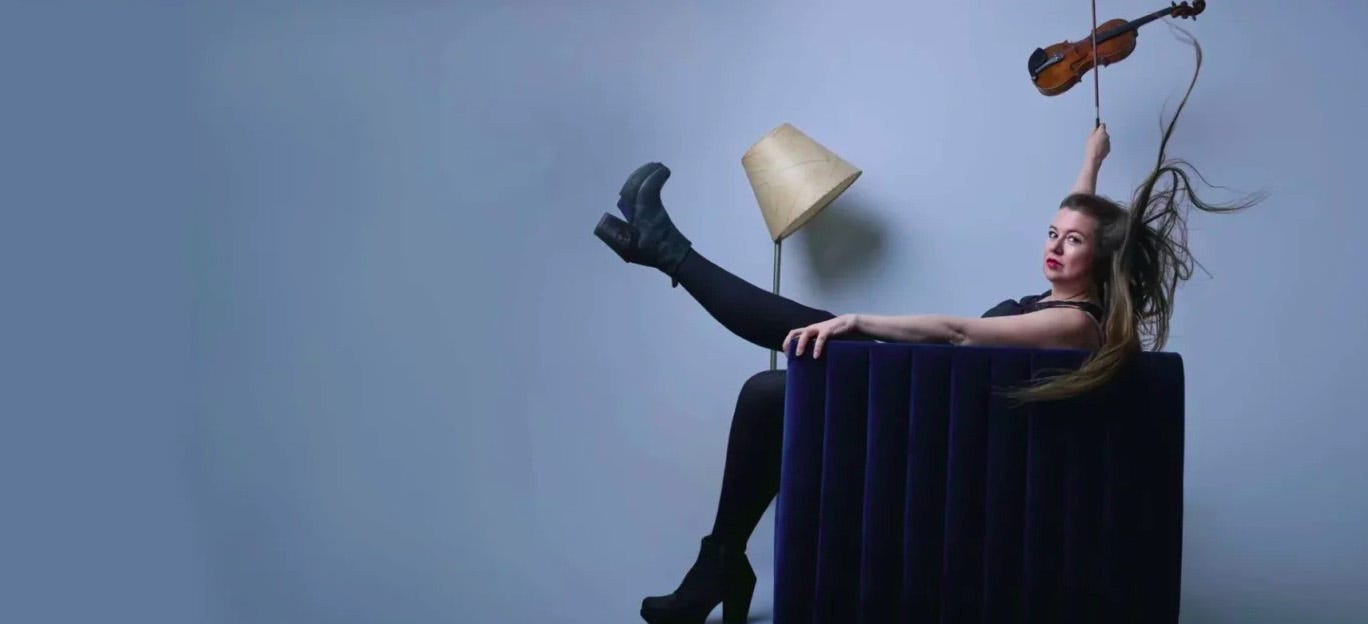
Dear Lara made its debut at the Santa Barbara International Film Festival in early February 2026. Since then, Lara has been travelling with it through the festival circuit.
For someone who has spent her life walking onto stages around the world with a violin, being a first-time filmmaker has occasionally put her in unfamiliar territory.
“I’m a little bit of a newbie,” she admits.
Her solution when somebody asks a question that’s a little too technical?
“Well, I’m mostly a violinist.”
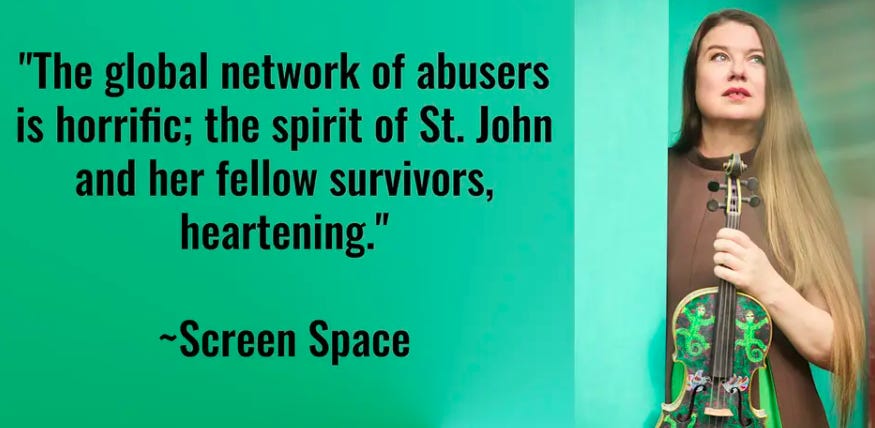
The film’s reception, Lara says, has been remarkable. At the time of our interview, it had received festival recognition in both Italy and France, and broadcast rights had been sold in New Zealand, Ireland and Finland.
For Lara, the festival circuit has also provided something beyond awards and distribution: the opportunity to sit with audiences, talk about the film and hear from people after they’ve seen it.
And she has made room in her life to do exactly that.
Making Room for Dear Lara
Classical musicians don’t generally decide what they’re doing six weeks from now. Major performances are often booked a year or two in advance. But film festivals operate very differently. Lara says a festival may give her only about six weeks’ notice that Dear Lara has been accepted.
The two worlds simply don’t fit together very well. So a full two years ago, Lara made a decision. She told her managers not to book her for any concerts for 2026.
“This is going to be the festival year. Don’t book me.”
She has taken the year off from her conventional performance schedule so she can go wherever the film goes.
This alone would be a significant decision for someone who has made her living as a solo violinist for decades. But as we talk, I begin to realize that something larger has happened.
Lara isn’t simply taking a year off. She is leaving a significant part of that life behind.
When Survival is no Longer the Goal
Lara has been playing the violin for more than half a century.
“I’ve been working for 51 years,” she says.
Then she tells me something surprising. Playing another major concerto somewhere simply doesn’t matter very much to her anymore.
“At this point, this [advocacy] is kind of my future. It’s obviously more so than playing. It doesn’t make any difference to me anymore if I go play a Mendelssohn concerto somewhere.”
That doesn’t mean she’s putting the violin away forever though. She still wants to play music that interests her.
She talks enthusiastically about travelling with a carbon-fibre fiddle to play Breton music with a group of accordionists. She plays with bands. She wants to experiment. Someday, she’d like to create a commissioning organization for women composers.

What she doesn’t particularly want anymore is to keep doing something simply because it’s what she’s always done.
“I just want to do things that I enjoy, and not have to worry anymore about survival.”
That word — survival. In Part One, Lara used the same word when she talked about the violin at Curtis. At 15, with no high school education and no conventional academic path to fall back on, she had come to a stark conclusion:
“The only way to survive was to play the violin.”
Now, more than half a century after she first picked one up, survival is no longer the goal.
“I have my violin, I have my savings, I have my husband, I’ve sold my apartment, I have my movie,” she tells me. “That’s more important. It’s way more important at this point.”
Choosing What Comes Next
There are people, Lara says, who have difficulty understanding why someone with her talent and career would ever want to step away from it. How could she waste this gift she had been given?
But I think that’s the wrong way to look at it. Lara isn’t giving up music. As she told me in Part One, music is a language to her. She could no more give it up than she could stop speaking English. What she’s figuring out now is the place she wants music to occupy in her life.
After more than five decades of lessons, practice rooms, competitions, conservatories, recordings, airplanes, concert halls and orchestras, she wants to play when the music itself excites her. She wants to work on projects that matter to her.
And right now, Dear Lara matters.
“I’m done that part of my profession,” she says of the conventional soloist life.
“And I’m glad to be done.”
That doesn’t mean she is done with playing the violin. She's simply becoming much more selective about when, where and what she plays.
”I play sometimes in a class… I really have a great time doing that. I’m not going to stop doing that. I’m doing a bunch of fiddle tunes like Bach into fiddle.
It’s so much more rewarding somehow to do something I enjoy rather than something I’ve been forced to do my whole life. ”
What she describes for what’s to come next doesn’t sound like an ending. It sounds like the beginning of a new chapter.
“I think I want the rest of my life to be about advocacy and change making. That looks like the future for me.” - Lara St. John
Lara St. John picked up a tiny violin because her big brother had one and she wanted one too. She became extraordinarily good at it. It took her around the world. It gave her a livelihood, and a way to survive.
But when Lara and I talked in my backyard all these years later, I got the sense that the most important thing about where she is now isn’t whether she keeps playing the violin.
It’s that, maybe for the first time, Lara gets to decide what comes next.
Where to Catch Dear Lara
Thanks to Lara, I was lucky enough to watch Dear Lara. It’s an incredibly powerful film and is a towering achievement. It’s no wonder it has been winning awards around the world.
With no film studio behind her, Lara is doing all of the leg work herself to line up screenings around the world and negotiate distribution.
Unfortunately there is no screening of the film lined up for London yet (hopefully in the New Year - it’s something I’ll work on), but there are a number of screenings scheduled in Ontario in the next month:
Upcoming Dear Lara screenings in Ontario
Saturday October 10, 2026. Toronto, Hot Docs Ted Rogers Cinema
Lara will be present in person for a Q&A.Friday November 6, 2026, Windsor, Windsor International Film Festival
Saturday, November 7, 2026, Stratford, Stratford Film Festival
Related links
Part One of this column - Dear Lara: The Girl With the Violin
Support Lara by buying albums and merch through her online shop here
Downtown London - Sponsor of The Loon
Downtown London is dedicated to championing the businesses, events, restaurants, shops, and people that make the core of our city vibrant.
ADVERTISEMENT

Forest City Arts & Culture Round-Up is sponsored by Downtown London
www.downtownlondon.ca
Supporting independent local journalism in our community
The Loon (London Ontario Online News) lineup
Local independent journalism bringing you new content every day.
Find our editorial standards and policies here.

Meet the Londoners who team up to send you a new feature every weekday:
Monday - Buckle Up - podcast with Matt Brown
SPONSORED BY HAMILTON ROAD BIATuesday - Ward Tours with Cedric Richards
SPONSORED BY LONDON BICYCLE CAFÉWednesday - City Hall Notes by Mike Donachie
SPONSORED BY SPERO LAWThursday - the Forest City Arts and Culture Roundup by Diana Tamblyn
SPONSORED BY DOWNTOWN LONDONFriday - Reflections with Steve Cordes
SPONSORED BY OLD EAST VILLAGE BIA
Also on Fridays: the local news ROUNDUP.
Every other Saturday: The Matt Brown Podcast. It’s the show about all things local, and maybe some other stuff too. SPONSORSHIP OPPORTUNITY AVAILABLE.
Superb, Diana. Thank you. And a big thank you to Lara for her bravery and candour.
Surely the Hyland would be interested in showing Dear Lara?