


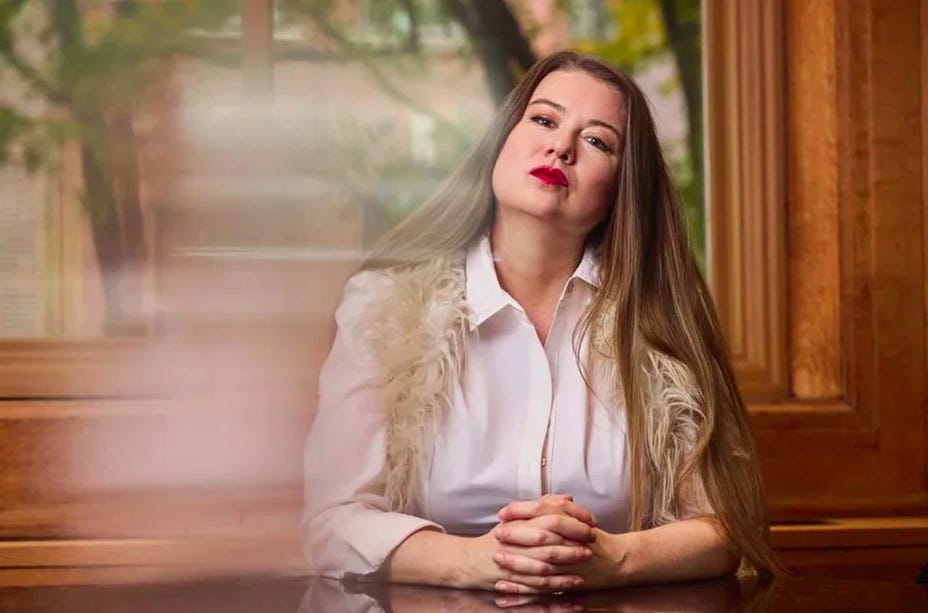
This week’s column is a bit of a departure from my usual format. It’s my first long-form feature for The Loon, built around an in-depth interview with celebrated violinist Lara St. John. I’d love to do more stories like this, so let me know what you think in the comments.
Long-form, independent local journalism like this is made possible by The Loon’s paid subscribers. Thank you for supporting the work we do!
You may have heard of Lara St. John, the London-born, internationally acclaimed violinist. A child prodigy, she gave her first public performance with an orchestra at the age of four and made her European debut at the age of nine in Lisbon, Portugal. At thirteen, she was accepted at the renowned Curtis Institute of Music in Philadelphia.
Since then, she’s built an extraordinary career. She won a JUNO Award in 2011 for her album Mozart, was named a Member of the Order of Canada in 2021 and has been named a Knight of Burgundy. She’s also founded her own record label, performed as a soloist with orchestras around the world, including the Royal Philharmonic Orchestra, San Francisco Symphony and Philadelphia Orchestra, and has released 17 albums.
Her latest project takes her in a very different direction. Dear Lara is a documentary she directed about decades of sexual abuse and institutional complicity within elite classical music conservatories and orchestras. It debuted earlier this year at the Santa Barbara International Film Festival, and has since been earning accolades at film festivals around the world.
Lara spoke about the film on CBC’s Q a few months ago, so naturally, I waited for our local media to sit down with one of London’s most accomplished exports and talk about her deeply personal new film.
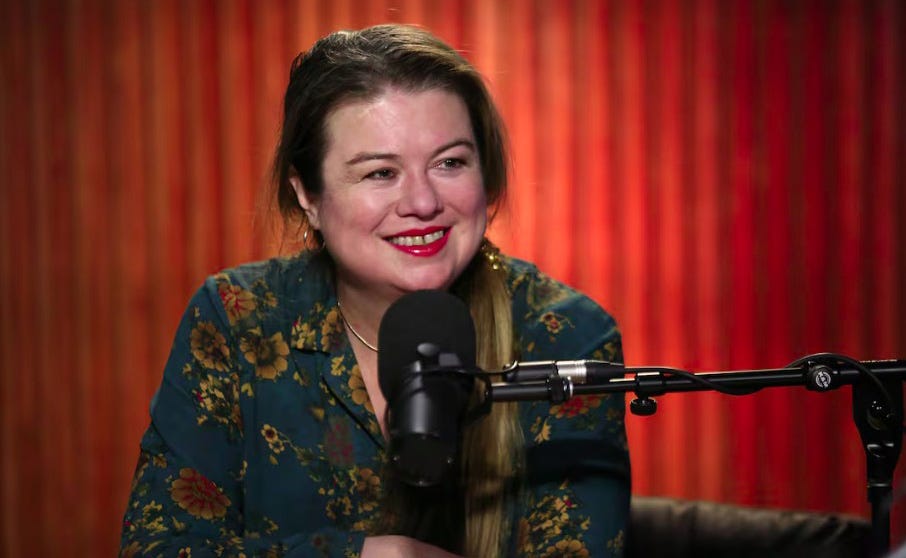
And I waited. And waited. Eventually, it became pretty clear that wasn’t going to happen. So I decided to do it myself.
After all, that’s one of the main reasons this column exists to cover the arts and culture stories in London that aren’t getting the attention they deserve.
I reached out to Lara to see if she would sit down with me for an interview for The Loon, and happily, she agreed.
Although she now lives full-time in New York City, Lara still has family in London and returns to the city regularly.
Content note: This article discusses sexual abuse and suicide.
Part One of a Two-Part Feature on The Loon
Part One of this article contains:
From Concert Halls to the Schoolyard
Learning to Speak Violin
The Beginning of the Rest of Her Life
When Everything Changed
Putting a Continent Between Herself and Curtis
The Life That Came After
The Past Doesn’t Always Stay Put
From Concert Halls to the Schoolyard
Setting up the interview was fairly straightforward, as I know Lara personally. We went to public school together at École Alexandra (London’s first French-language school, now École élémentaire Marie-Curie).
Even then, there was something slightly exotic about her, at least to me. Lara would disappear from class for stretches of time to perform somewhere halfway around the world, then return and seemingly pick up her schoolwork effortlessly right where she’d left off.
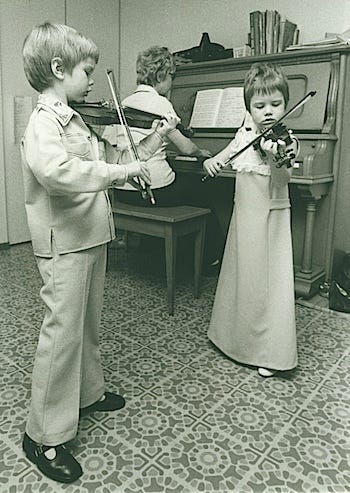
I remember Lara and her older brother Scott (also a celebrated violinist), coming into our class to perform for us when we were probably seven or eight years old, with their Mom accompanying them on the piano. I remember thinking it was pretty glamorous and sophisticated.
Lara remembers it differently though...
“I felt incredibly uncool,” she tells me when we sit down to talk in my backyard all these years later.
By Grade 7, if she had to bring her violin to school, Lara says she would sometimes put it in a garbage bag and hide it outside. To the rest of us, she was the girl travelling around the world playing the violin.
Learning to Speak Violin
There wasn’t some grand musical plan for the St. John children. Their parents weren’t professional musicians. Lara says her mother happened to see a small newspaper ad for music lessons and thought it would give her young children something to do. Scott attended classes first.
“He was three and I was two,” Lara remembers. “And he came home with a tiny violin. And then I was like one of those sisters that… there’s no way he’s going to have something that I don’t have.”
So Lara got an even smaller violin. She was two-and-a-half, and things moved quickly for both children.
“Like we had, we just learned stuff. And everybody was impressed… folks would say, here, learn this. And we just would.”
By four, five and six, the St. Johns were already playing in concerts and music competitions. Then, at the age of nine, Lara won the national Canadian Music Competition. European judges heard her play and invited her to Portugal, and at nine— she made her European debut.
The following year, she returned with Scott, and the two played the Sinfonia Concertante. At one point, the two young musicians played 24 concerts in 22 days in Spain.
I ask her the obvious question: did she actually like any of this?
“I liked some of it. I liked the music. I liked the travel at the time, you know, learning new things... I mean, I would say overall, yes.
But I did kind of feel very uncool at school, you know, because it was like, we’re not going to, you know, play hockey somewhere.”
But when you begin doing something at two-and-a-half, it’s difficult to separate what you love from simply who you’ve always been.
“Recently, both my brother and I have been looking back and saying, did we do this because we were good at it? And because we started out this way, or because we loved it? We’re not sure.”
She compares it to language.
“You can’t stop speaking English right now, can you? Because that’s what you do.”
By about 12, Lara says she had made a conscious decision that music really was what she wanted to do. At 13, that decision took her away from London.
The Beginning of the Rest of Her Life
Lara’s brother Scott had been accepted to the prestigious Curtis Institute of Music in Philadelphia. Lara went with him, initially intending to complete Grade 8 by correspondence while she practised and prepared to audition herself.
But the correspondence courses soon fell away, and she auditioned for Curtis and was accepted at 13 with a full scholarship (anyone accepted into Curtis does not pay tuition).
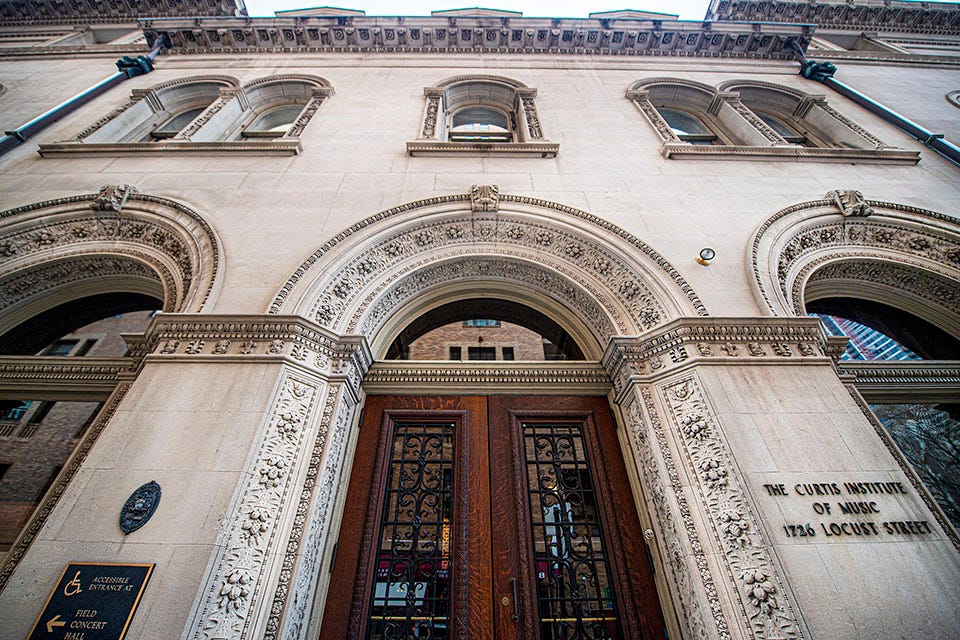
Lara was one of the youngest students at a college of approximately 200 people and an acceptance rate of about 2%. She didn’t have a high school diploma. She didn’t even finish elementary school. None of that seemed particularly important at the time, as she had made it into Curtis.
“There we were and I really thought it was like the beginning of the rest of my life... and I was so happy” she says.
Initially, it was everything she had hoped. She attended master classes, played in the school’s lab orchestra and sought out opportunities to learn even when she wasn’t required to be there.
“I was just interested. Even things I didn’t have to do, I would do.”
But she was also very young. She was living away from home with her brother, surrounded largely by older students. And at Curtis, Lara says, a student’s major teacher held enormous power over their education and future.
That power imbalance would prove devastating.
When Everything Changed
Lara has spoken publicly about what happened next, including in a major 2019 investigation by The Philadelphia Inquirer and now in her documentary, Dear Lara.
“The first year started… and it was so exciting and then bad things started happening.”
Lara says she was sexually abused by her major instrument teacher, Jascha Brodsky, during her first year at Curtis. In March 1986, when she was 14 and Brodsky was 78, she says Brodsky raped her.
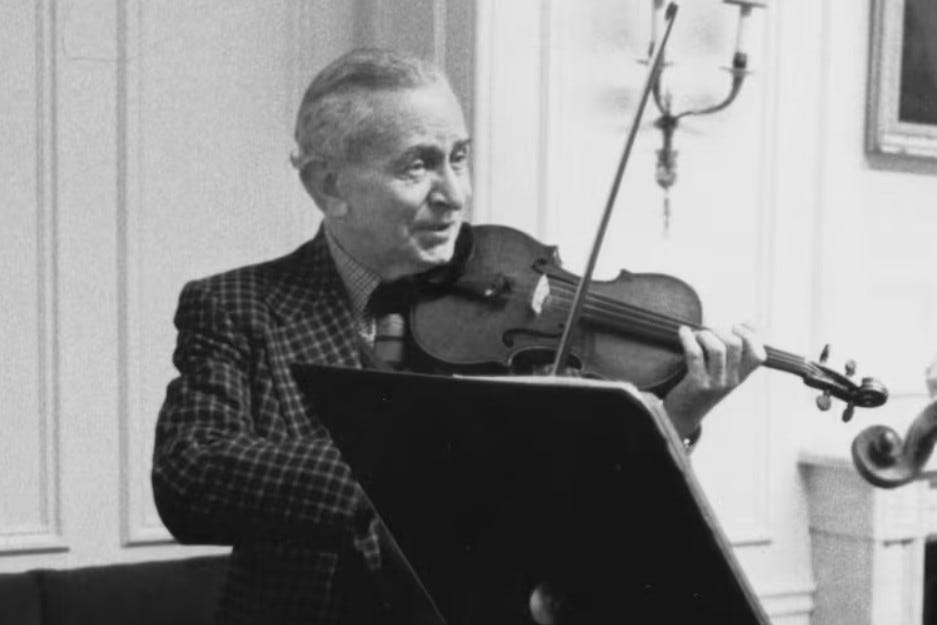
Lara describes herself at the time as extraordinarily naive: “I didn’t know anything about anything.”
She was far from home. She had few friends her own age. And she says her teacher understood exactly how much power he held over the futures of both her and her brother at Curtis.
“He knew I loved my brother, and he knew my brother was happy there.”
She recalls him telling her, “Wouldn’t it be a shame if you had to leave the school and your brother?”
Brodsky also taught Scott. “The major teacher is the one that has all the control over you… without any reason, they can kick you out.”
After the rape, she bought a pregnancy test. This was 1986, long before today’s simple home tests, and Lara didn’t understand that she needed to wait before taking it. She spent her week’s food money on the test and then realized she had probably used it too soon. She was 14 years old, alone, terrified she might be pregnant, and now had no money to eat.
“I was going to starve for a week because of what this man did. But at the time, my only concern was keeping my brother at that school. And I knew that if I got pregnant... that would wreck things.”
Then something shifted, and Lara went from fearful to angry.
“I just said… this is never going to happen again.”
But stopping the sexual abuse didn’t mean Lara could simply walk away. She remained at Curtis, and she remained Brodsky’s student.
Eventually, at 15, Lara confided in two friends. Together, the three of them went to the Dean. According to Lara, when they asked that she be allowed to change teachers, the Dean initially refused.
“He basically laughed at me, and he said— well, what do you want me to do?” And my friend said, “…she just needs to change teachers, obviously.”
He said, “That doesn’t happen here at Curtis, I’m sorry.”
So then my friend said, “Well, we’re going to go to the police.”
And then he really started laughing, and he said “Oh, my God, who do you think the police would believe, some kid or someone who’s been with this school for decades?”
Those two friends would become important many years later. Both were interviewed for The Philadelphia Inquirer‘s 2019 investigation and corroborated Lara’s account of that meeting.
Eventually, Lara was moved to another teacher. But what had happened didn’t disappear with the change of instructors.
Putting a Continent Between Herself and Curtis
Lara threw herself into music. In her third year at Curtis, she says she understood that she was going to have to find a way to support herself, and violin was the one thing she knew how to do.
“I realized I was going to have to survive somehow,” she says. “And I had nothing else.”
She had no high school credits. No conventional academic path to fall back on.
“The only way to survive was to play the violin.”
But by then, simply being at Curtis had become unbearable. During her third year, Lara attempted suicide.
She remembers passing Brodsky in the hallway and becoming physically ill from the smell of his cologne.
“I realized I’m not going to survive if I stay here.”
Her escape came through an exchange program she found between Canada and the Soviet Union.
“I put a continent between myself and that school.”
She believes the decision saved her life. In the Soviet Union, nobody knew her history. Nobody knew what had happened at Curtis. She could simply be Lara.
“I was able to kind of create myself anew.”
When she still wasn’t ready to return home, she went to England on another scholarship. And eventually, she built the career that the rest of the world knows.
Above, watch an excerpt of Lara performing at an NPR Tiny Desk concert in 2016, where she ‘left many of us [NPR staff] in the room breathless.’
Also watch her piano accompanist’s reaction in the video — even he seems blown away by the performance!
The Life That Came After

The girl from London became an international soloist. There were concerts around the world. Recordings. Albums. Eventually, Lara founded her own record label —Ancalagon Records, so she could have complete control over every aspect of her recordings.
For more than 20 years, this was her life. And she was successful.
“It was my bread and butter,” she says. “I started making pretty good money… and that’s just what I did for many years.”
“I was pretty much happy. I was going around the world. I was travelling. I was able to pay my rent and buy my food.”
She had made a life for herself. What happened at Curtis belonged to the past.
Or at least Lara tried to keep it there.
“If I thought about it, I would try not to.”
For years, this method largely worked. Until it didn’t.
The Past Doesn’t Always Stay Put
In 2013, Lara came across something that enraged her. The former Curtis dean who she says she had approached for help as a teenager had retired and was living in Paris. He wrote an article on a “pretty famous blog in classical music” and was publicly portraying himself as an advocate for the protection of children.
“I saw crimson,” she remembers.
She wrote to the Curtis Institute of Music, and told the school what had happened to her decades earlier. Then, once again, she tried to move on.
“Life goes on, and my life went on for a while.”
But by 2018, something had changed. Lara had spent decades building an extraordinary career after Curtis. She had travelled the world, recorded albums and created a life that, by her own description, was largely a happy one.
Yet the story she’d tried to leave behind wasn’t finished with her.
“I just decided in 2018, that’s it. I’ve had it,” she tells me.
She contacted The Philadelphia Inquirer, whose reporters began investigating her story.
They spoke with Lara. They spoke with others. They tracked down the people who had accompanied the 15-year-old Lara to the Dean’s office decades earlier.
In July 2019, the Inquirer published a lengthy investigation into Lara’s allegations, and the story was featured on the front page of its Sunday edition.
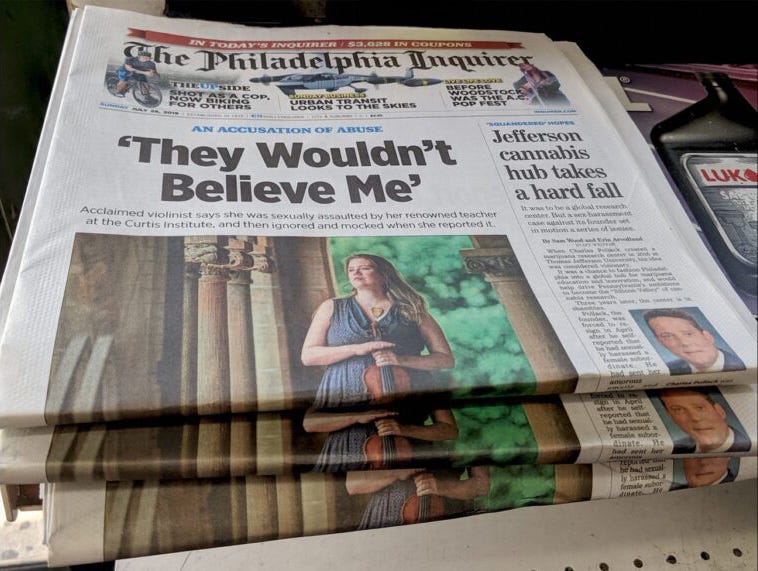
Then something happened that she hadn’t anticipated. People started writing to her. And they didn’t stop.
Coming in Part Two next week: Hundreds of people in the classical music community began contacting Lara with similar stories of their own abuse.
Faced with the question of what to do with these stories, Lara made a decision that would consume seven years, cost her an apartment and ultimately change the course of her life: she would make the film Dear Lara.
Downtown London - Sponsor of The Loon
Downtown London is dedicated to championing the businesses, events, restaurants, shops, and people that make the core of our city vibrant.
ADVERTISEMENT

Forest City Arts & Culture Round-Up is sponsored by Downtown London
www.downtownlondon.ca
Supporting independent local journalism in our community
The Loon (London Ontario Online News) lineup
New content every day.

We’ve teamed up to send you a new feature every weekday:
Monday - Buckle Up - podcast with Matt Brown
SPONSORED BY HAMILTON ROAD BIATuesday - Ward Tours with Cedric Richards
SPONSORED BY LONDON BICYCLE CAFÉWednesday - City Hall Notes by Mike Donachie
SPONSORED BY SPERO LAWThursday - the Forest City Arts and Culture Roundup by Diana Tamblyn
SPONSORED BY DOWNTOWN LONDONFriday - Reflections with Steve Cordes
SPONSORED BY OLD EAST VILLAGE BIA
Also on Fridays: the local news ROUNDUP.
Every other Saturday: The Matt Brown Podcast. It's the show about all things local, and maybe some other stuff too. SPONSORSHIP OPPORTUNITY AVAILABLE.
Lara's dad taught me French at Medway S.S. in the second half of the 80s. I remember once he had a radio on at low volume during class because either Lara or Scott was playing at a competition that was being broadcasted.
I wasn't aware of what happened to Lara at the Curtis Institute until I read this piece. It's an important story. Thank you for covering it.